
Live Beautifully at Home



10 Best Rooftop Planters Ideas for a Beautiful Outdoor Space
 Rhonda
My Blue Creek Home Founder & Editor
I spent over 12 years in decorative painting and faux finishing, starting with a faux finishing company I co-owned in Mississippi that...
October 7, 2026
7 min read
Leave a comment
Rhonda
Rhonda
My Blue Creek Home Founder & Editor
I spent over 12 years in decorative painting and faux finishing, starting with a faux finishing company I co-owned in Mississippi that...
October 7, 2026
7 min read
Leave a comment
Image Notice. Some images featured in this article may originate from third-party sources and are used for illustrative purposes only. Please review our Image Credits Policy for full attribution information.
Rooftop planters Ideas can make a roof feel like a real outdoor room, even when there is very little ground space. The right containers bring height, privacy, greenery, and structure without requiring a traditional garden bed.
A rooftop can also give you the freedom to create a planting style that feels completely separate from the rooms below. Tall trees can frame a view, large containers can define seating areas, and smaller pots can soften hard surfaces around dining spaces.
The best rooftop planters Ideas balance beauty with practical needs. You need containers that suit the weather, plants that can handle the amount of sun and wind your roof receives, and arrangements that leave enough room for people to move comfortably.
Color can play a big role too. Warm terracotta brings a relaxed Mediterranean feeling, while charcoal containers create a clean modern look. If you prefer a richer planting scheme, Black Flower Garden Ideas can add deep contrast against green foliage and lighter paving.
The goal is not to fill every empty corner with plants. A few well placed containers can give your rooftop a stronger sense of shape, making the space feel comfortable, useful, and connected to nature.
Rooftop Planters Ideas With Terracotta
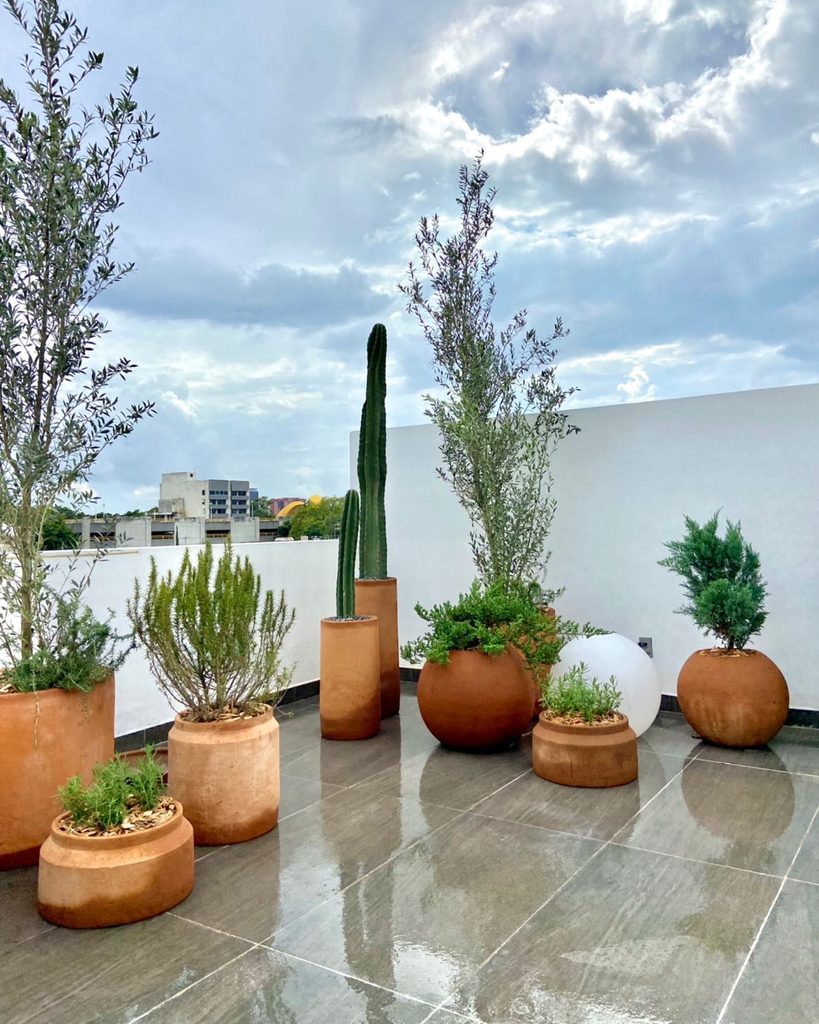
Credit: @cumulomex
Terracotta containers give a rooftop a warm, earthy feeling that works especially well with Mediterranean and desert inspired planting. You can mix tall cacti, olive trees, rosemary, and other sun loving plants to create an arrangement that feels relaxed without becoming messy.
Varying the shapes and heights of the pots keeps the planting area interesting. Try placing taller containers toward the back and lower rounded pots closer to seating areas, while leaving clear walking space between each group.
Lush Rooftop Planters Ideas
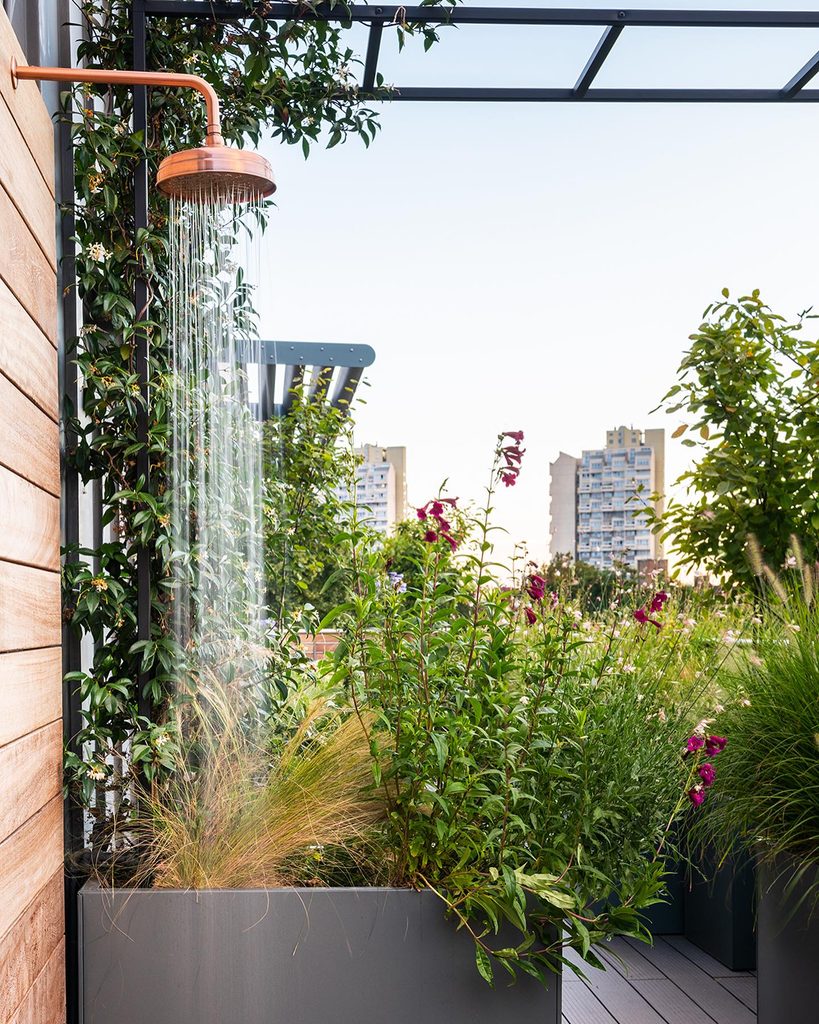
Credit: @gardenslondon
A lush planting scheme can turn an exposed roof into a private green retreat. This approach works especially well when you combine grasses, flowering plants, shrubs, and climbing greenery so the space has different heights and textures.
For a similar rooftop garden ideas approach, use long rectangular planters around the edges of the space. They can create a strong green border while leaving the center open for a chair, small table, or outdoor shower, giving the rooftop a relaxed garden room feeling.
Rooftop Planters Ideas For Privacy
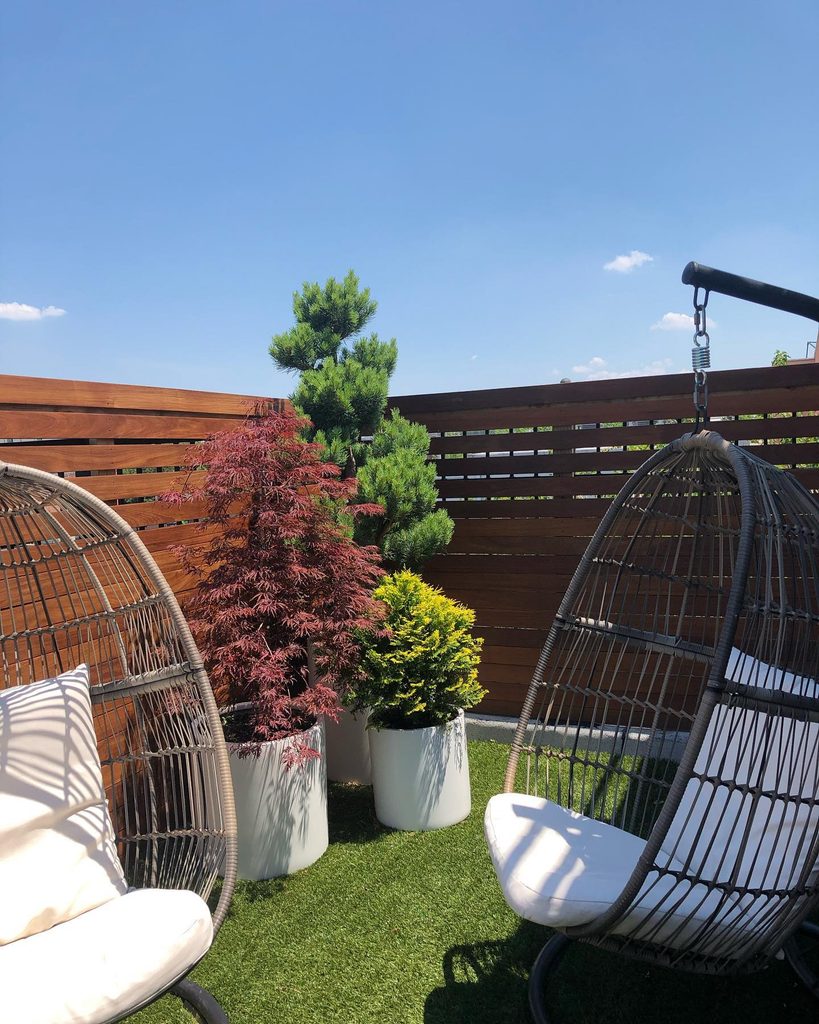
Credit: @house.it.design
Privacy becomes much easier when plants are used as part of the rooftop layout. Tall trees and dense shrubs can soften a railing or screen nearby buildings while giving the seating area a calmer atmosphere.
Choose containers that are wide enough to support plants as they grow, especially when the roof is exposed to strong wind. Repeating two or three plant varieties can also make the screen feel organized, while warm wood or dark fencing adds a comfortable backdrop.
Sculptural Planters For Rooftops
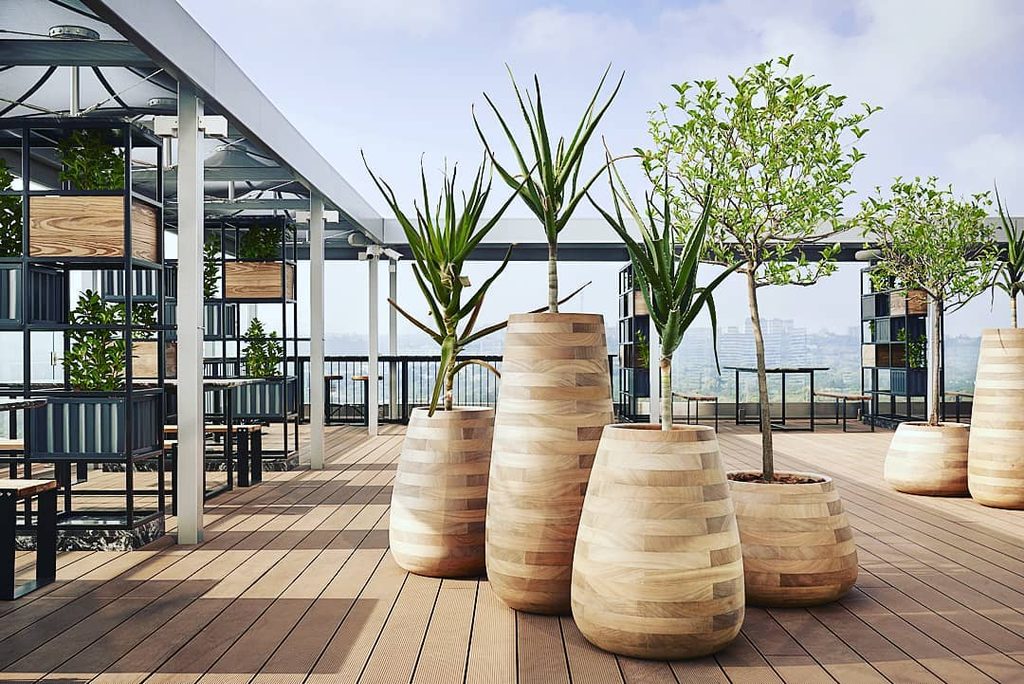
Credit: @indigenusplanters
Large sculptural containers can become architectural features on a rooftop. Their shape adds visual weight to an open space, while tall plants inside them help connect the hard lines of decking, railings, and surrounding buildings.
For a modern terrace, consider oversized containers in wood, stone, fiberglass, or another durable material. A small group of matching forms often has more impact than many unrelated pots, and the simpler arrangement gives each plant room to stand out.
Black Rooftop Planters With Greenery
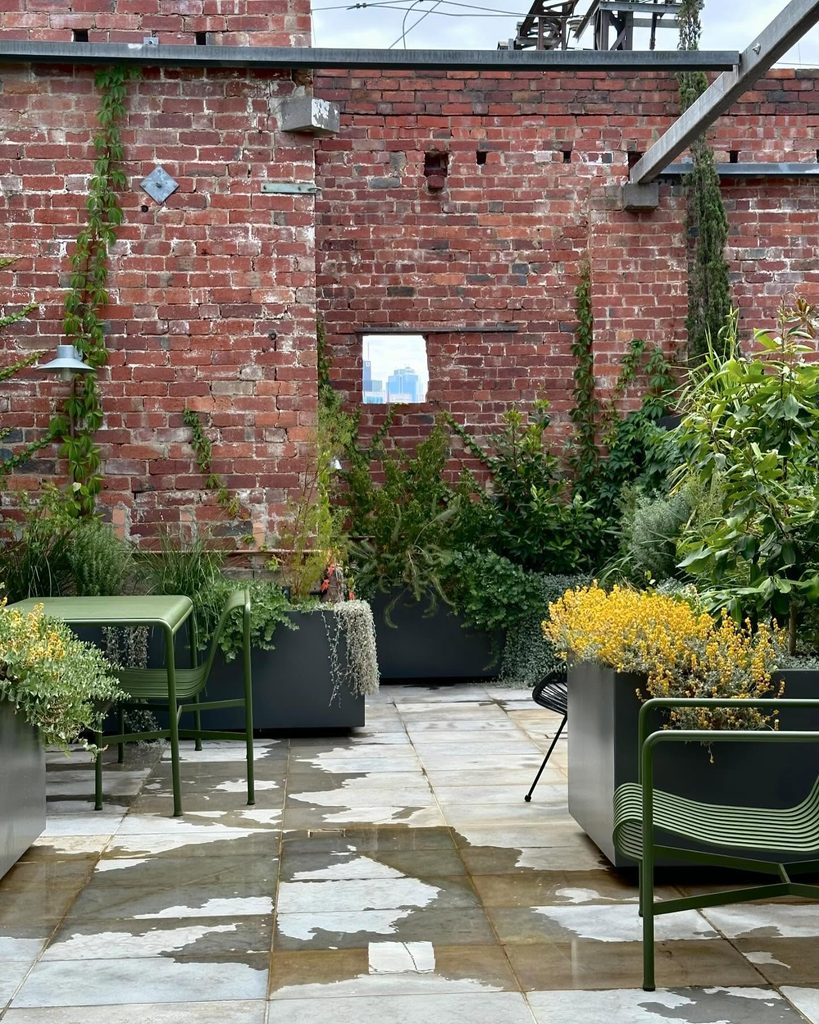
Credit: @jala_landscape_studio
Black containers create a strong background for green foliage and colorful flowers. They are especially useful when you want your plants to feel like part of a modern rooftop design instead of a collection of separate pots.
This is also a natural place to bring in Black Flower Garden Ideas through dark containers paired with silver foliage, yellow flowers, deep green shrubs, and soft grasses. Keep the plant palette simple so the dark containers provide structure without making the space feel heavy.
Rooftop Planters Ideas For Dining
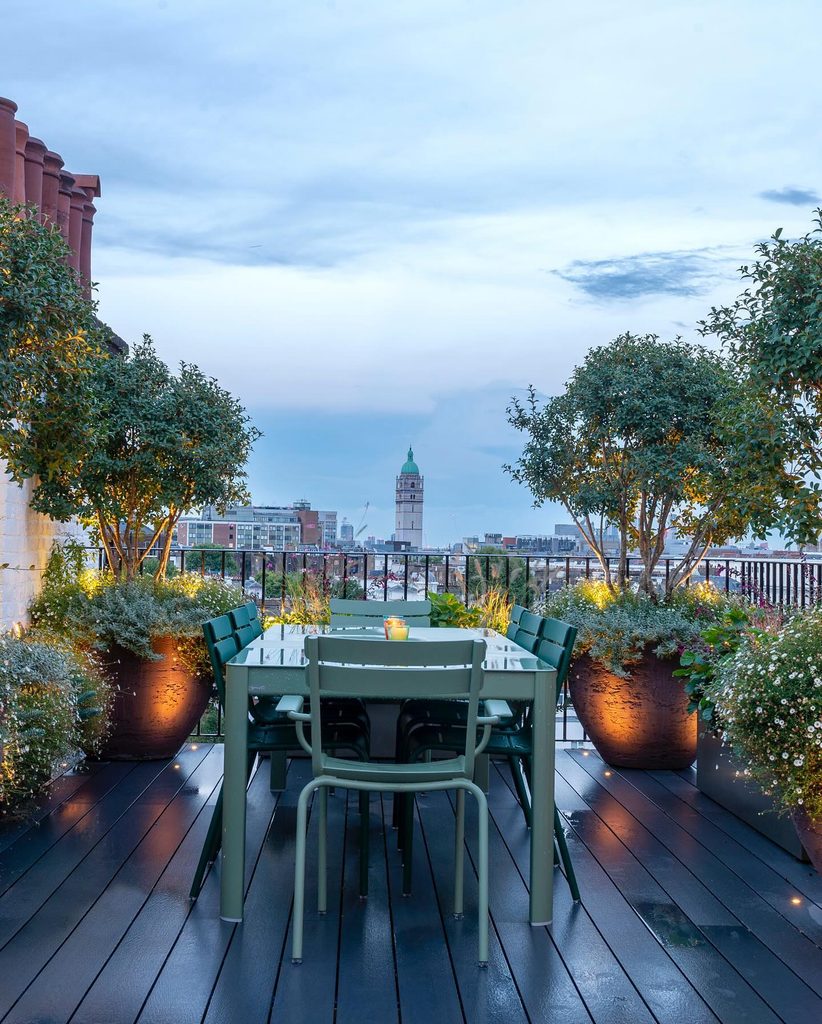
Credit: @maitannehunt
Plants can make a rooftop dining area feel much more comfortable and enclosed. Large containers placed around the dining table create a soft boundary while still allowing the view beyond the roof to remain open.
Use taller plants at the back and lower flowers or herbs near the table. This arrangement gives you a sense of enclosure without blocking conversation, and subtle outdoor lighting placed among the containers can make evening meals feel especially inviting.
Large Planters For Shared Spaces
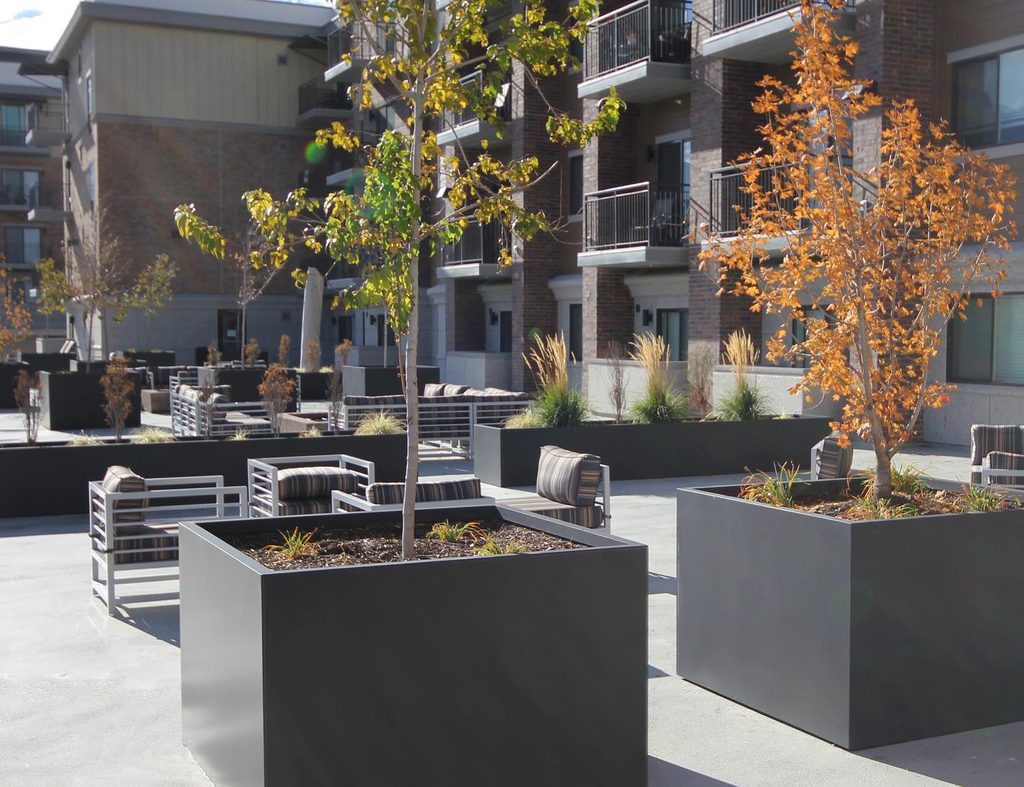
Credit: @outdoorelementsdesign
Large planters are useful when a rooftop needs to serve several purposes at once. They can separate dining areas from lounge spaces, guide people through the terrace, and create clear zones without permanent walls.
For container garden ideas, choose durable planters with enough depth for the plants you want to grow. Repeating the same container style throughout a large roof can help several seating areas feel connected, even when each area has its own purpose.
Pergola Planters For Shade
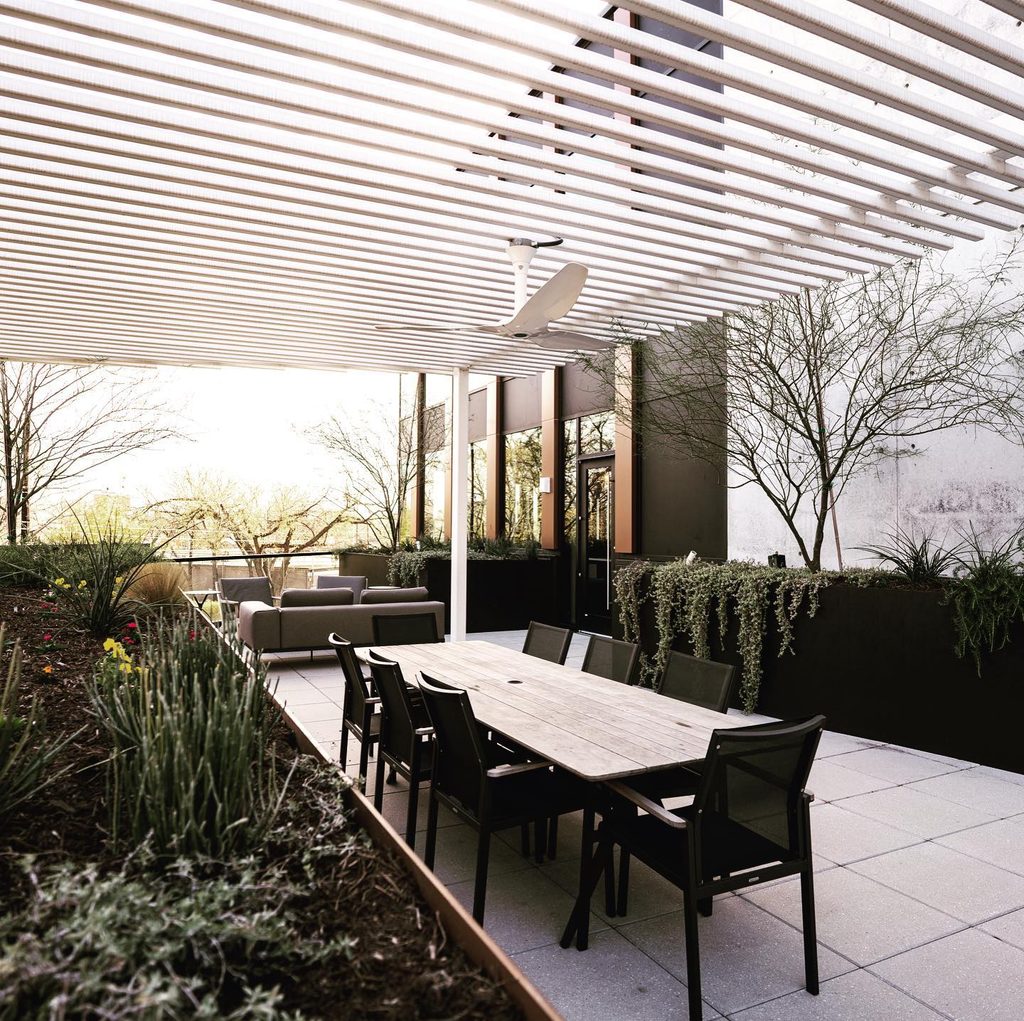
Credit: @sarabistudio
A pergola becomes much more welcoming when greenery grows around its edges. Planters can support climbing plants while also softening the structure, creating a shaded dining or sitting area that feels connected to the rest of the garden.
Choose plants according to the amount of light beneath the pergola and around its sides. Trailing plants can soften the edges of large containers, while upright plants can add privacy and help the structure feel more integrated with the rooftop.
Rooftop Planters Ideas With Raised Beds

Credit: @staghornnyc
Long raised planters can make a rooftop feel like a proper garden while keeping the planting organized. They are especially helpful when you want to combine ornamental plants, herbs, grasses, and small shrubs in one continuous planting area.
Wooden raised beds can bring warmth to concrete or stone terraces and work beautifully with simple outdoor furniture. Before installing them, make sure the roof structure can support the combined weight of the containers, soil, plants, and water.
Rooftop Planters Ideas With Succulents
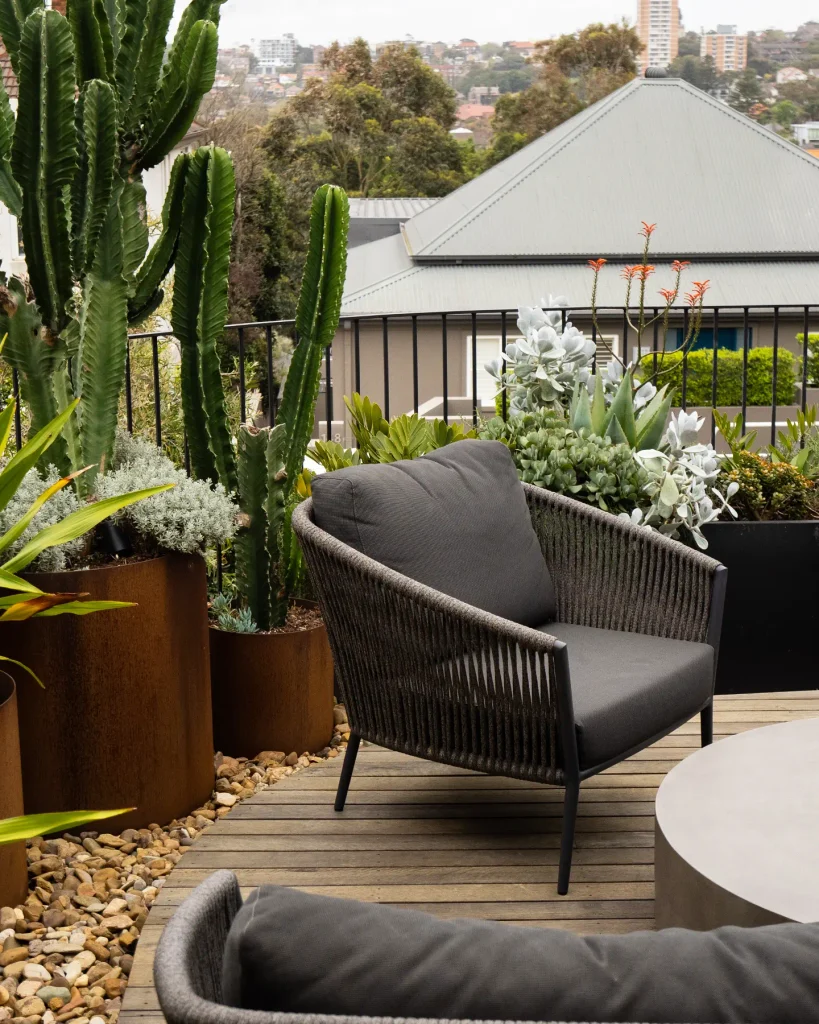
Credit: @stonelotuslandscapes
Succulents and architectural plants are a strong choice for sunny rooftops because their shapes add interest without needing a crowded planting scheme. Tall cactus forms can provide height, while smaller succulents fill the space around seating areas and paths.
This style works particularly well with large metal or stone containers. Add a layer of decorative gravel around the plants to keep the planting area visually tidy, and choose containers with excellent drainage to protect plants from excess moisture.
Choosing Plants For A Rooftop
The best rooftop planters Ideas begin with the conditions your plants will face every day. Rooftops often receive stronger sunlight, more wind, and greater temperature changes than sheltered garden spaces, so plant selection needs to be practical as well as attractive.
Start by watching your roof at different times of day. Notice which areas receive full sun, which corners get afternoon shade, and where wind seems strongest, then choose plants that match those conditions.
For sunny spaces, look at plants that naturally handle heat and bright light. Depending on your climate, possibilities can include lavender, rosemary, ornamental grasses, succulents, olives, citrus, agaves, and other plants suited to container growing.
Making Rooftop Planters Feel At Home
Good rooftop planters Ideas should support how you want to use the space. If the rooftop is mainly for dining, keep the center open and use plants around the edges, while a lounge area may benefit from taller containers placed behind chairs.
Scale matters when choosing containers. Tiny pots can disappear on a large terrace, while oversized containers can make a small rooftop feel crowded, so use the size of your outdoor furniture and available floor area as a guide.
Think about repetition when selecting materials. Using the same terracotta, wood, black, or neutral container finish several times can make separate planting groups feel connected.
You can also create rhythm by repeating plant shapes. For example, several upright trees can frame a dining area, while rounded shrubs can soften the corners and grasses can fill gaps between larger containers.