
Live Beautifully at Home


12 Stunning playroom storage ideas To Keep Toys Organized

Image Notice. Some images featured in this article may originate from third-party sources and are used for illustrative purposes only. Please review our Image Credits Policy for full attribution information.
A well planned playroom can make busy days feel much easier, and the right playroom storage ideas can help every toy find a natural home. When storage is simple enough for children to understand, putting things away becomes part of everyday play instead of a big task at the end of the day.
Good storage also needs to work with the way your family uses the room. Open shelves make favorite toys easy to reach, drawers hide smaller pieces, and labeled containers help everyone know where things belong without making the room feel too strict.
The best playroom storage ideas balance function with the relaxed feeling a child needs. You can create a space that holds building pieces, books, art supplies, dolls, pretend play toys, and everyday favorites while still leaving plenty of room for creativity.
Playroom Storage Ideas For Cleanup
Credit: @anni.und.die.bande
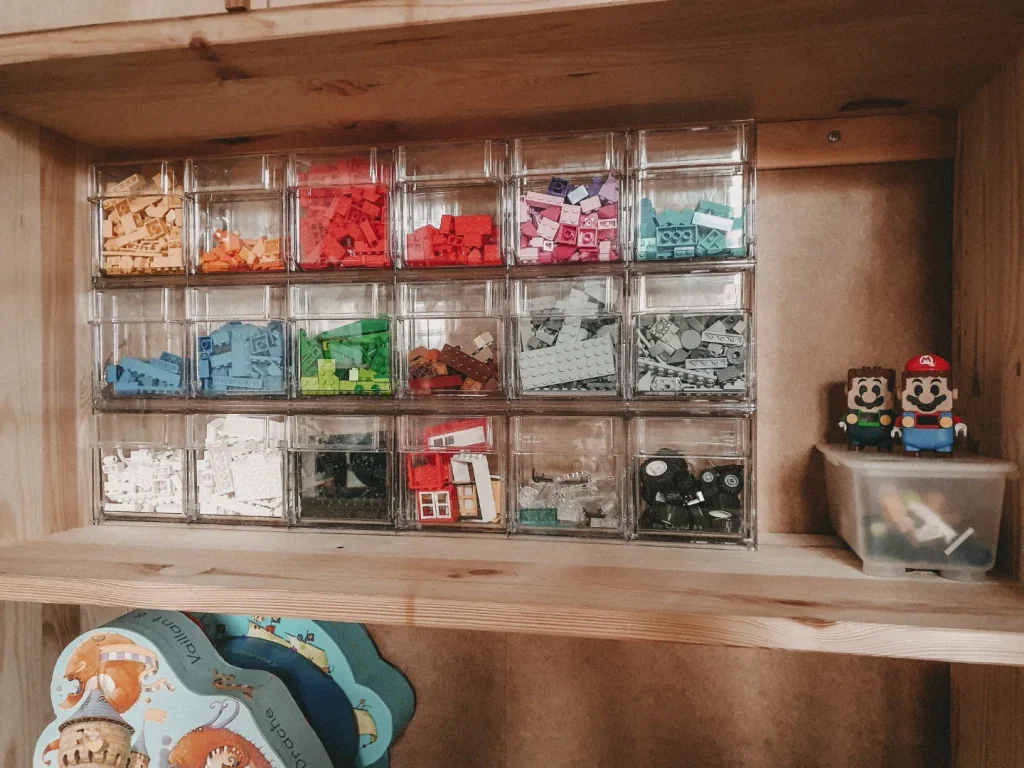
Color sorting can turn a large collection of building pieces into a system that feels easy to understand. With playroom storage ideas like clear containers grouped by color, children can quickly see where pieces belong and find the colors they need for their next creation.
Choose shallow containers when small pieces are involved, because children can see the contents without emptying the entire box. Clear acrylic organizers can also work beautifully for this purpose, and stores such as The Container Store offer many sizes that can be mixed and matched.
Playroom Storage Ideas For Reading
Credit: @byjc_minis
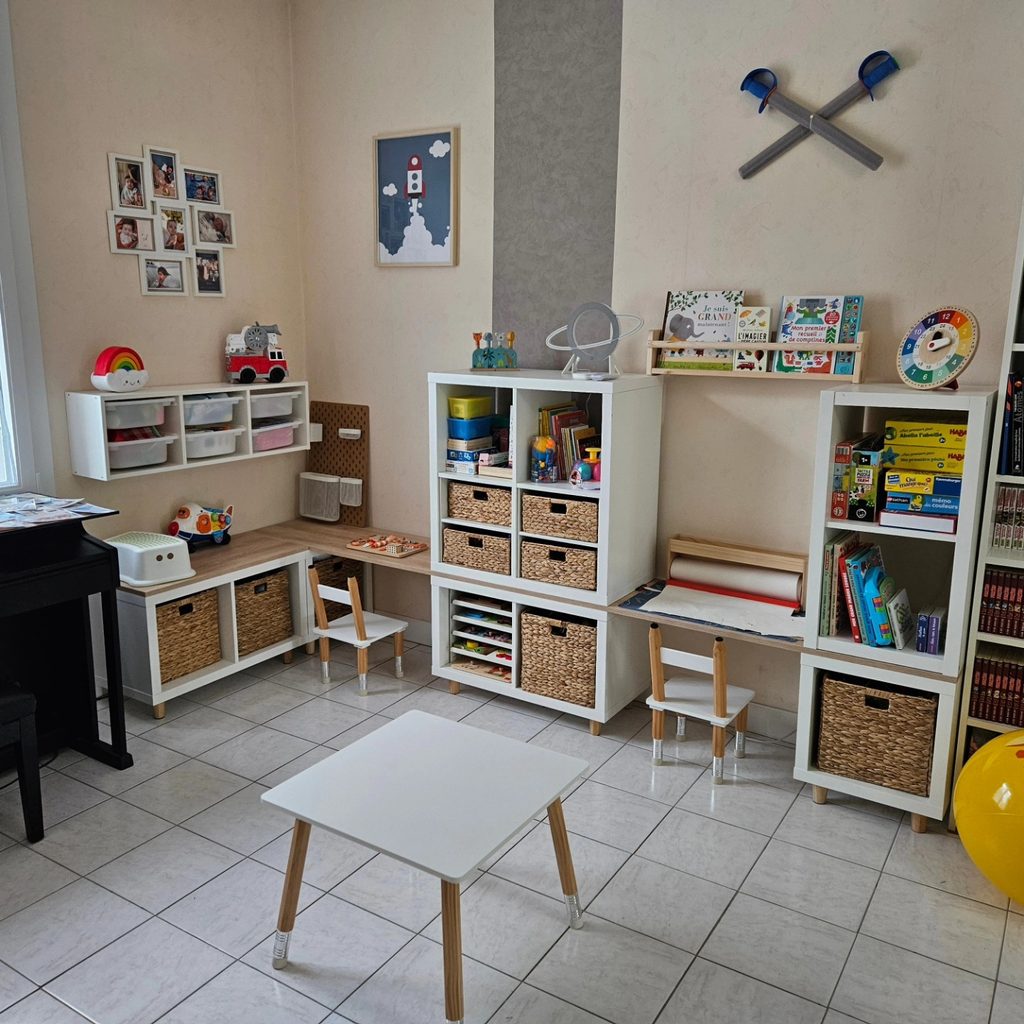
A playroom becomes more useful when books have a dedicated place alongside toys. This approach to playroom storage ideas keeps reading material visible and gives children a quiet activity they can reach without opening a cabinet or searching through a large bin.
Use cube shelving to create separate homes for books, baskets, games, and small toys. Add a comfortable chair or floor cushion nearby, then keep the shelves low enough for children to browse independently, which makes book storage Ideas feel like part of the play area instead of a separate task.
Creative Work Storage Station
Credit: @drashleysoderlund
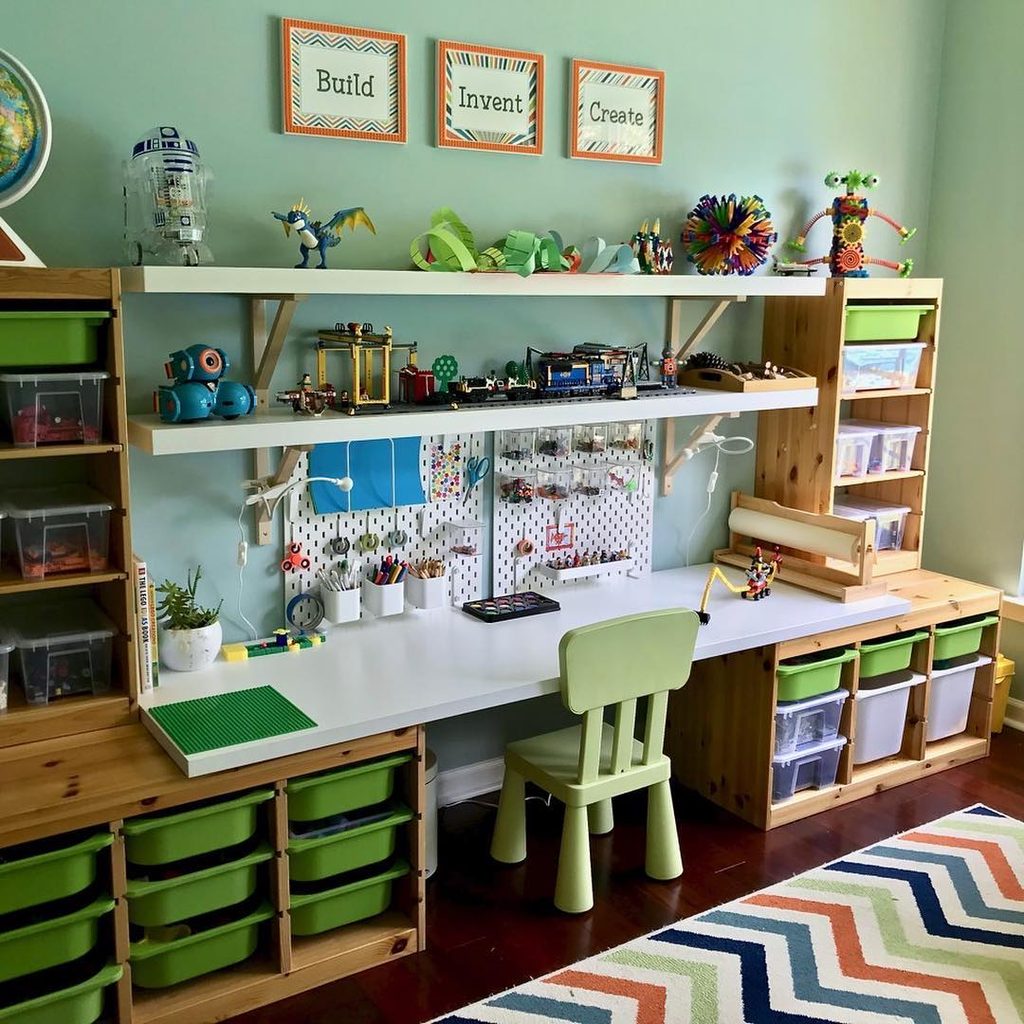
A dedicated creative station can give drawing, building, cutting, and crafting a clear home. This is one of the most useful playroom storage ideas when your child enjoys making things, because supplies can stay close to the work surface without spreading across the entire room.
Use shallow drawers or small containers for pencils, paper, scissors, blocks, and other supplies. A pegboard above the desk can hold frequently used tools, while lower shelves can store larger materials, making the whole station easy to reset when creative time is finished.
Clear Bins With Simple Labels

Credit: @house.of.prim
Clear containers are especially useful when a playroom holds many different types of toys. One of the smartest playroom storage ideas is to combine transparent bins with simple labels, so children can identify what belongs inside without pulling every container from the shelf.
Labels can be written words, pictures, or both, depending on the child’s age. Categories such as dolls, cars, art, figures, and dress up supplies make toy storage ideas much easier to maintain because each category has a clear place to return to.
Natural Baskets For Open Shelves

Credit: @lets.play.all.day
Woven baskets bring warmth to a playroom while hiding toys that do not need to stay on display. They are especially helpful when you want playroom storage ideas that feel softer and more decorative than rows of plastic containers.
Choose baskets that are large enough to hold a useful category but small enough for a child to carry. Natural materials also pair beautifully with wooden toys, neutral shelves, and colorful play pieces, creating a room that feels calm without taking away its playful character.
Tall Storage With Colorful Bins
Credit: @lilsspotlb
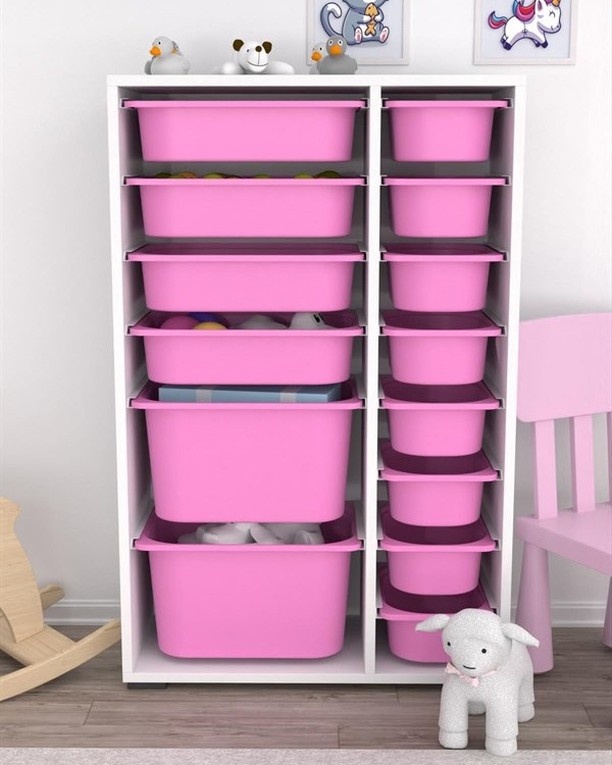
Vertical shelving makes excellent use of wall space when floor area is limited. Tall furniture can hold several levels of toys while keeping the footprint small, making it one of the most practical playroom storage ideas for bedrooms, apartments, or compact playrooms.
Use larger bins toward the bottom and smaller containers higher up. Bright colors can add personality, while a simple white or neutral shelf keeps the overall arrangement easy to live with and easy to update as toy collections change.
Staggered Shelves For Easy Access
Credit: @lilsspotlb
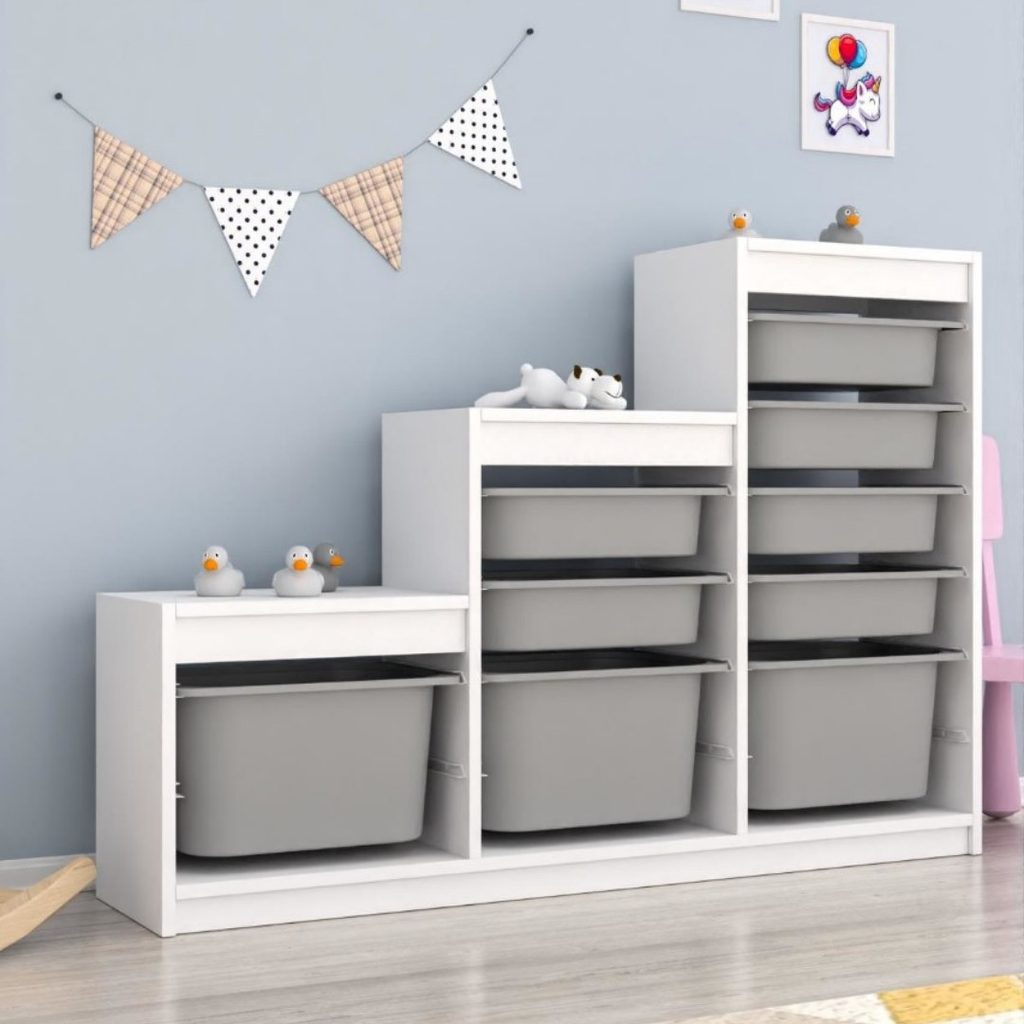
Different shelf heights can make storage easier for children of different ages. Lower sections can hold everyday toys, while taller sections can be reserved for books, decorative pieces, or activities that need adult supervision.
This style works well when you want playroom storage ideas that grow with your child. Start with large bins for younger children, then replace some containers with smaller labeled boxes as their interests become more specific and their ability to sort improves.
Low Drawers For Young Children

Credit: @mama_assia__
Low drawers are a strong choice for toddlers because they allow children to see and reach their toys without climbing. This makes playroom storage ideas feel more natural because the storage system is designed around the child’s height instead of the adult’s.
Use wide drawers for soft toys, vehicles, blocks, and pretend food, then reserve smaller sections for tiny objects. Drawers can also keep visual clutter under control when the room needs to feel calm after playtime.
Sort Building Pieces By Type
Credit: @melsbrickworld
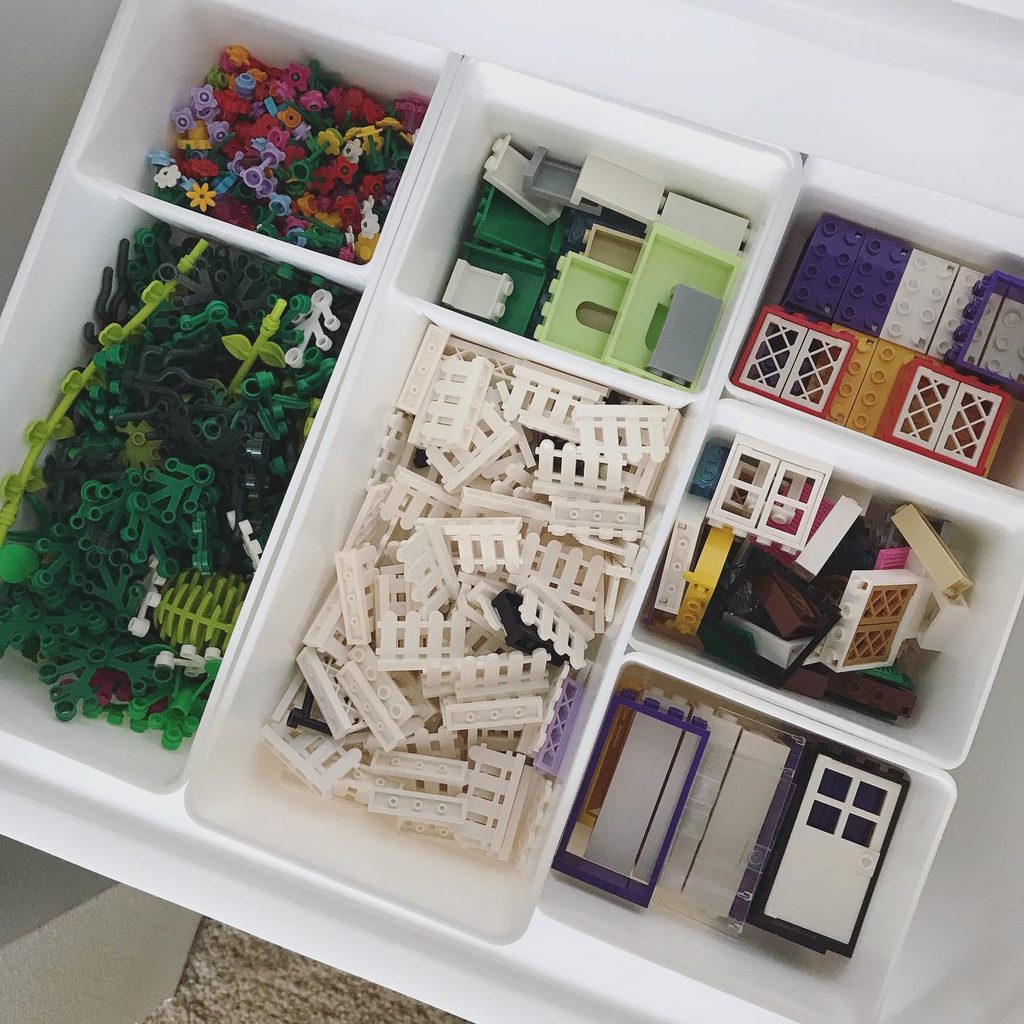
Building toys become much easier to use when the pieces are sorted by their purpose. Separate containers for doors, windows, wheels, plants, fences, figures, or special pieces can make future building sessions faster and more enjoyable.
This is one of the most useful playroom storage ideas for children who spend a lot of time building detailed creations. Small divided boxes work especially well because they prevent tiny pieces from becoming one large collection that has to be searched every time.
Custom Shelves For Small Spaces

Credit: @ramy.meuble
A custom storage unit can turn an awkward wall or narrow corner into valuable toy storage. When shelves are designed around the available width and height, you can fit bins, books, toys, and display pieces into one organized area.
If a custom unit is outside your budget, look for modular cube shelves that can be arranged to fit the room. Add baskets or plastic containers inside the cubes, and keep a few sections open for favorite toys that deserve to remain visible.
Labeled Bins For Toy Categories
Credit: @scottsdaleneat
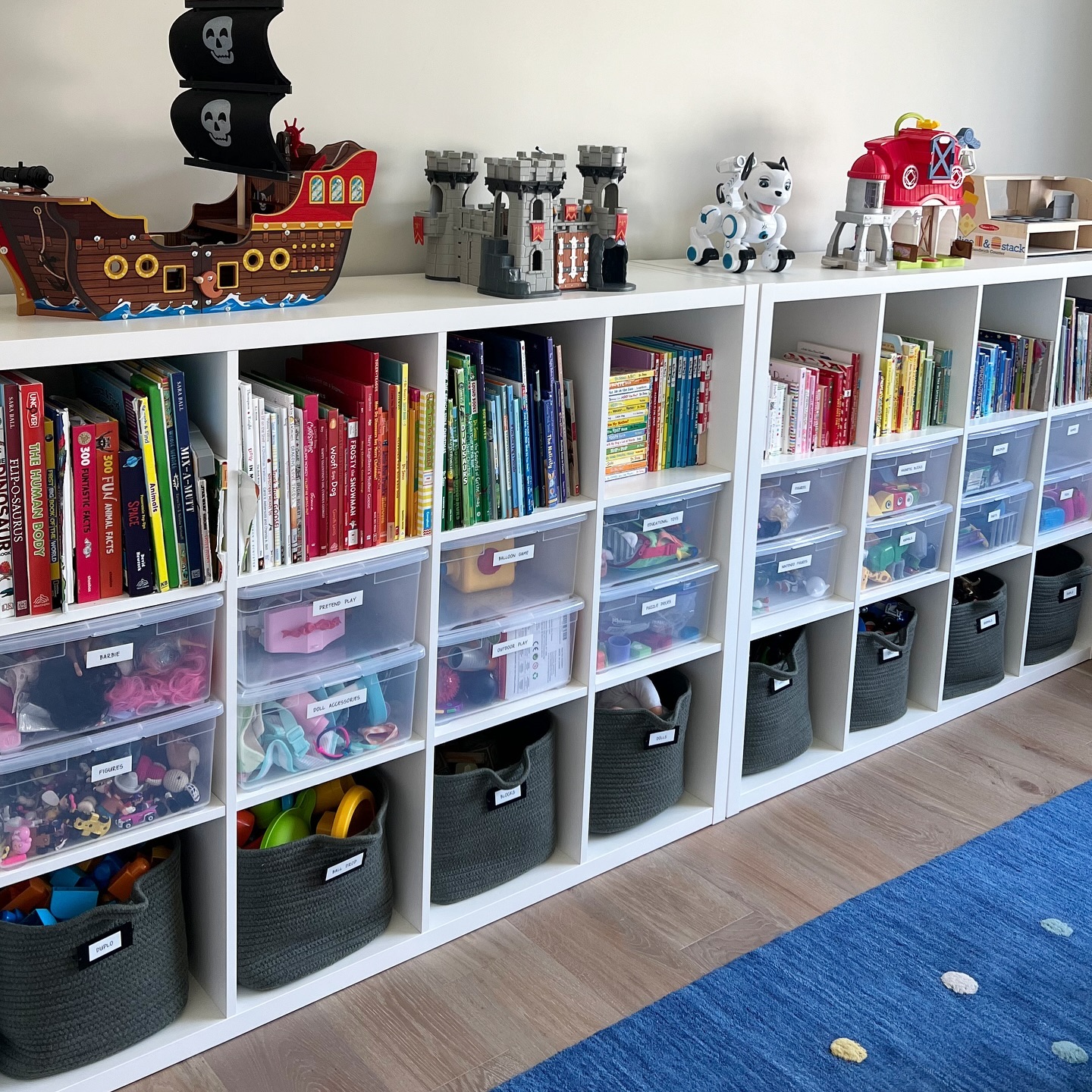
A large shelf becomes much easier to maintain when every container has a clear purpose. This approach to playroom storage ideas works especially well for families with many toy categories because it gives each group a permanent home.
Keep labels short and easy to understand. Words such as cars, dolls, puzzles, animals, blocks, and outdoor toys are enough, and picture labels can help younger children connect the category with the correct container.
Crates For Flexible Storage
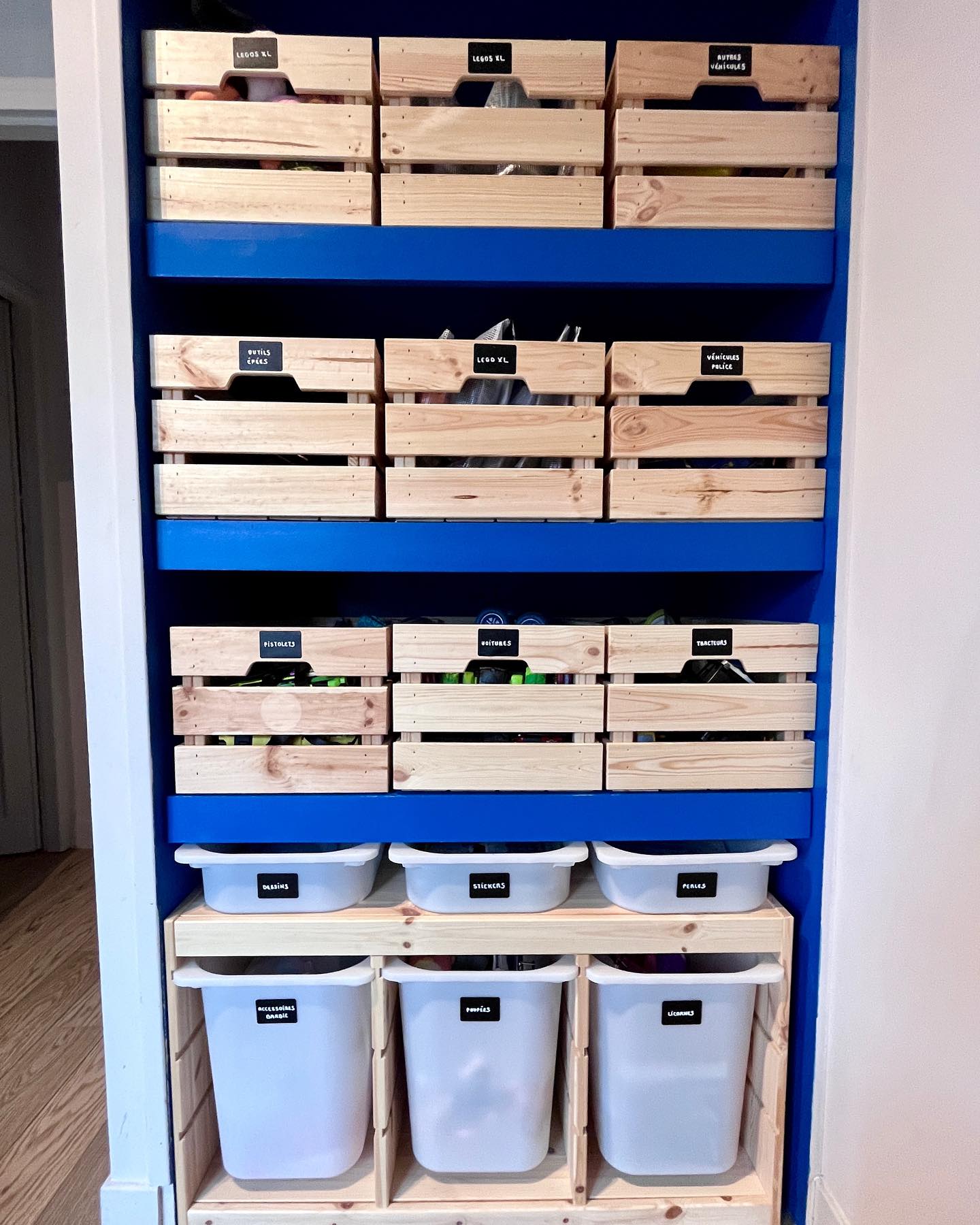
Credit: @sissti.organise
Wooden crates offer flexible storage that can be moved as the playroom changes. They work especially well for larger toys because the open front makes it easy to see what is inside while the solid structure keeps the storage area visually organized.
Painted crates can add a strong color accent, while unfinished wood gives the room a softer natural feel. You can also label each crate according to its current use and change the labels later when your child’s interests change.
Create Zones For Different Activities
A good storage system works best when the room is divided into simple activity zones. Keep books near the reading area, art supplies near the creative table, building pieces close to the building surface, and pretend play items together.
This approach makes playroom organization ideas easier to maintain because children do not have to carry toys across the whole room before putting them away. It also helps the room feel more predictable, especially when several children use the same space.
Make Small Toys Easier To Find
Tiny toys often create the biggest storage problem because they can disappear into large bins and become difficult to sort. Use shallow containers, divided trays, or small boxes inside larger drawers so little pieces remain grouped together.
For craft materials, craft storage ideas such as divided containers can keep beads, stickers, buttons, crayons, and other small supplies separated. Choose containers with secure lids for pieces that are not suitable for very young children, and always follow the age guidance that comes with the toy.
Choose Storage That Grows With Your Child
The best playroom system should not need to be replaced every year. Look for shelves, baskets, drawers, and bins that can change purpose as your child grows, because the toys may change but the need for simple storage will remain.
A low cube shelf might begin with large baskets for baby toys and later hold books, puzzles, art supplies, or collections. This flexibility makes playroom storage ideas more practical over time and helps you avoid buying completely new furniture whenever interests change.
Think about access when choosing each storage level. Everyday toys should stay within easy reach, while fragile objects, tiny pieces, and materials that need supervision should be stored higher.
A useful system also leaves room for change. Children often move quickly from one interest to another, so avoid assigning every shelf permanently to one category.
Build A Simple Reset Routine
A playroom stays easier to manage when cleanup happens in small moments throughout the day. Instead of waiting until the room is completely covered in toys, return a few categories to their containers whenever an activity ends.
Give each category a clear home and keep the system consistent. If cars always belong in one bin and books always return to one shelf, children can learn the routine without needing a long explanation each time.
Try to keep the number of storage categories reasonable. Too many labels can make cleanup confusing, especially for younger children who may understand broad groups better than very specific ones.
A five minute reset at the end of the day can also help the room start fresh the next morning. The goal is not perfect order, but a storage system that makes returning toys simple enough to repeat.
A thoughtful playroom should make room for creativity without allowing clutter to take over. With shelves, bins, baskets, drawers, and clear categories, your playroom storage ideas can support both everyday play and easier cleanup.
The most successful systems are the ones children can understand and adults can maintain. When every toy has a sensible home, the room can stay welcoming, useful, and ready for the next round of play.

[…] kids shared bedroom ideas, storage can also help create a sense of ownership. Give each child a drawer, shelf, basket, or […]