
Live Beautifully at Home


How to Organize Kitchen Cabinets So Everything Has a Place
 Rhonda
My Blue Creek Home Founder & Editor
I spent over 12 years in decorative painting and faux finishing, starting with a faux finishing company I co-owned in Mississippi that...
November 18, 2026
12 min read
Leave a comment
Image Notice. Some images featured in this article may originate from third-party sources and are used for illustrative purposes only. Please review our Image Credits Policy for full attribution information.
There is something frustrating about opening a kitchen cabinet and having three things fall out before you can reach the one you need. Maybe the mugs are crowded together, the food containers have lost their lids, or the spices are hiding behind bags of pasta. You tidy everything up, close the doors, then somehow find yourself dealing with the same mess a few weeks later. I think this is one of those home problems that takes up more mental space than we realize.
Learning how to organize kitchen cabinets is not about buying matching containers or making every shelf look like a picture from a magazine. It is about making everyday cooking feel less stressful. I love a kitchen where everything has a sensible place, where I can reach for a plate without moving five other things, and where putting groceries away does not feel like a puzzle.
The secret is to give every cabinet a purpose before you start moving things around. Once you understand what belongs where, even a small kitchen can feel more spacious.
Why I Would Give Every Kitchen Cabinet a Clear Purpose
Credit: Canva
A cluttered kitchen often happens because things end up wherever there is an empty space. Baking supplies sit beside drinking glasses, cooking utensils get mixed with serving pieces, and food containers take over an entire shelf.
The problem is not always a lack of storage. Sometimes the storage we already have is simply being used in the wrong way.
When I think about how to organize kitchen cabinets, I focus on making the kitchen work around everyday habits. The things you reach for several times a day deserve the easiest spots to access. Items used once or twice a month can live higher up or farther back.
This small change makes a difference. You spend less time searching, you can see what you own, and putting everything away becomes much easier.
My Quick Tips for a More Organized Kitchen
These are the little things I would keep in mind before starting.
- Keep everyday plates, bowls, and glasses close to the dishwasher or sink.
- Store heavy pots and pans on lower shelves where they are easier to lift.
- Use shelf risers to create a second level for mugs, bowls, and canned food.
- Keep food containers together with their lids stored vertically.
- Leave a little breathing room on every shelf so items are easy to remove.
What I Would Gather Before Getting Started
You do not need an expensive collection of organizers to get started. I would begin with a few useful basics and add more only after measuring the cabinets.
- Cleaning cloths and mild dish soap, approximately $3 to $8.
- Clear storage bins, approximately $5 to $15 each.
- Adjustable shelf risers, approximately $10 to $20.
- Drawer dividers, approximately $8 to $18.
- A turntable for oils, sauces, or spices, approximately $8 to $15.
- Stackable food storage containers, approximately $15 to $30 for a set.
- Labels and a marker, approximately $4 to $8.
- Measuring tape, approximately $3 to $7.
Prices are general US retail estimates and vary by store, size, and material.
I would also prepare three bags or boxes before opening the cabinets. One is for items to keep, one is for donations, and one is for anything that needs to be recycled or thrown away.
How I Would Start Organizing Kitchen Cabinets Without Feeling Overwhelmed
The first thing I would do is choose one cabinet. Not the entire kitchen, not every drawer, just one small area.
This matters because emptying every cabinet at once can leave you surrounded by dishes, food packets, and kitchen equipment with nowhere to put them. It is much easier to finish one area before moving to the next.
Start with a cabinet that causes daily frustration. Perhaps it is the one holding your plates, the cabinet underneath the sink, or the crowded space where you keep food containers.
Take everything out and place it on a clean counter or table. Seeing everything together helps you notice how much you own. You may find several similar mugs, unopened kitchen gadgets, or serving dishes you have not touched in years.
Before putting anything back, wipe the shelves with warm water and a little mild dish soap. Pay attention to the corners where crumbs and dust collect. Let the shelves dry completely.
How I Decide What Deserves the Best Cabinet Space
One thing I notice about kitchen storage is that people often give the prettiest dishes the easiest shelves while everyday items get pushed into awkward corners.
For example, I would place everyday plates and bowls on shelves between waist and shoulder height. Glasses and mugs can sit nearby, especially if that cabinet is close to the dishwasher.
Heavy cookware belongs on lower shelves. Baking trays can stand vertically in a suitable divider, making them easier to remove without lifting a whole stack.
Here is a simple arrangement I like:
| Cabinet location | What I would store |
|---|---|
| Lower shelves | Pots, pans, heavy bowls |
| Middle shelves | Plates, bowls, everyday glasses |
| Upper shelves | Serving dishes, occasional items |
| Narrow cabinets | Spices, oils, small supplies |
| Deep cabinets | Appliances used less often |
The goal is to make every movement feel natural. You should not have to cross the entire kitchen just to find a mixing bowl.
How I Would Organize Kitchen Cabinets With Simple Storage Solutions
Once the cabinets are clean and everything has been sorted, I would look at the shelves themselves.
Most kitchen cabinets have more usable space than we think. The problem is that one shelf often becomes a crowded pile of items stacked on top of each other.
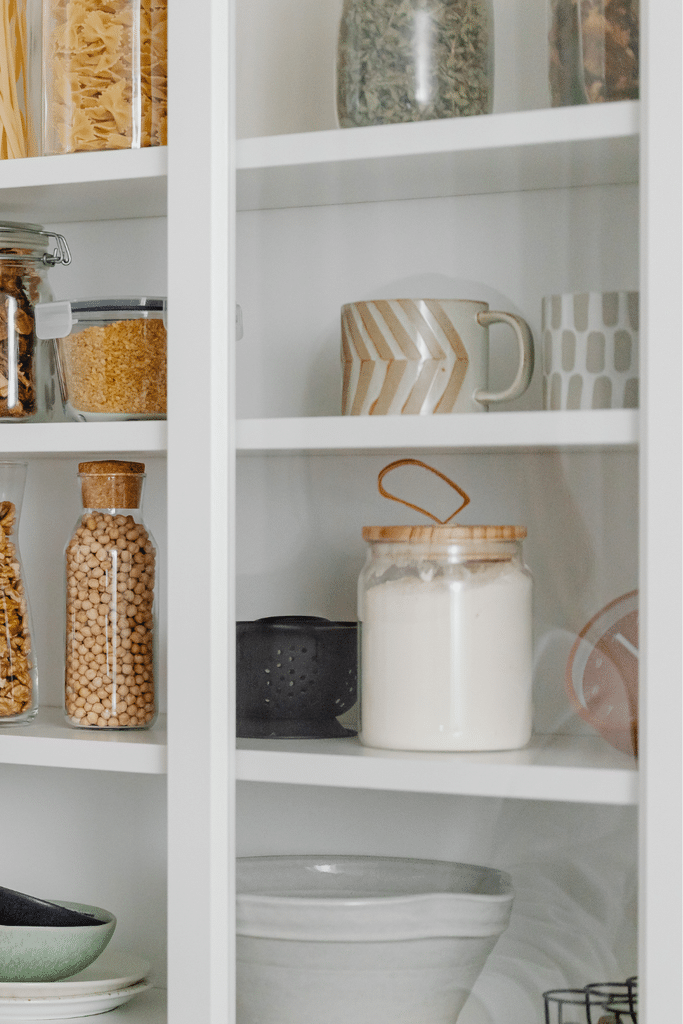
Clear storage bins are especially useful for grouping smaller items. You can use them for baking supplies, snack packets, tea bags, or food preparation accessories.
My preference is to choose a few matching bins in different sizes. Buying an entire set before knowing what you need often creates more clutter.
Credit: Canva
How I Keep Plates, Glasses, and Mugs Easy to Reach
Dishes are some of the most frequently used items in a kitchen, so I would give them a cabinet that is easy to access.
Start by separating everyday dishes from special occasion pieces.
Keep dinner plates together, followed by smaller plates and bowls. If you have several sizes, stack the same sizes together to prevent awkward piles.
A good rule is to avoid stacking more plates than you can comfortably lift. For most everyday dishes, stacks of six to eight plates are manageable, depending on their weight and shelf height.
If your shelves are tall, a small shelf riser can help you store smaller plates above larger ones.
Mugs need a little attention too. They tend to multiply, especially when you collect different colors or styles.
How I Would Arrange Pots, Pans, and Cooking Supplies
Pots and pans can be some of the hardest items to organize because they are bulky, heavy, and often awkwardly shaped.
I would start by placing the largest cookware on the bottom shelf. This keeps the weight low and makes lifting safer.
Next, group pans by size. Small saucepans can sit together, while larger cooking pots can be placed toward the back of the cabinet.
If you have enough vertical room, pan organizers are a useful purchase. They allow baking sheets, cutting boards, and frying pans to stand upright.
This is one of my favorite storage improvements because it prevents the familiar problem of lifting an entire pile just to reach the pan underneath.
How I Make Pantry Cabinets Feel Less Crowded
Food storage can become messy surprisingly quickly. A new grocery bag arrives, something gets pushed toward the back, and suddenly you have forgotten about three packets of pasta.
The easiest way to prevent this is to group food by category.
I would create separate areas for breakfast foods, baking ingredients, pasta and rice, canned goods, snacks, and cooking essentials.
Clear bins make these groups easier to manage. They are especially useful for small packets that tend to slide around.
For dry ingredients, airtight containers can help protect food from moisture and pests. I like containers with wide openings because they are easier to fill and scoop from.
How I Organize Kitchen Cabinets in a Small Kitchen
Small kitchens need a little more thought because every shelf matters.
I would start by removing anything that does not belong in the kitchen. Paperwork, random household items, and things that have no connection to cooking can quickly take over valuable storage.
Next, look at the unused vertical space.
A shelf that holds only a few short glasses may have enough height for an additional riser. A deep corner cabinet may work better with a rotating organizer.
A narrow pull out organizer can be useful beside a refrigerator or between cabinets. It is a good place for bottles, spices, or other slim items.
If your kitchen has awkward corner cabinets, consider a suitable lazy Susan. It makes reaching items in the back much easier.
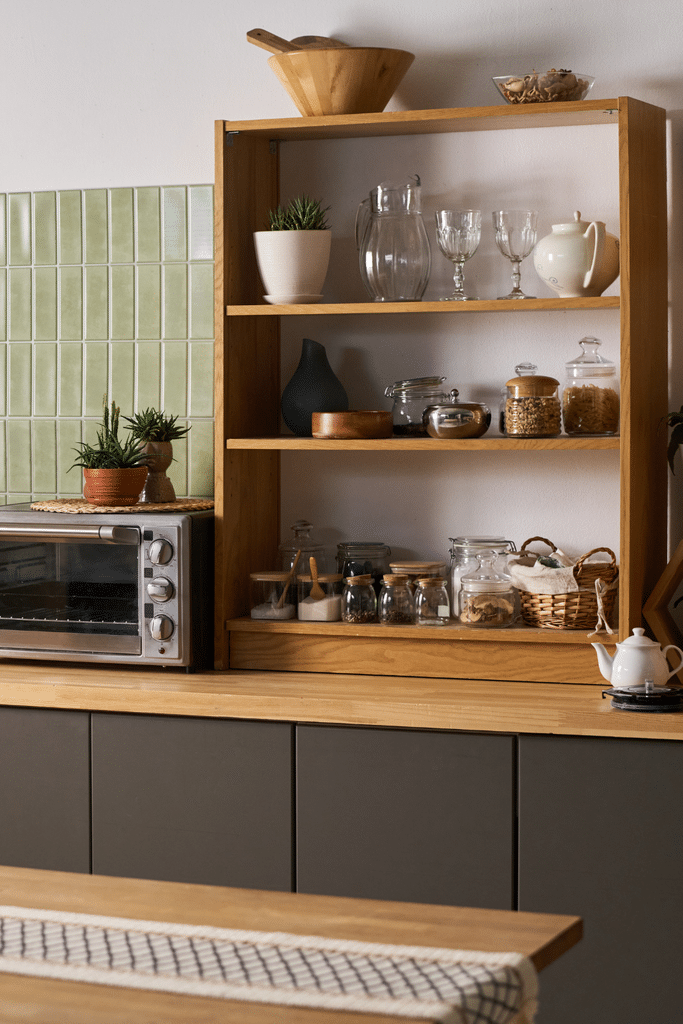
I would also keep countertops as clear as possible. A little open counter space makes food preparation feel more comfortable.
Credit: Canva
How I Keep Spices and Everyday Ingredients in Order
Spices are small, but they can create a surprisingly frustrating storage problem.
Different packet sizes, jars, and bottles rarely fit together neatly. Before long, the spices you need are hiding behind several others.
I would choose one storage method and stick with it.
If you use spices regularly, a tiered shelf organizer is a practical choice. It allows you to see the labels without moving every jar.
A shallow drawer can also work well with angled inserts. This keeps jars visible and prevents them from rolling around.
For a cabinet, a small turntable is useful for frequently used seasonings.
Group spices by how you cook. Everyday seasonings can sit together, while baking spices such as cinnamon, nutmeg, and cloves can have their own small section.
How I Make the New Organization Easy to Maintain
The real test of kitchen organization is not how the shelves look on the first day. It is whether you can keep them that way during a busy week.
I would give every category a clear home and make sure everyone who uses the kitchen can understand the arrangement.
Labels can help, especially inside pantry cabinets. They do not need to be decorative or complicated. Simple words such as pasta, baking, breakfast, and snacks are enough.
Try to avoid making storage systems too strict. If putting something away requires opening several containers or moving other items, the arrangement may not work for everyday life.
What I Would Avoid When Organizing Kitchen Cabinets
There are a few common mistakes that can make a beautifully arranged kitchen difficult to use. These are the things I would watch out for.
Buying organizers before measuring
It is tempting to purchase matching baskets and containers first. But an organizer that is too wide, too tall, or too deep can waste valuable space. Measure each shelf before spending money.
Storing heavy items on high shelves
Large pots, heavy appliances, and tall stacks of dishes are difficult to lift overhead. Keep the heavier items low, especially if the cabinets are deep.
Keeping too many containers
Food storage containers have a habit of multiplying. Keep matching bases and lids together, recycle damaged pieces, and avoid saving every takeaway container.
Making everything look pretty but difficult to use
Matching labels and glass jars are lovely, but they are not the most important part. If you cannot easily reach the things you use every day, the system needs changing.
How I Know My Kitchen Cabinets Are Finally Working
I think the nicest part of organizing kitchen cabinets is the feeling you get when everything becomes easier.
You open a door and know where the plates are. You can reach the saucepan without moving a pile of other things. You see the ingredients you already have, which makes planning meals less stressful.
That is what I would aim for.
A well organized kitchen does not need expensive custom cabinets or perfectly matching containers. It needs a little planning, a sensible arrangement, and storage that fits the way you live.
If you are working with a small budget, start with what you already own. Reuse sturdy boxes, adjust your shelves, and only buy organizers when you can see exactly what problem they will solve.
I would much rather have a simple cabinet that works beautifully than a shelf full of expensive accessories that look good but make everyday cooking harder.
Frequently Asked Questions About Organizing Kitchen Cabinets
How do I organize kitchen cabinets on a small budget?
I would start by removing unused items and rearranging what you already own. Reuse small boxes for grouping supplies, then spend money only on useful pieces such as shelf risers or drawer dividers.
What should I put in upper kitchen cabinets?
I like keeping lightweight dishes, mugs, glasses, baking supplies, and occasional serving pieces in upper cabinets. Heavy pots and appliances are safer and easier to access on lower shelves.
How often should I reorganize kitchen cabinets?
I would do a quick check every month and a deeper clean every three to six months. This gives you time to remove expired food, adjust storage, and get rid of items that are no longer useful.
What is the best way to organize kitchen cabinets without buying organizers?
My favorite approach is to group similar items, stack dishes by size, store lids vertically, and use existing boxes or baskets to contain smaller supplies. Good organization starts with giving everything a clear place, not with spending money.