
Live Beautifully at Home


Modern Entryway Shoe Storage Ideas That Make Small Spaces Work Better
 Rhonda
My Blue Creek Home Founder & Editor
I spent over 12 years in decorative painting and faux finishing, starting with a faux finishing company I co-owned in Mississippi that...
September 21, 2026
9 min read
5 Comments
Rhonda
Rhonda
My Blue Creek Home Founder & Editor
I spent over 12 years in decorative painting and faux finishing, starting with a faux finishing company I co-owned in Mississippi that...
September 21, 2026
9 min read
5 Comments
Image Notice. Some images featured in this article may originate from third-party sources and are used for illustrative purposes only. Please review our Image Credits Policy for full attribution information.
When your front door opens into a pile of shoes, the whole entry can feel crowded before you even notice the rest of the room. Entryway Shoe Storage Ideas can give every pair a clear home while making the space easier to use every day.
The best storage does not need to feel like a storage room. A built in bench, a slim cabinet, open cubbies, or a simple wooden rack can become part of the room while keeping everyday footwear close to the door.
Think about how you leave and enter your home before choosing a piece. If you usually sit to remove shoes, seating can make the routine easier, while a narrow hallway may benefit from vertical storage that uses wall space instead of valuable floor area.
Good storage also makes cleaning simpler. When shoes have a specific place to return to, the floor stays clearer and the entry feels calmer without requiring a complicated organizing system.
Built In Entryway Shoe Storage Ideas
Credit: @starlightbedrooms
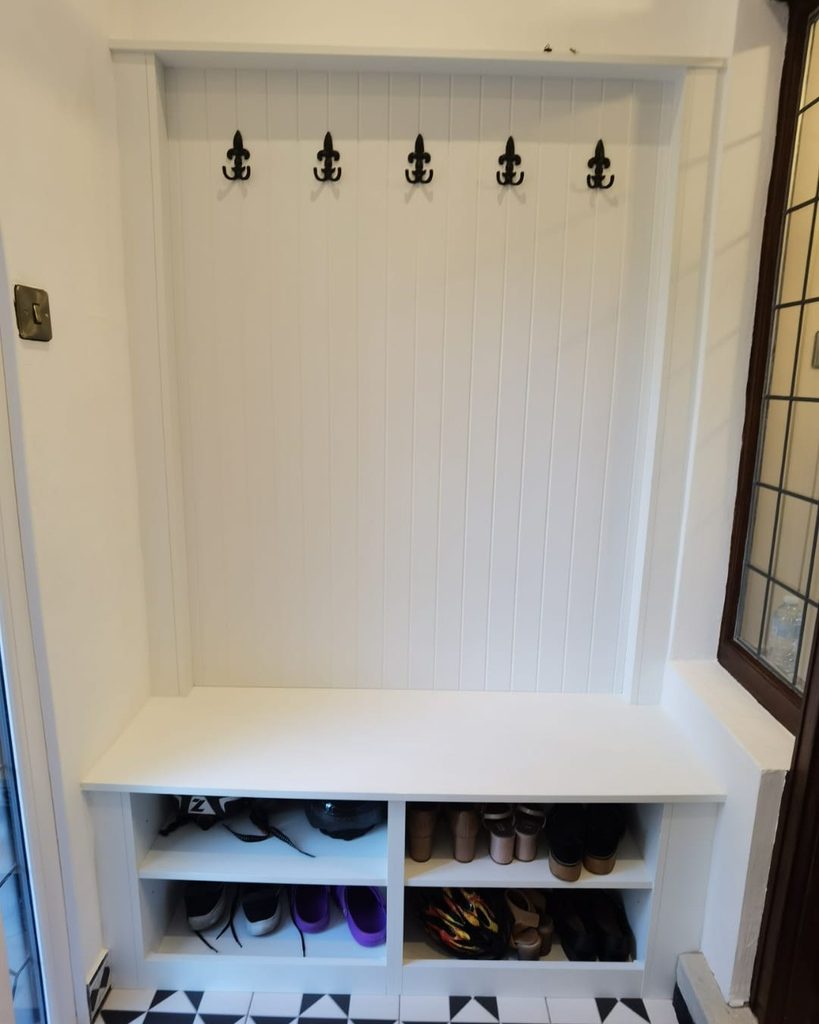
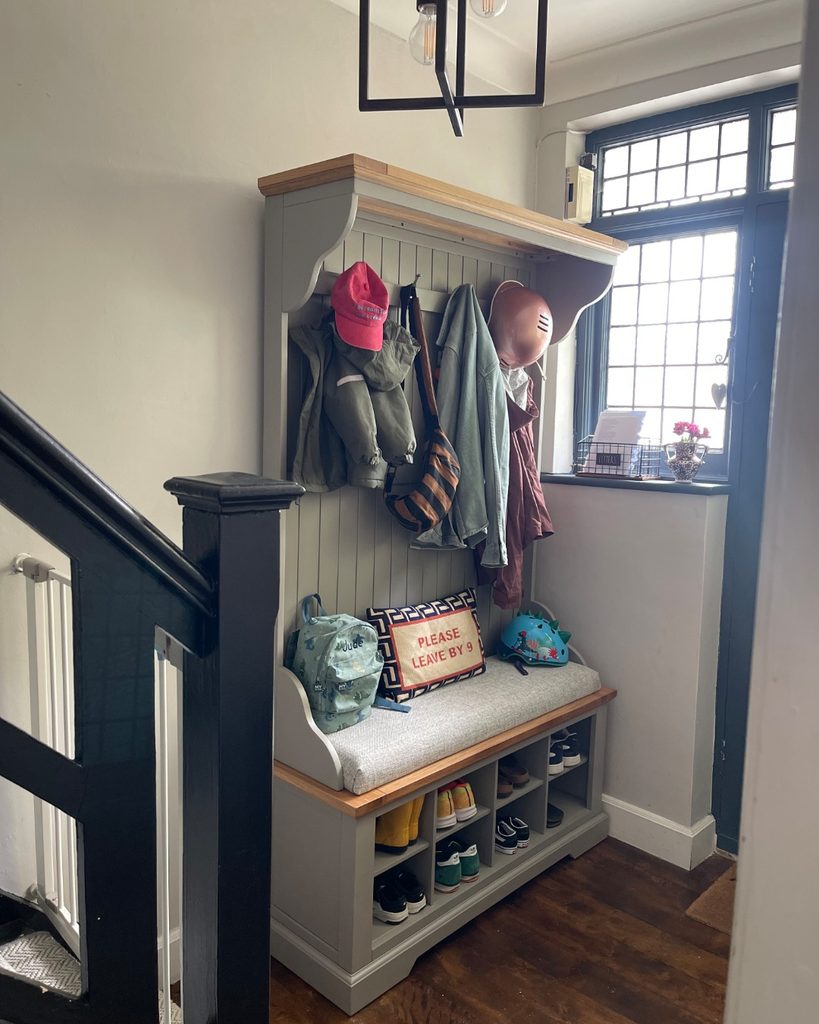
A built in bench creates a useful landing place for shoes, bags, and daily accessories without making the entry feel crowded. This type of Entryway Shoe Storage Ideas setup works especially well when you want seating and storage to share the same footprint, as shown in many built in entryway designs.
Use open cubbies below the seat for the pairs your household reaches for every day. Hooks above the bench can hold coats and bags, while the countertop gives you a comfortable place to sit and remove shoes before heading farther into the house, as seen in this Houzz storage guide.
Tall Tilt Out Shoe Cabinet
Credit: @bala_furniture
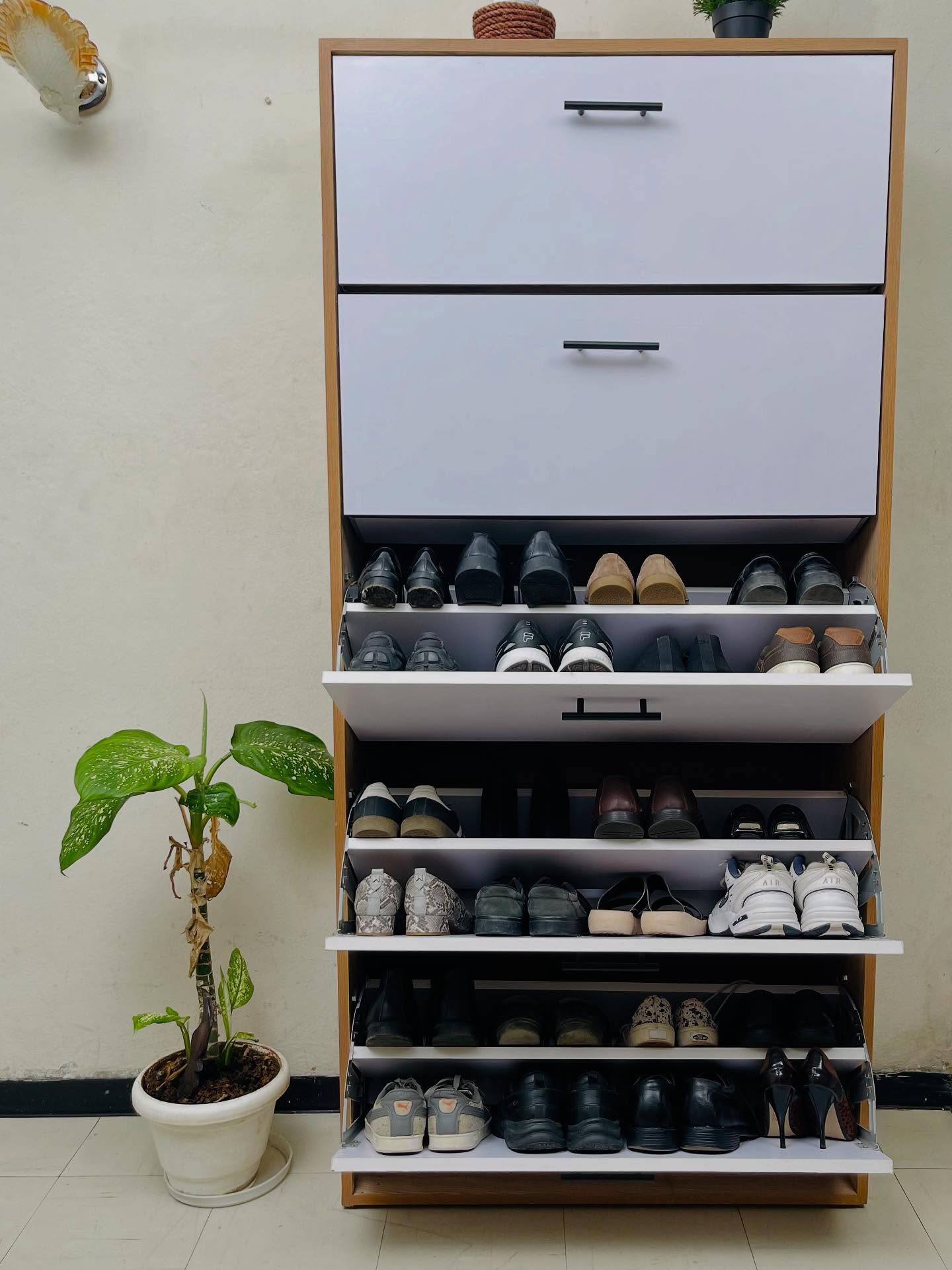
A tall cabinet makes excellent use of vertical space when the floor area near your door is limited. Entryway Shoe Storage Ideas like this keep several rows of footwear organized while the closed fronts help the room feel visually quieter, similar to the compact cabinets featured in IKEA shoe storage ideas.
This style can be especially useful for homes with many pairs because several compartments can be stacked into one narrow footprint. Before choosing a tall unit, measure the ceiling height and make sure the cabinet can be securely anchored, as recommended for tall storage furniture in this IKEA cabinet guide.
Soft Neutral Storage Bench
Credit: @ml_architecte
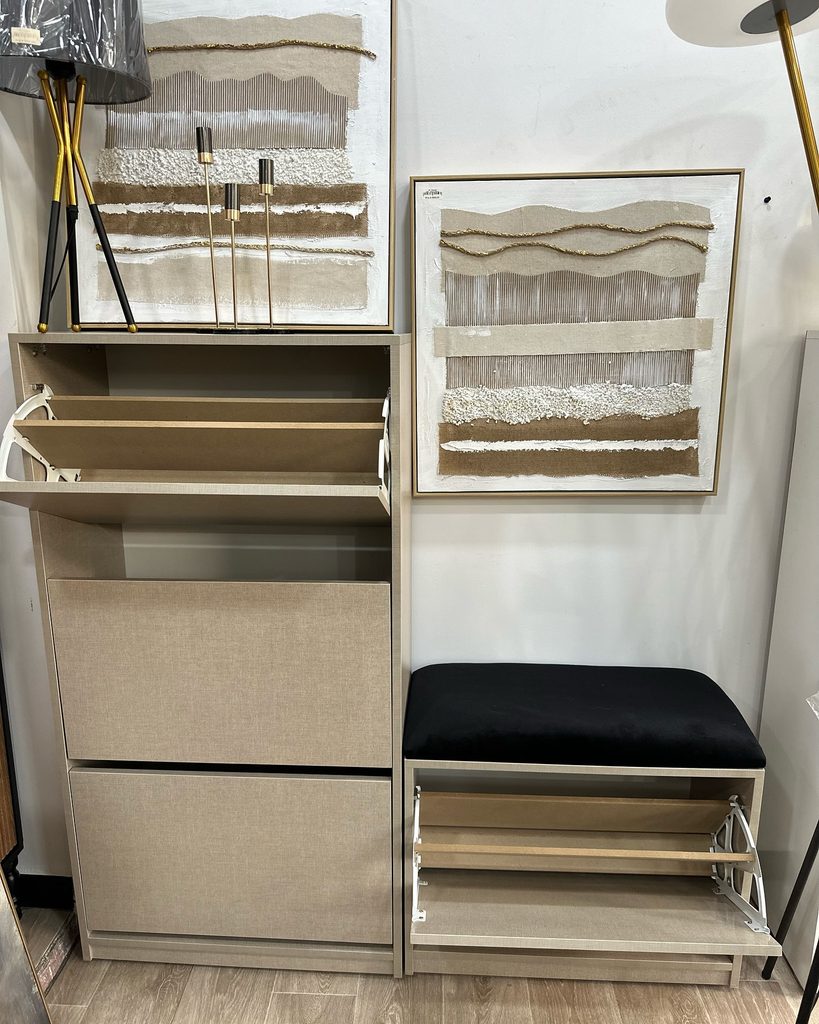
A soft neutral storage bench brings a furniture feel to the entry while keeping shoes close at hand. This approach works well when you want small entryway shoe storage to blend into a calm color palette instead of becoming the strongest feature in the room, much like the compact solutions shown in IKEA small hallway storage ideas.
Choose fabric fronts, baskets, or simple doors when you want smaller items hidden from view. A padded seat also makes the storage more comfortable for daily use, especially when you regularly sit down to put on boots or sneakers, with similar bench storage ideas appearing in Houzz entryway organization ideas.
Shoe Storage Beside Stairs
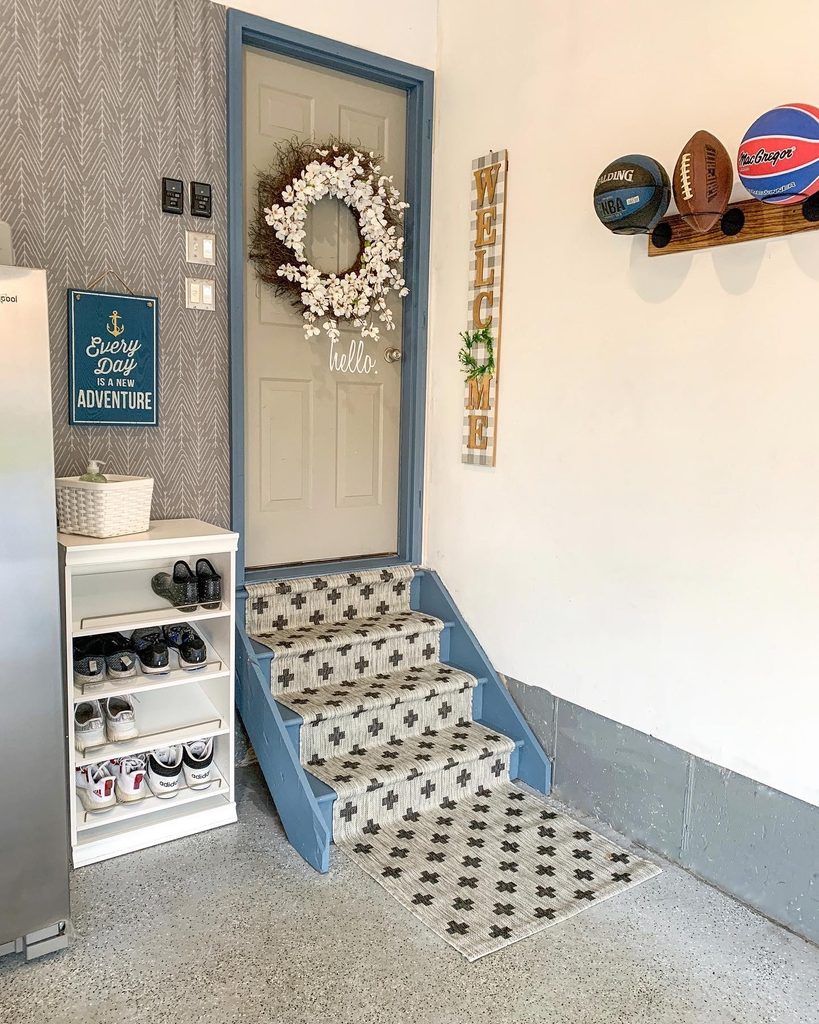
Credit: @closetmaid
The space beside a staircase can become a surprisingly useful storage zone when a traditional entry cabinet will not fit. Entryway Shoe Storage Ideas that use narrow vertical furniture make it possible to keep shoes near the door without blocking the walking path.
Look for a cabinet that is narrow enough to preserve comfortable movement through the space. A small shelf beside the stairs can hold everyday sneakers, while less frequently worn footwear can move into a deeper closet or another part of the home, as suggested by Houzz entryway storage ideas.
Full Height Entry Cabinet
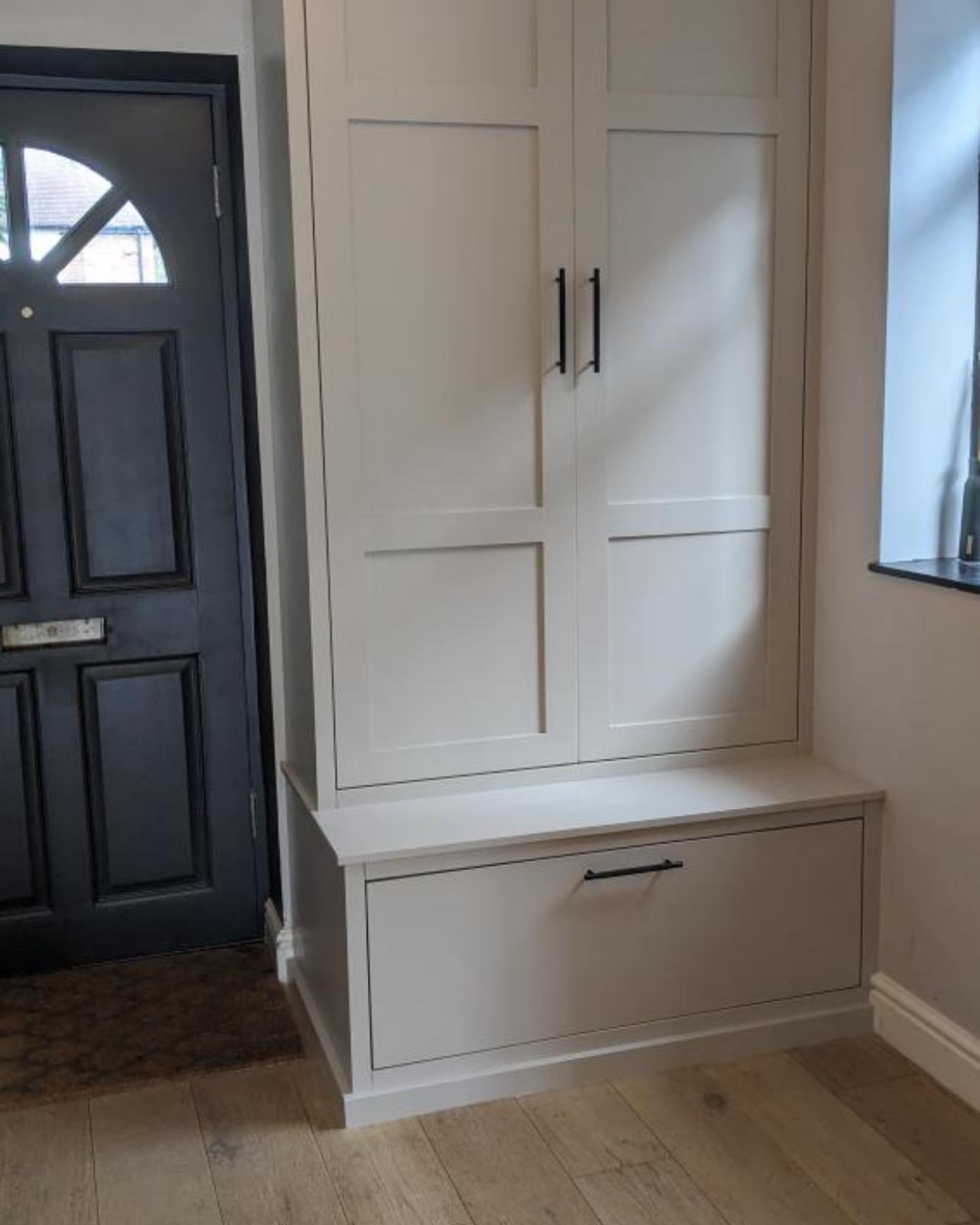
Credit: @ngodfreycarpentry
A full height cabinet gives the entry a clean furniture wall while hiding shoes and other outdoor essentials behind doors. This is one of the most useful Entryway Shoe Storage Ideas when you want the room to feel simple and uncluttered, especially because closed storage can keep frequently used items contained, as shown in IKEA shoe cabinet options.
Use the lower section for shoes and reserve the upper shelves for bags, hats, seasonal accessories, or household items. If you are planning a custom unit, measure your tallest boots before deciding shelf heights so the storage works for the footwear you already own, with useful planning advice available through Houzz entryway storage inspiration.
Compact Four Cube Cabinet
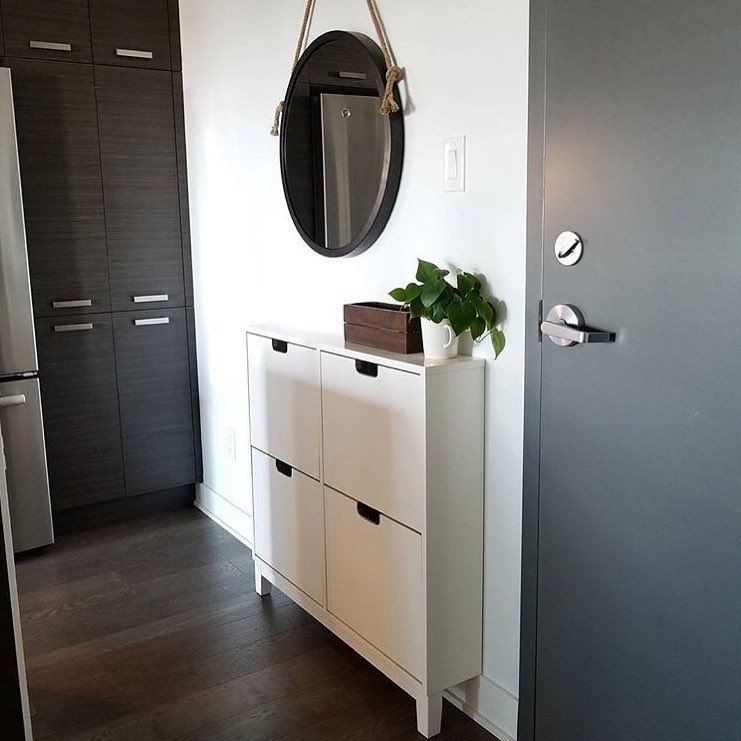
Credit: @mysmallspaceuk
A small cube cabinet is an easy way to give different people or shoe types their own section. Entryway Shoe Storage Ideas do not need to involve large built ins, and a compact unit can work beautifully when you only need space for a few everyday pairs, similar to the smaller storage approaches in IKEA shoe storage solutions.
Keep one compartment for sneakers, another for slippers, and another for frequently worn outdoor shoes if that suits your routine. Adding a round mirror, small plant, or shallow tray above the cabinet can make the furniture feel connected to the rest of the entry, much like the styling shown in IKEA hallway storage ideas.
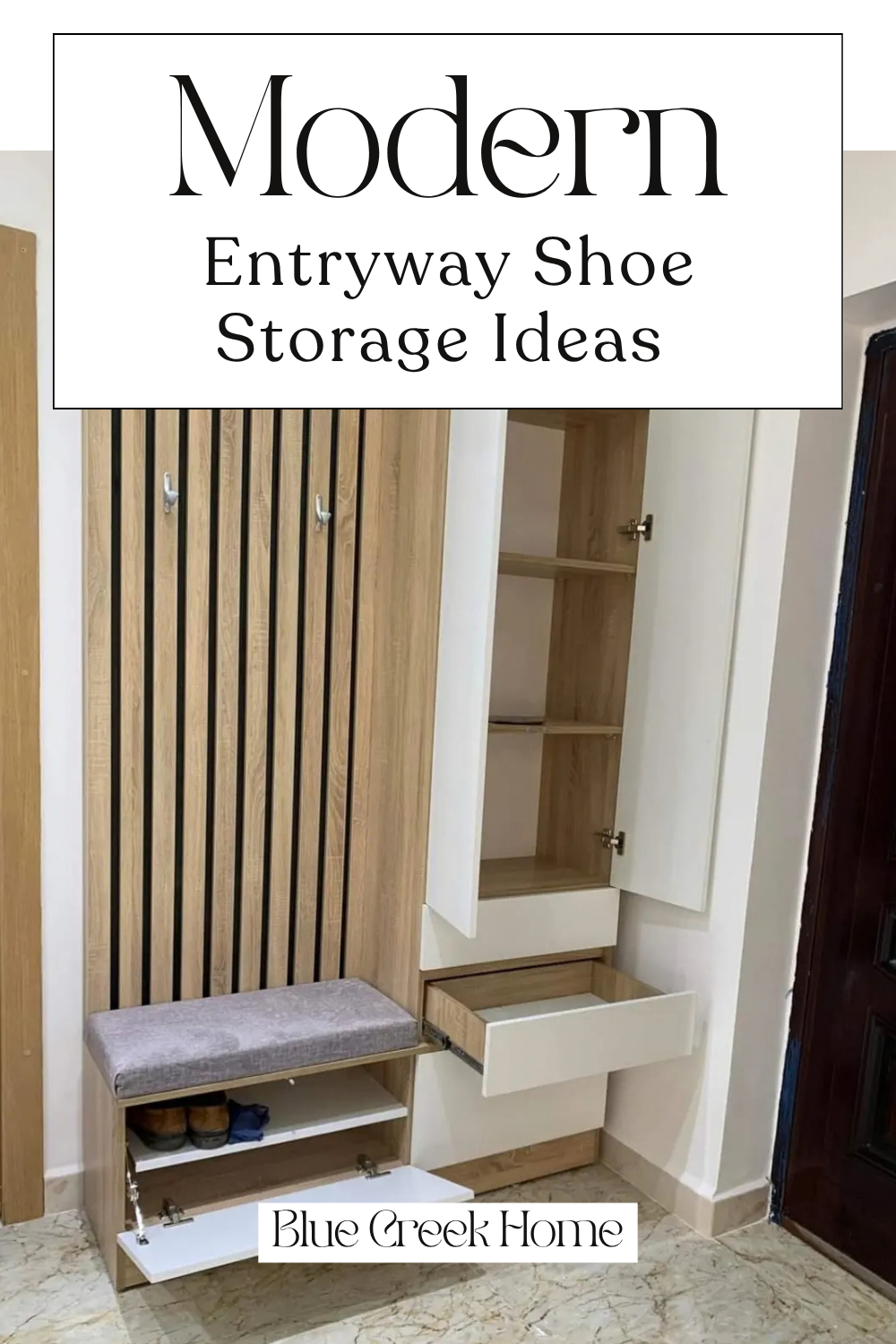
Slatted Wood Storage Wall
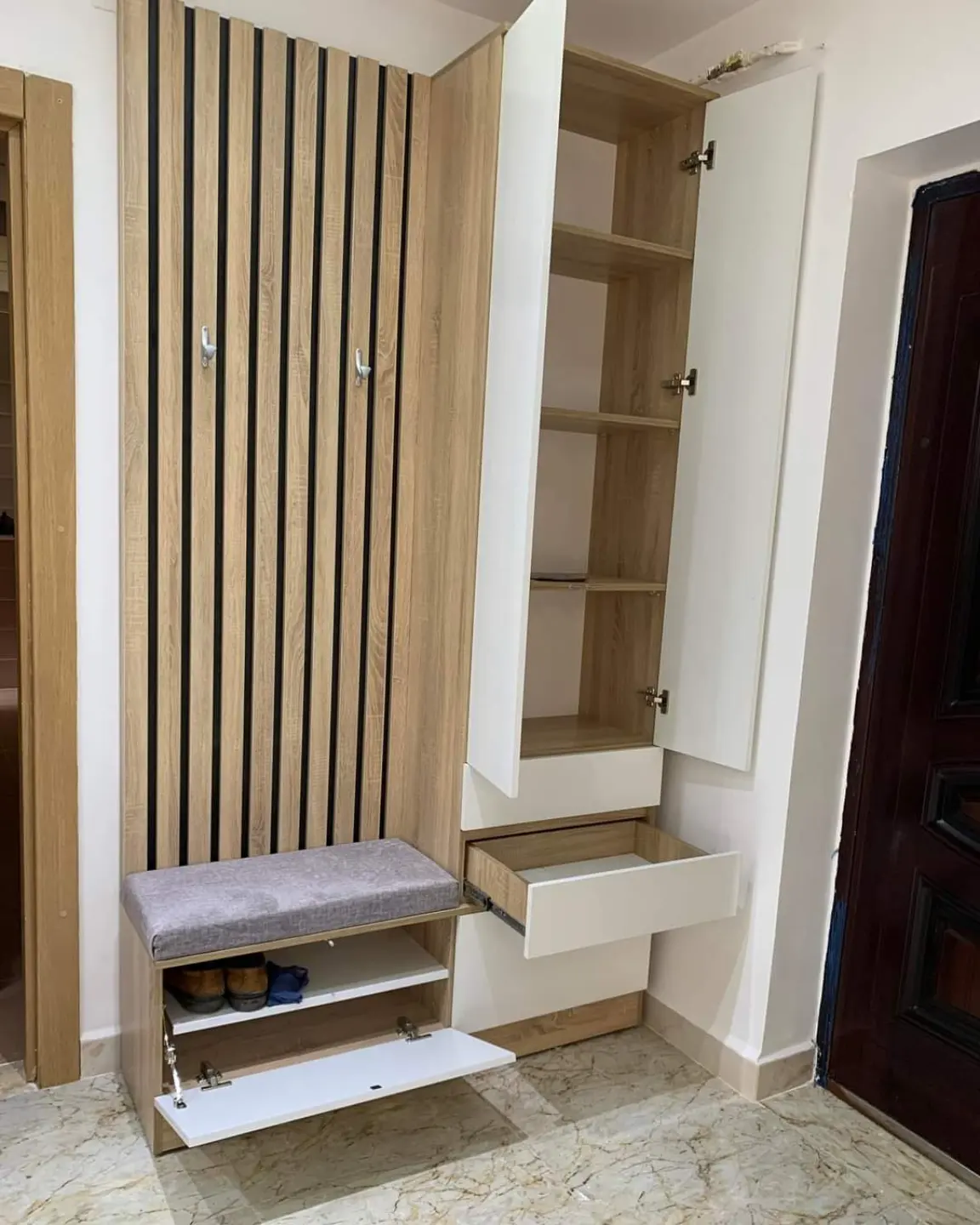
Credit: @pro_cuisine23
A slatted wood feature gives shoe storage a stronger architectural presence while keeping the entry useful. The combination of a seat, shoe compartments, hooks, and tall storage makes these Entryway Shoe Storage Ideas especially suitable when one wall needs to handle several daily tasks, similar to multifunctional storage discussed by Houzz built in entryway storage.
Use contrasting wood and white surfaces to give the unit visual depth without adding lots of decoration. A small upholstered seat can soften the harder materials, while drawers and doors below can hide smaller accessories, following the practical mix of open and closed storage seen in Houzz mudroom storage ideas.
Classic Wood Shoe Bench
Credit: @oak_furniture_land
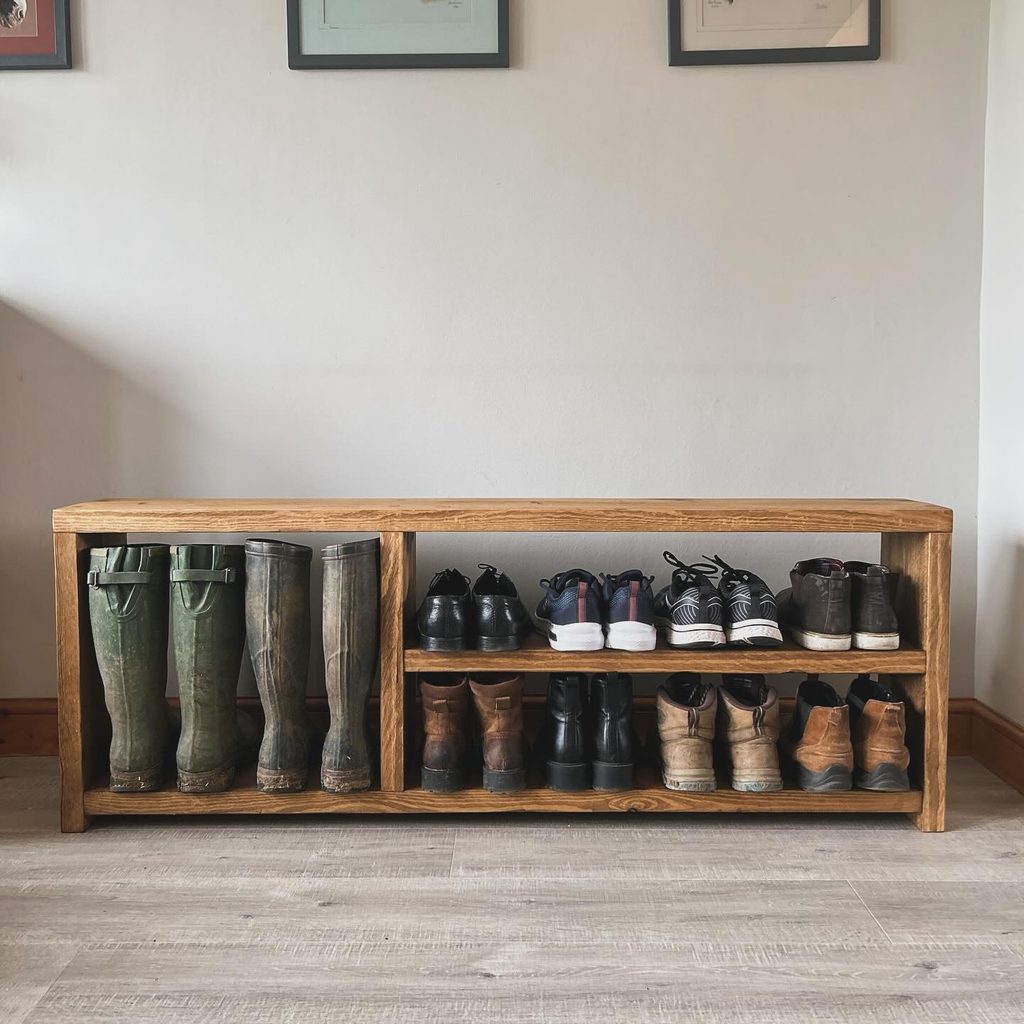
A low wooden rack is a simple choice when you prefer furniture that feels warm and timeless. These Entryway Shoe Storage Ideas work particularly well in homes with wood flooring because the natural material connects the storage to the room without demanding much visual attention, much like the open racks discussed in IKEA shoe storage ideas.
Give taller boots their own section and use the other shelves for sneakers, loafers, or walking shoes. A wooden unit can also be moved later if your entry changes, making it a practical choice when you are not ready for custom cabinetry, with open storage options also covered by The Spruce shoe storage guide.
Mid Century Flip Down Cabinet
Credit: @orsowoodworking
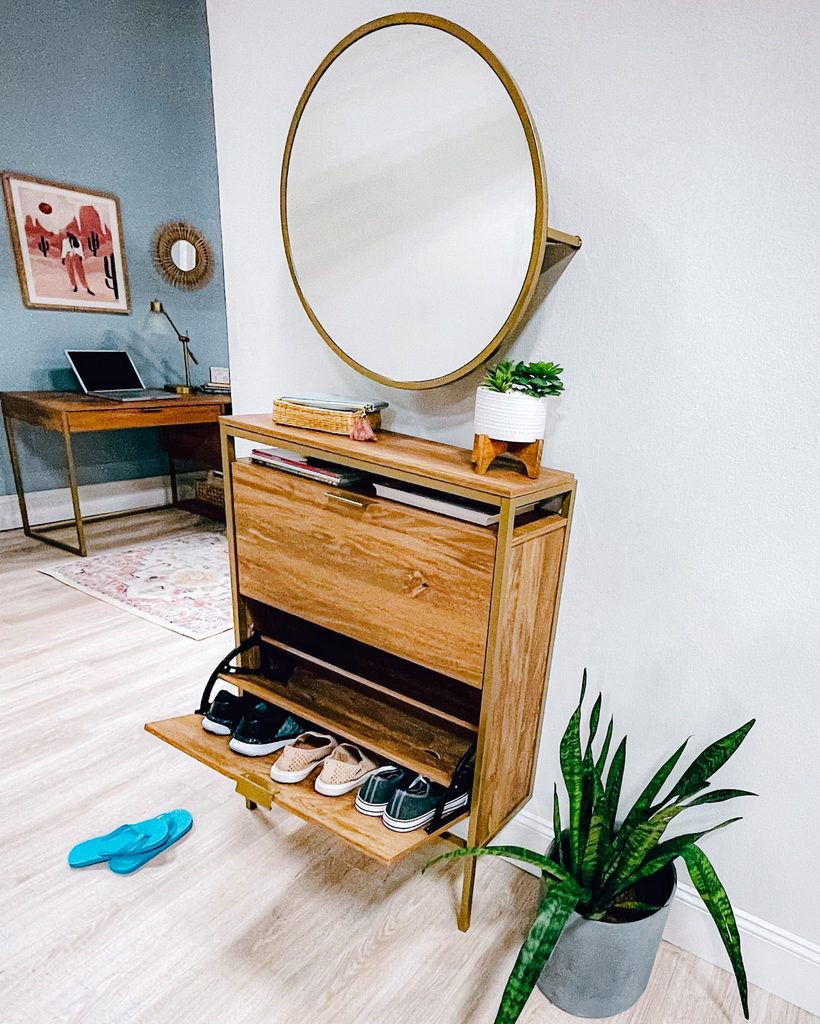
A wood flip down cabinet can make shoe storage feel like a piece of furniture instead of an organizing product. The slim shape is useful when you want closed shoe cabinet storage that does not take up much visual space, a style that works well in compact entries according to IKEA shallow shoe cabinet ideas.
The top surface can become a small display area for a mirror, plant, bowl, or keys. Keep the styling light so the cabinet remains easy to use, and leave enough space around the doors for comfortable opening, especially when the furniture sits close to a doorway, as demonstrated by IKEA compact shoe cabinets.
Custom Angled Shoe Shelves
Credit: @sauderusa
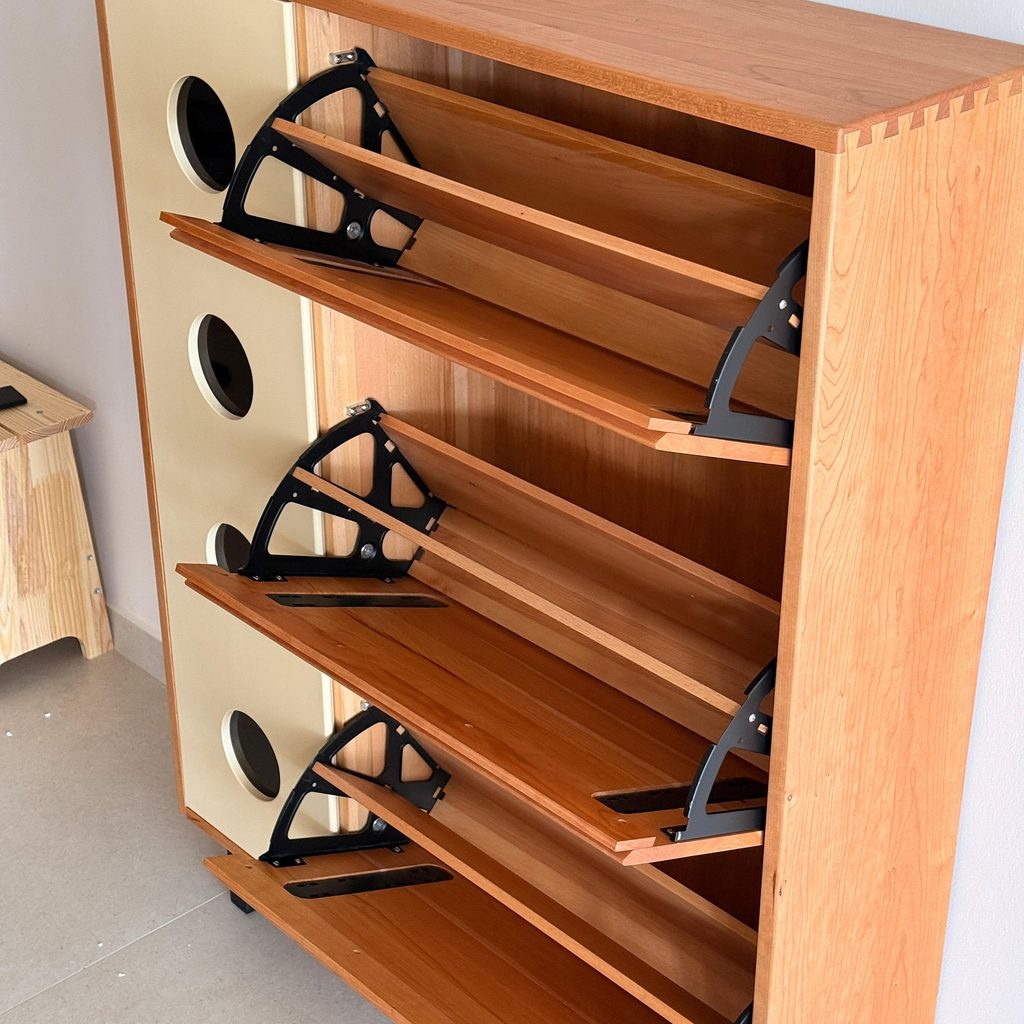
Angled shelves make it easy to see footwear while keeping each row neatly contained. This style of Entryway Shoe Storage Ideas can work well for households with many shoes because the open arrangement makes it simple to find a pair without opening several doors, similar to the accessible storage systems described in IKEA shoe organization ideas.
The best part of angled shelves is the flexibility they offer for different shoe heights. Reserve deeper or taller sections for boots and use shallower rows for flats and sneakers, then add a tray below for damp footwear when needed, following practical entry organization principles from Houzz entryway organization.
High Capacity Wood Storage
Credit: @lofthomefurniture
A deeper wooden cabinet is a good choice when shoe storage needs to handle a large collection without spreading footwear across the floor. This approach turns Entryway Shoe Storage Ideas into a substantial furniture feature, giving you room to organize different categories while keeping the overall room orderly, much like the storage planning discussed in Houzz shoe organization ideas.
Choose adjustable shelves when possible so the interior can change as your footwear needs change. Boots, sneakers, dress shoes, and seasonal pairs rarely need the same amount of space, so flexible shelving can prevent wasted areas, while the overall idea of dividing frequently used and less used shoes is supported by IKEA shoe organization guidance.
How To Choose Shoe Storage For Your Entry
Start by measuring the wall, not the furniture you hope to buy. Record the available width, height, and depth, then check the path from the door to the rest of the home so the storage does not make the walkway uncomfortable.
Your household routine should guide the design. If everyone removes shoes immediately after coming inside, an open rack or bench can make that habit easy, while a closed cabinet may work better when keeping footwear out of sight is the main goal.
For a narrow entry, vertical storage can provide useful capacity without taking over the floor. A shallow cabinet can also be helpful because it sits close to the wall, and some slim IKEA models are designed specifically to save floor space in small entrances, as shown in this IKEA shoe cabinet guide.
If you are planning Blue Walk In Closet Ideas, consider whether some shoes should live there instead of in the entry. Keeping only everyday pairs near the front door can make a smaller hallway easier to manage, while special occasion and seasonal shoes can stay in the closet.
Make Your Entry Shoe Storage Work Harder
A good entry system usually needs more than a place for shoes. Hooks for coats, a small tray for keys, baskets for accessories, and a comfortable place to sit can turn one storage wall into a useful daily station.
If you have children, give each person a clearly defined area. This can be as simple as one cubby per person, or a labeled basket placed near their shoes, so putting things away becomes easier to understand.
For busy households, consider keeping everyday footwear at hand and moving less used pairs elsewhere. IKEA also recommends separating footwear that is currently in use from shoes that are not needed right now, which can help prevent a small storage area from becoming overloaded, as explained in this IKEA organization guide.
A shoe bench storage setup can be especially helpful if your household tends to remove shoes while standing near the door. A seat provides comfort, while the area beneath it can hold daily footwear without requiring another piece of furniture.

[…] related Entryway Shoe Storage Ideas can also inspire useful thinking about compact organization. Both spaces benefit from vertical […]
[…] storage elsewhere in the home, the same planning idea can be applied in smaller zones. For example, Entryway Shoe Storage Ideas can give shoes and everyday accessories a dedicated home near the door, leaving the bedroom storage […]
[…] above the appliance can hold a small plant, a useful container, or a simple decorative piece. For small kitchen storage, every shelf should earn its place, so choose items that add warmth without making the counter […]
[…] you are working with limited floor space, consider Low Seating Living Room Ideas with furniture that has slim legs or a compact footprint. […]
[…] usually starts by giving every category a clear home. When shelves, cabinets, drawers, and wall space work together, you can find what you need quickly and keep the floor open for parking, repairs, or […]