
Live Beautifully at Home


9 Perfect deck layout ideas With Stylish Seating and Dining Zones
 Rhonda
My Blue Creek Home Founder & Editor
I spent over 12 years in decorative painting and faux finishing, starting with a faux finishing company I co-owned in Mississippi that...
October 25, 2026
8 min read
Leave a comment
Image Notice. Some images featured in this article may originate from third-party sources and are used for illustrative purposes only. Please review our Image Credits Policy for full attribution information.
A well planned deck gives you more room to enjoy fresh air, share meals, and spend time with family. The right deck layout ideas help you make the most of your outdoor space, whether you have a small patio, a raised timber platform, or a large backyard deck beside the house.
The secret is to plan around the way you live. A quiet corner for morning coffee needs a different arrangement from a busy entertaining area with a dining table, outdoor kitchen, or space for children to play. The shape of your deck, the amount of sunlight it receives, and the path between your house and garden all influence what works best.
Natural timber brings warmth, while grey composite boards create a clean, modern look. Curved platforms, built in seating, and covered areas add character while making the space more useful throughout the year.
With thoughtful deck layout ideas, you can create an outdoor area that feels connected to your home and suits your everyday needs.
Before choosing furniture, measure the deck and mark the areas needed for walking, dining, and relaxing. This simple step helps prevent overcrowding and makes the layout easier to plan.
Curved deck layout ideas With a Fire Pit
Credit: @carpentryaustralia
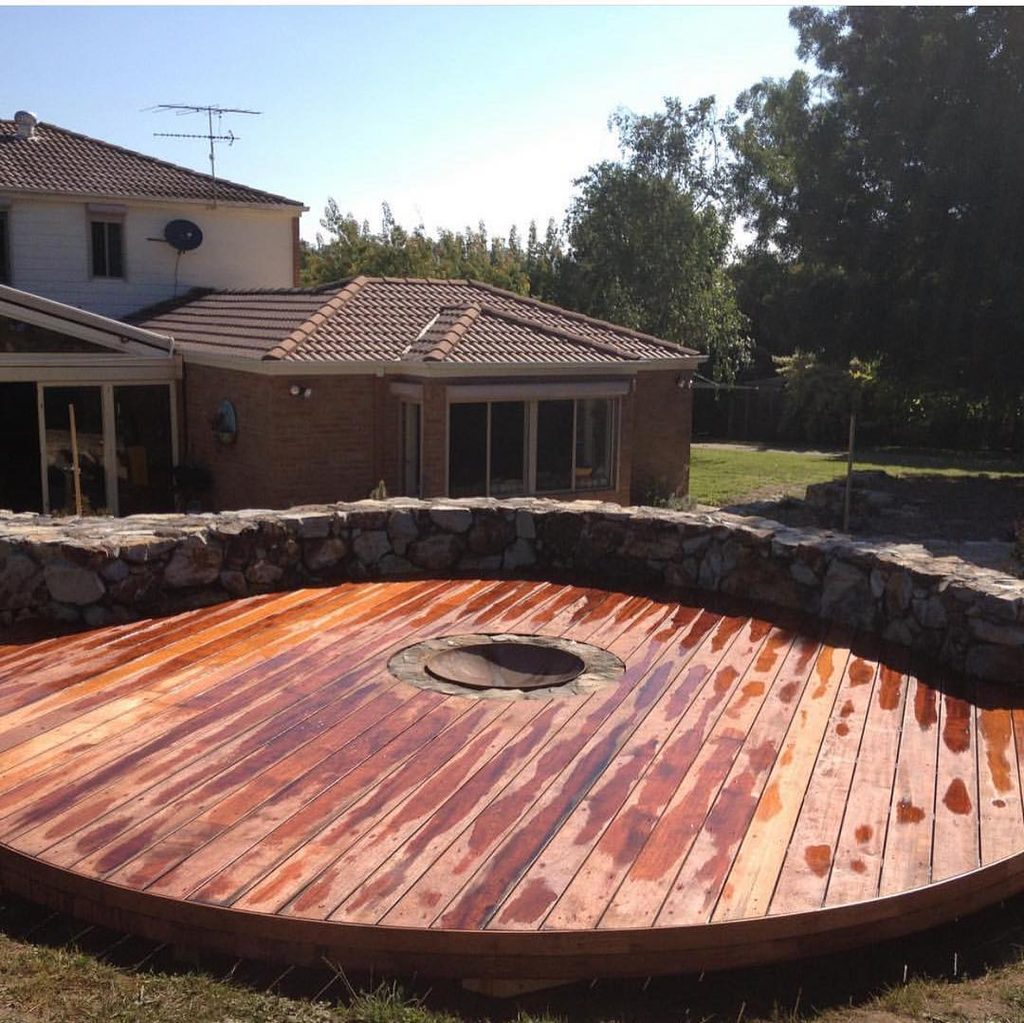
A circular deck creates a natural gathering place in your backyard, especially when you build a fire pit into the center. This arrangement gives your outdoor space a clear purpose and makes it easy to bring chairs together for relaxed evenings outside.
Choose durable timber boards and a heat resistant surround designed for your fire feature. Leave enough room around the opening for safe movement, and check local fire regulations before deciding on the size and location of the pit.
A Raised Deck Around Trees
Credit: @cobrire
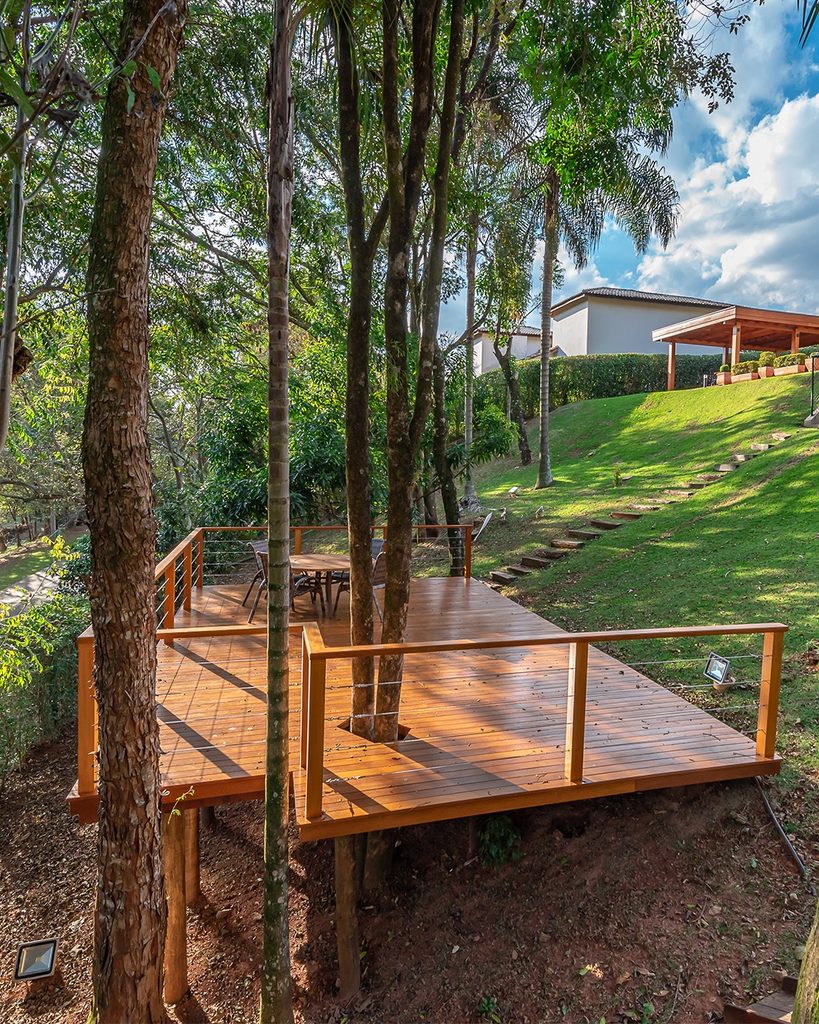
A raised timber deck makes a sloping garden easier to enjoy while preserving the trees that give your yard its character. This layout creates a quiet retreat among the greenery, with room for a small dining set or a pair of comfortable outdoor chairs.
For a successful design, have a qualified builder plan the supports around existing tree roots and allow for future trunk growth. A natural wood finish works beautifully with leafy surroundings, while simple railings help define the platform without making it feel closed in.
A Spacious Deck With Light Boards
Credit: @deck_guardian
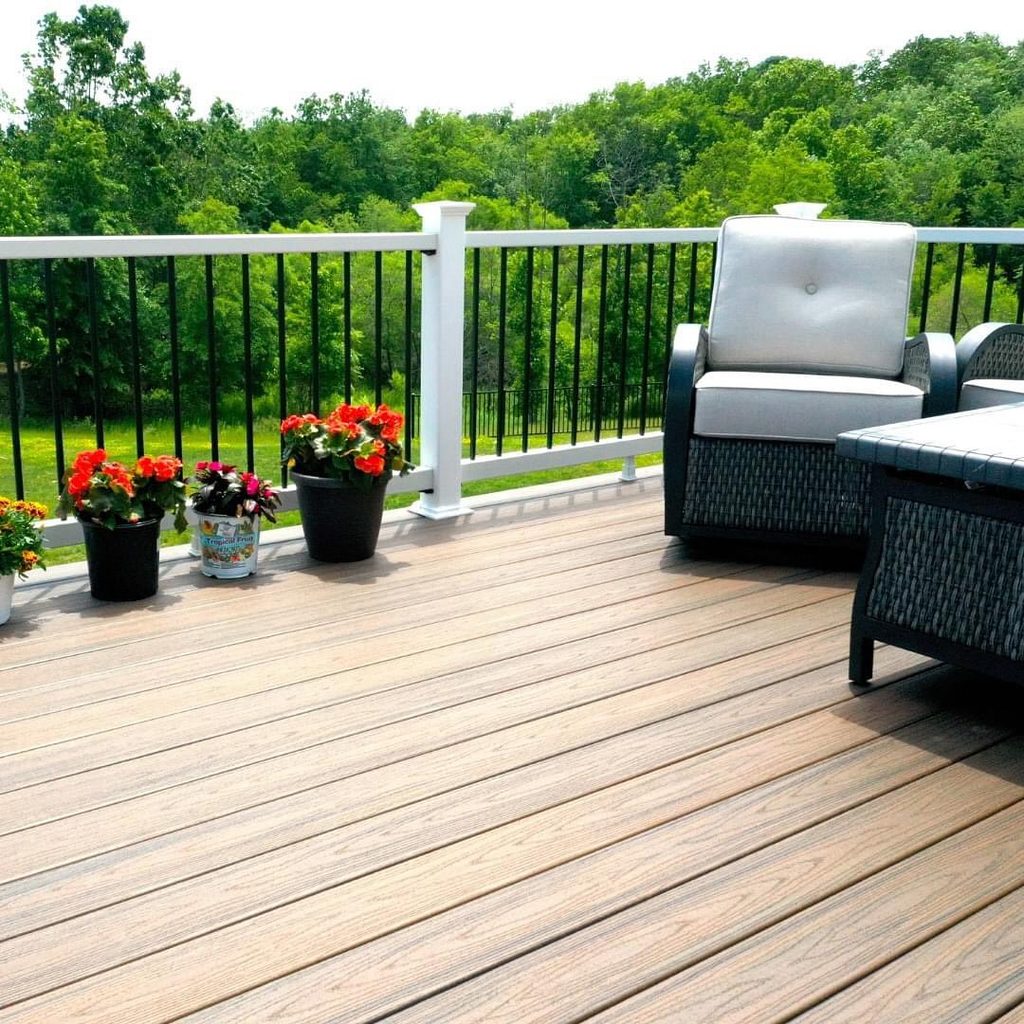
Light coloured decking gives an outdoor seating area an open, airy feel. Straight boards running in one direction create a sense of length, making this arrangement especially useful for a deck where you want clear walking space and room for lounge furniture.
Composite boards in pale grey or sandy beige offer a useful option if you prefer a consistent finish with less routine upkeep. Before choosing a shade, compare samples outdoors because sunlight, nearby walls, and surrounding greenery can change how the colour appears.
A Covered Deck for Entertaining
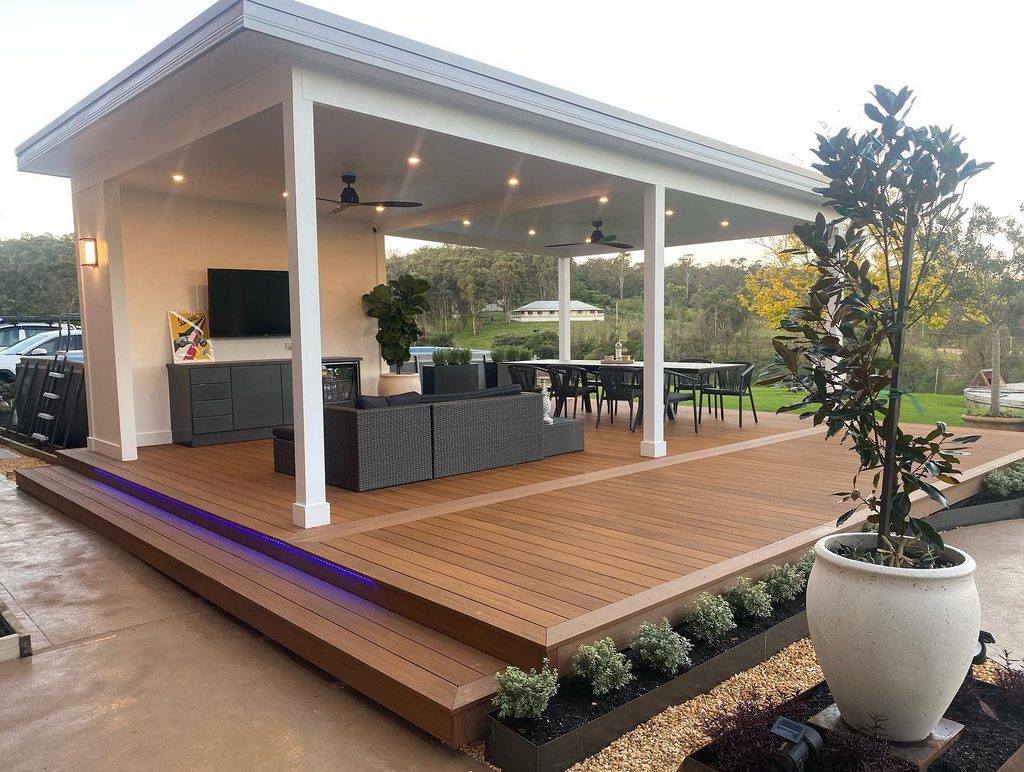
Credit: @futurewood.au
A large covered deck gives you space for several outdoor activities without making the garden feel crowded. You can arrange a sofa near the house, place a dining table farther out, and leave a clear route between both areas so guests can move around comfortably.
Plan the roof, lighting, and electrical fittings together from the beginning. A wide roof can provide welcome shade and shelter, while ceiling fans and warm recessed lights help the space feel comfortable during summer evenings and family gatherings.
A Timber Deck With Open Views
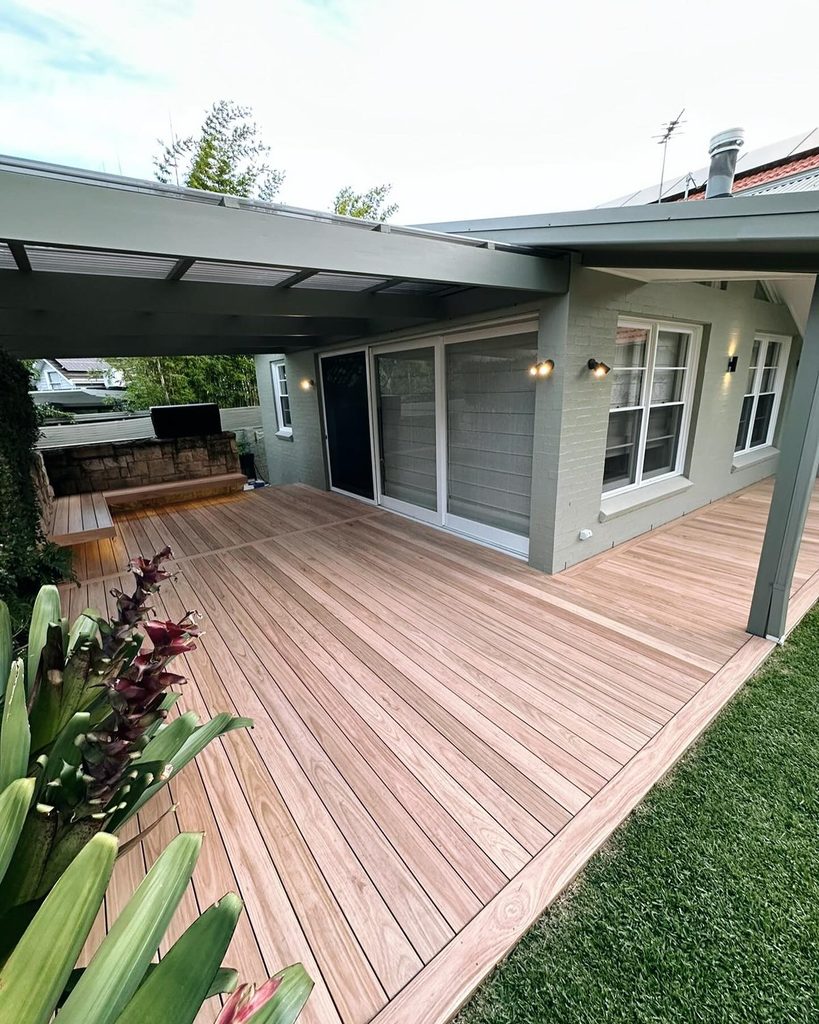
Credit: @gftimber
When your home overlooks a garden or open landscape, a generous timber platform can become an extension of your living room. Keeping the furniture grouped toward one side leaves room to enjoy the view, while a long dining table creates a practical place for outdoor meals.
Choose outdoor furniture that suits the scale of the deck, and keep the main walking route free from chair legs and planters. If you are considering Pool deck ideas, the same principle applies around swimming areas, where clear circulation and suitable slip resistant surfaces are especially important.
A Covered Deck With Modern Details
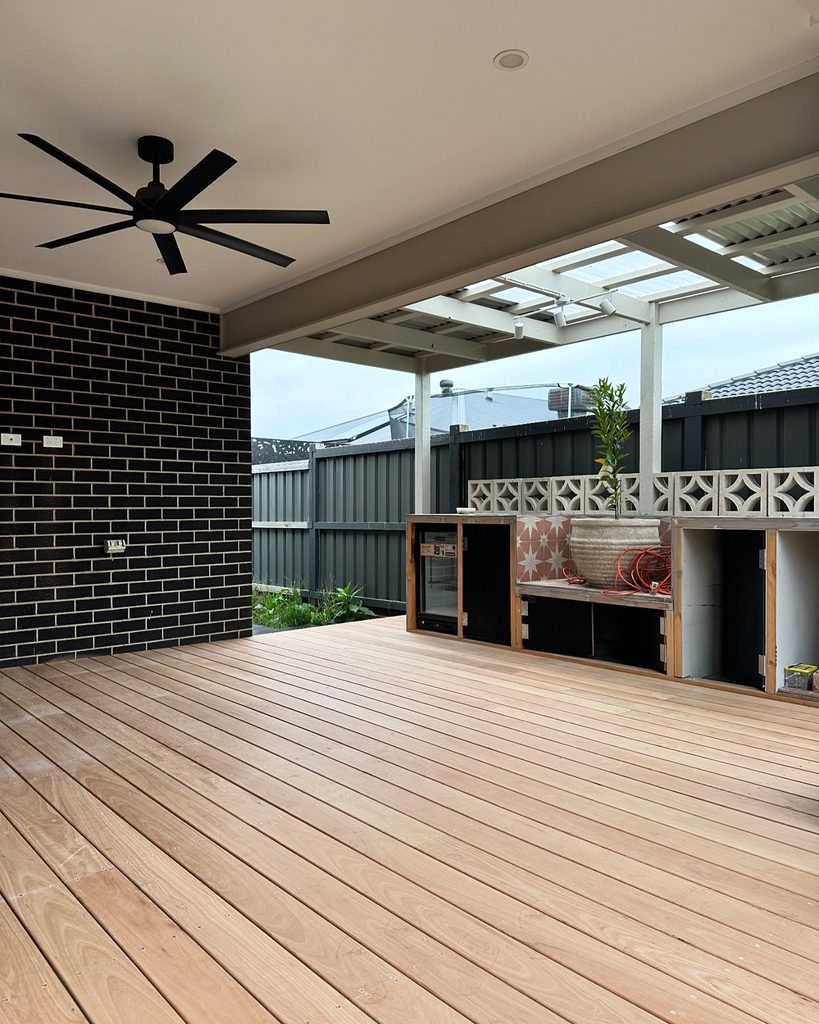
Credit: @lacasa___brook
A covered deck beside a dark brick wall creates a strong, contemporary outdoor setting. The combination of timber flooring, dark finishes, and a simple roof gives the area a defined character, making it a good choice for a home with modern architecture.
Divide the space into useful zones before adding accessories. A dining area can sit near the kitchen entrance, while a small outdoor bar or serving counter occupies another section, leaving the center open for movement and everyday use.
A Circular Deck With Tile
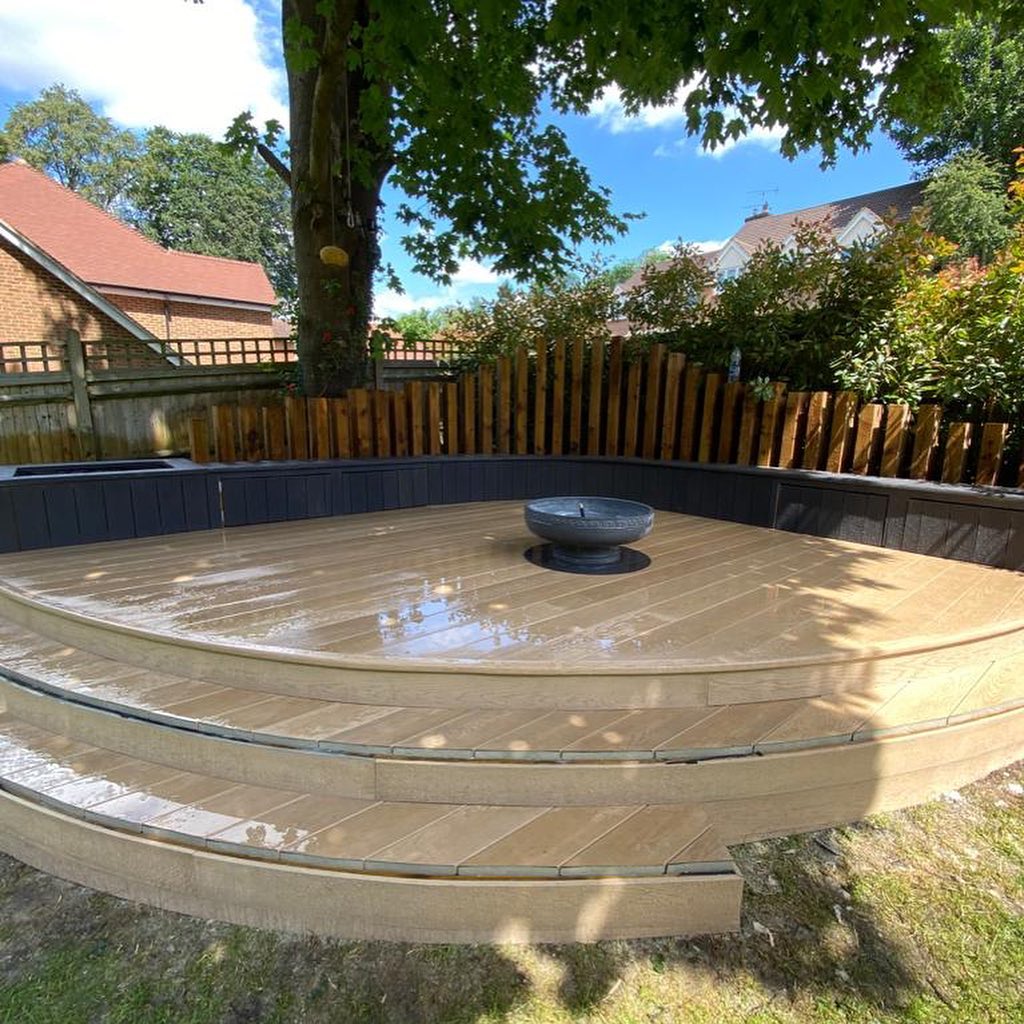
Credit: @londondeckingcompany
A curved platform adds a softer outline to a backyard, breaking away from the straight edges of a typical rectangular deck. A circular arrangement also draws attention to a central fire bowl or decorative feature, creating a natural focal point for conversation.
Outdoor tiles can work well for this design when they are suitable for exterior use and installed over a properly prepared base. Select a textured, weather resistant finish and plan the drainage carefully so water does not collect on the surface after rain.
A Minimalist Grey Deck
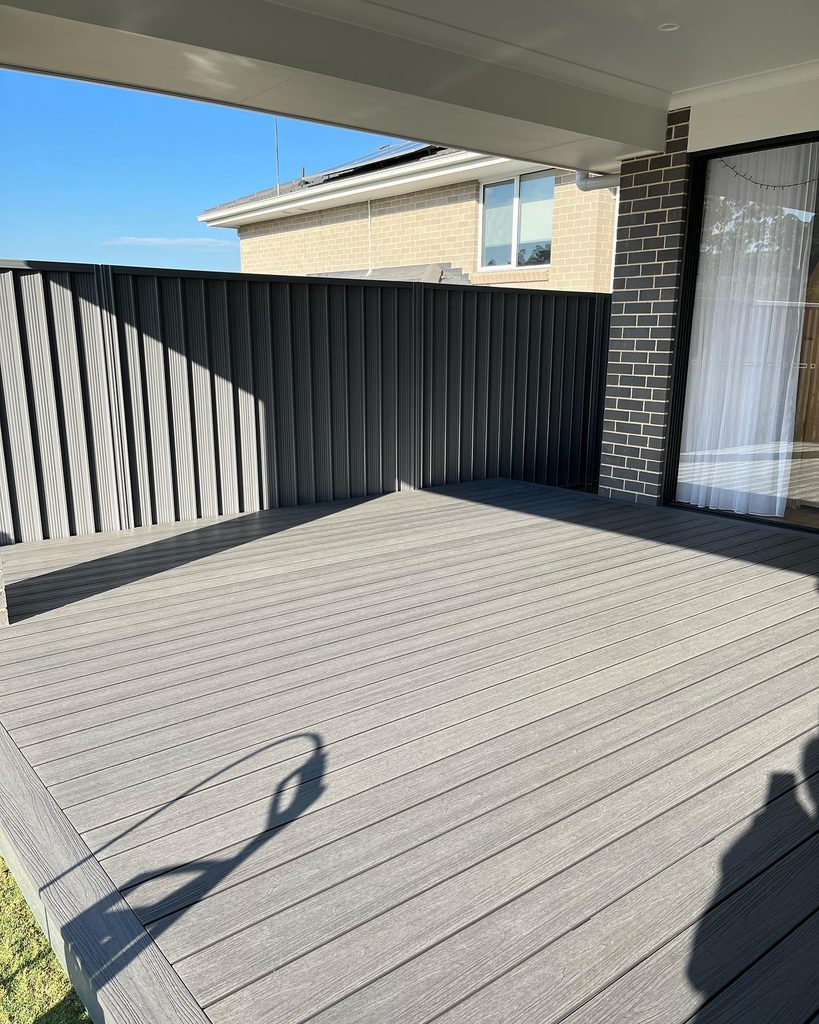
Credit: @sanmarino_interiors
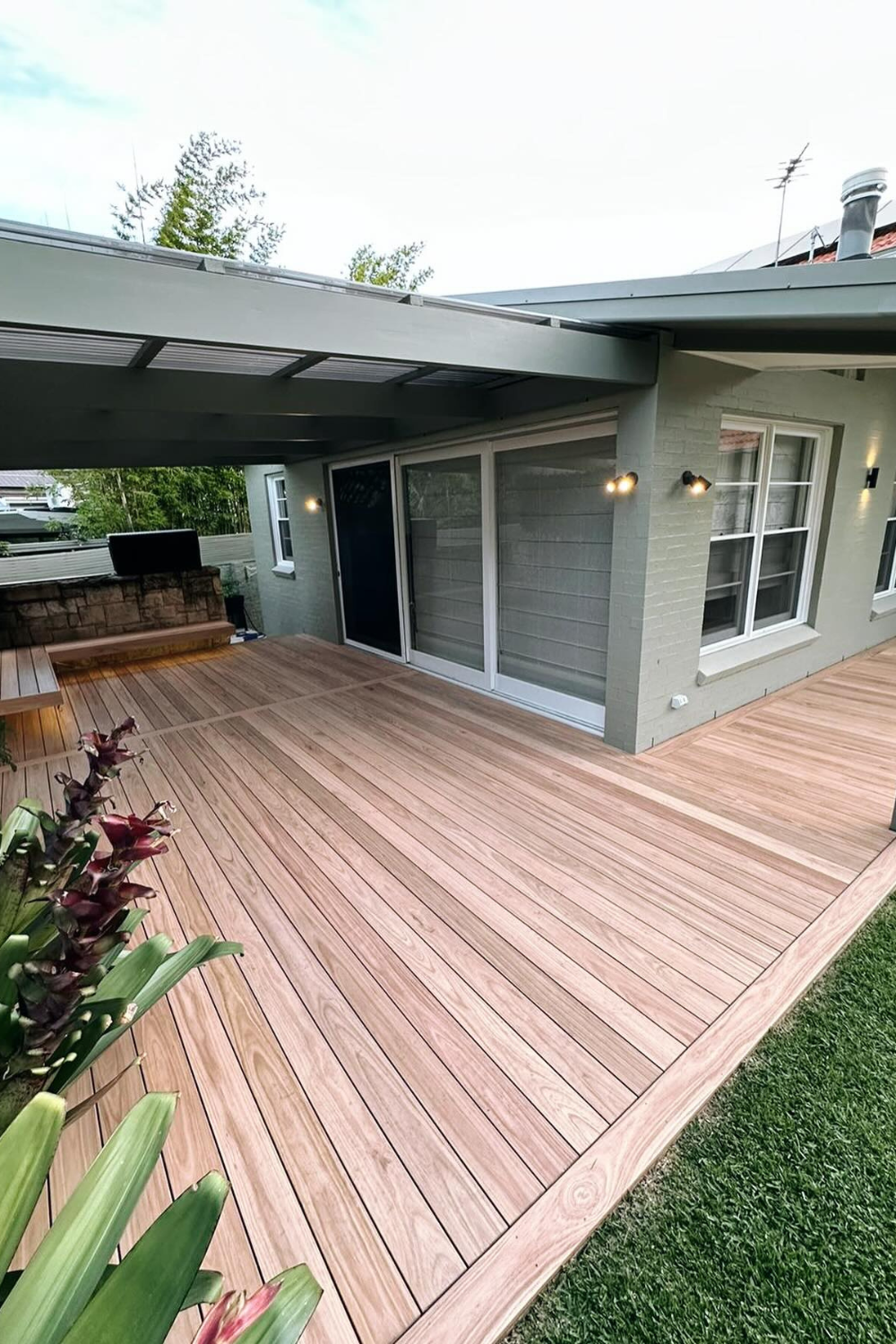
A simple grey deck suits homes with dark fencing, brickwork, and clean architectural lines. The understated colour gives you flexibility with furniture, allowing black seating, cream cushions, or a few green plants to provide contrast without making the space feel busy.
Use a consistent board direction to create visual order, and choose edging that gives the platform a neat outline. If the deck sits close to a sliding door, keep the entrance clear and leave enough space for the door to open fully and for people to pass comfortably.
Built In Seating Along the Deck
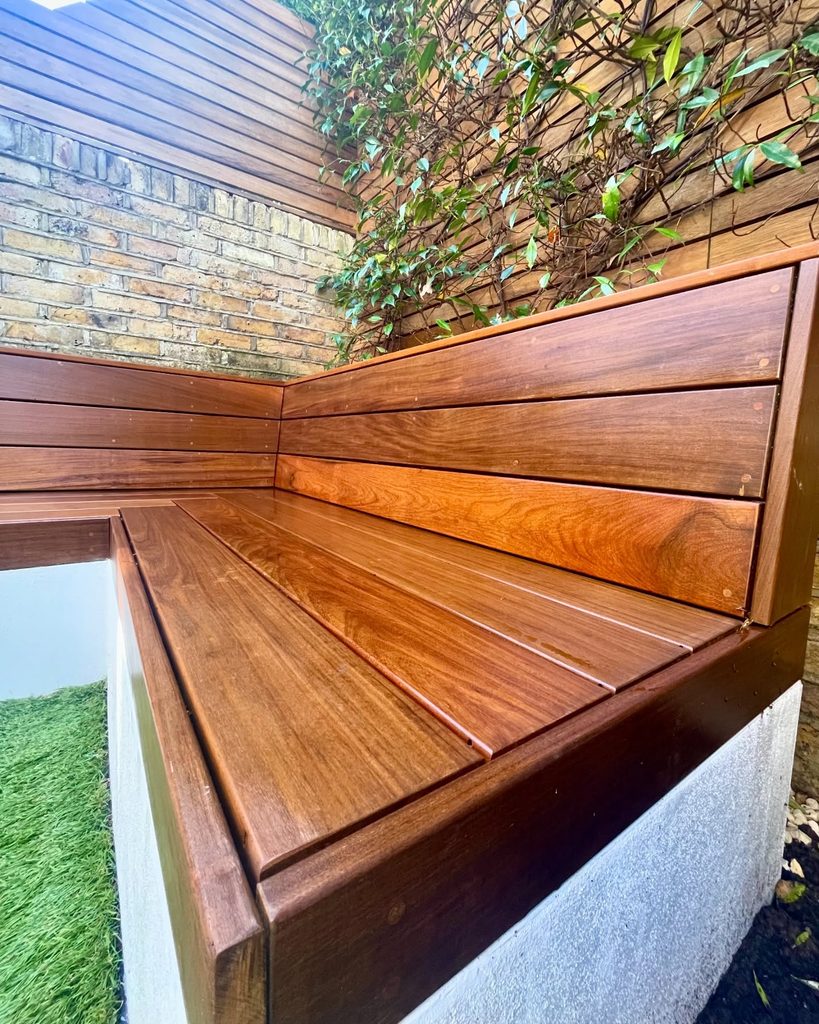
Credit: @thedeckdude
Built in timber seating makes good use of corners that might otherwise remain empty. An L shaped bench can create a comfortable conversation area, define the edge of a small deck, and provide a place to sit without filling the floor with separate chairs.
Match the seat boards to the deck for a connected appearance, then add weather resistant cushions for comfort. Allow enough depth for relaxed seating, and consider a hinged storage section only if it can stay dry and ventilated.
Planning a Practical Deck Layout
The most useful deck layout ideas begin with a clear understanding of how you want to use your outdoor space. Think about your daily routine, the number of people who usually gather outside, and the activities that matter most to you.
If you enjoy outdoor dining, place the table close to the kitchen or back door. This makes carrying food and drinks easier, while keeping the main seating area free for relaxing.
For a family that enjoys spending time outdoors, a flexible layout can make a big difference. Leave an open section for children to play, or create a comfortable corner where adults can sit nearby and keep an eye on the garden.
Measure the deck before buying furniture. A simple sketch with the dimensions of your table, chairs, sofa, and planters helps you see how much floor space remains for walking.
It also helps to think about privacy and shade early. Screens, pergolas, umbrellas, and carefully placed plants can make a sunny or overlooked deck more comfortable without closing it off from the garden.
Create Clear Outdoor Zones
A large deck feels easier to use when each section has a clear purpose. You might create a dining area, a lounge corner, and a small space for plants, with enough room between them for easy movement.
For a compact platform, choose furniture that serves more than one purpose. A bench with storage, a folding dining table, or lightweight chairs gives you more flexibility when guests arrive.
Your home’s doors and windows also influence the layout. Keep entrances open and position larger furniture away from busy doorways, so the deck remains easy to access throughout the day.
Consider the direction of the sun before choosing your seating arrangement. A shaded corner can be ideal for afternoon reading, while an open area may suit breakfast or early evening meals.
Choosing Materials and Finishing Details
The materials you choose influence the appearance, upkeep, and comfort of your deck. Timber offers natural grain and warmth, while composite decking provides a more consistent finish and generally requires less frequent maintenance.
Natural timber needs a suitable exterior finish and regular care to help protect it from moisture, sunlight, and wear. Composite boards still need cleaning, and their surface temperature can vary with colour, sun exposure, and weather conditions.
Pay attention to the structure beneath the boards as well. Proper support, drainage, ventilation, and suitable fixings help the deck perform well over time, particularly in areas that experience heavy rain or strong temperature changes.
Railings, steps, and changes in floor height deserve careful planning. Raised decks need suitable fall protection, and steps need a safe, consistent design that works for everyone using the space.