
Live Beautifully at Home

Creative Blue Flower Garden Ideas Worth Trying, For Sure
 Rhonda
My Blue Creek Home Founder & Editor
I spent over 12 years in decorative painting and faux finishing, starting with a faux finishing company I co-owned in Mississippi that...
September 8, 2026
8 min read
3 Comments
Rhonda
Rhonda
My Blue Creek Home Founder & Editor
I spent over 12 years in decorative painting and faux finishing, starting with a faux finishing company I co-owned in Mississippi that...
September 8, 2026
8 min read
3 Comments
Image Notice. Some images featured in this article may originate from third-party sources and are used for illustrative purposes only. Please review our Image Credits Policy for full attribution information.
There is something about a blue flower garden that feels different from any other color scheme outside. Blue has a calming, almost magical quality in a garden space. It makes everything around it look fresher and super nice to see.
A blue flower garden is one of those ideas that works at every scale. A single pot of blue blooms on a patio table can carry just as much weight as a full border filled with them.
Color in a garden builds slowly. Do not try to add blue everywhere at once. Start with one area and let it grow from there.
True blue is rare in the plant world, so when you find a variety you love, plant more of it than you think you need.
A Mixed Blue Border at the Entry
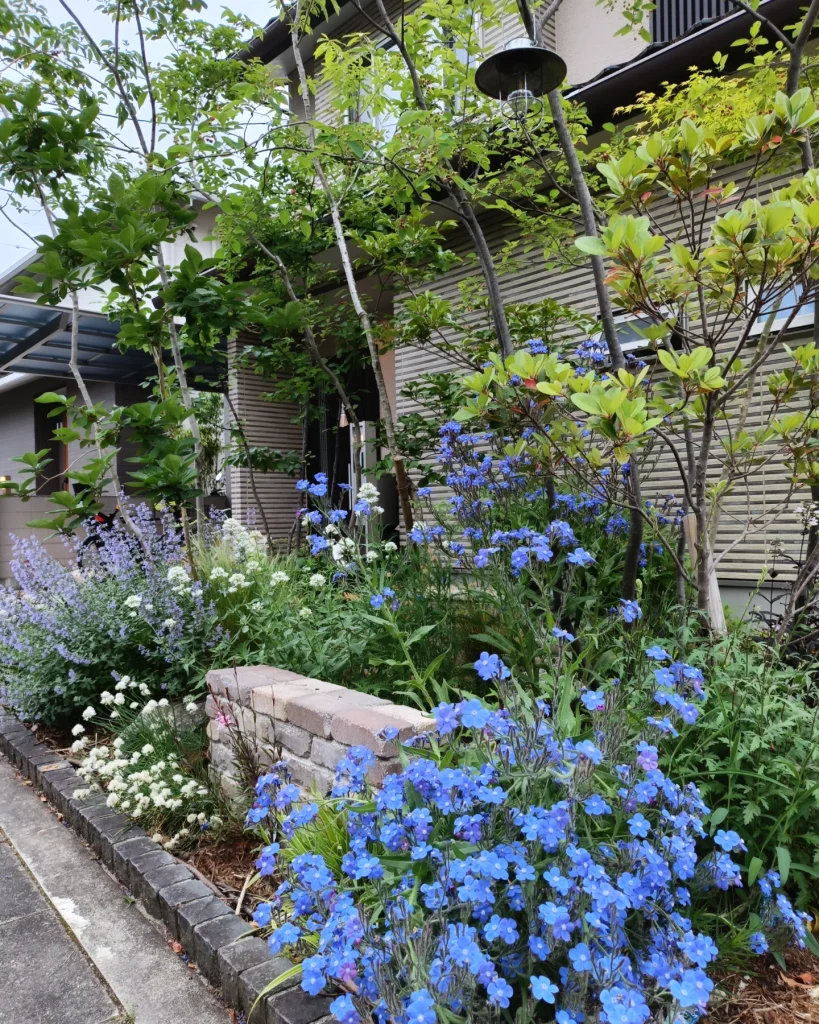
Credit: @niwa87saku39
A blue flower garden at your front entry sets the tone for everything that follows. When you layer different heights and varieties of blue blooms together, the result feels like something that happened naturally over many seasons, even when it was carefully planned.
The key to making a mixed entry border work is giving the plants room to weave together without looking forced. Forget-me-nots allowed to drift and fill between taller stems create that soft, romantic cottage garden effect that feels genuinely welcoming.
Vintage Garden Art With Blue Blooms
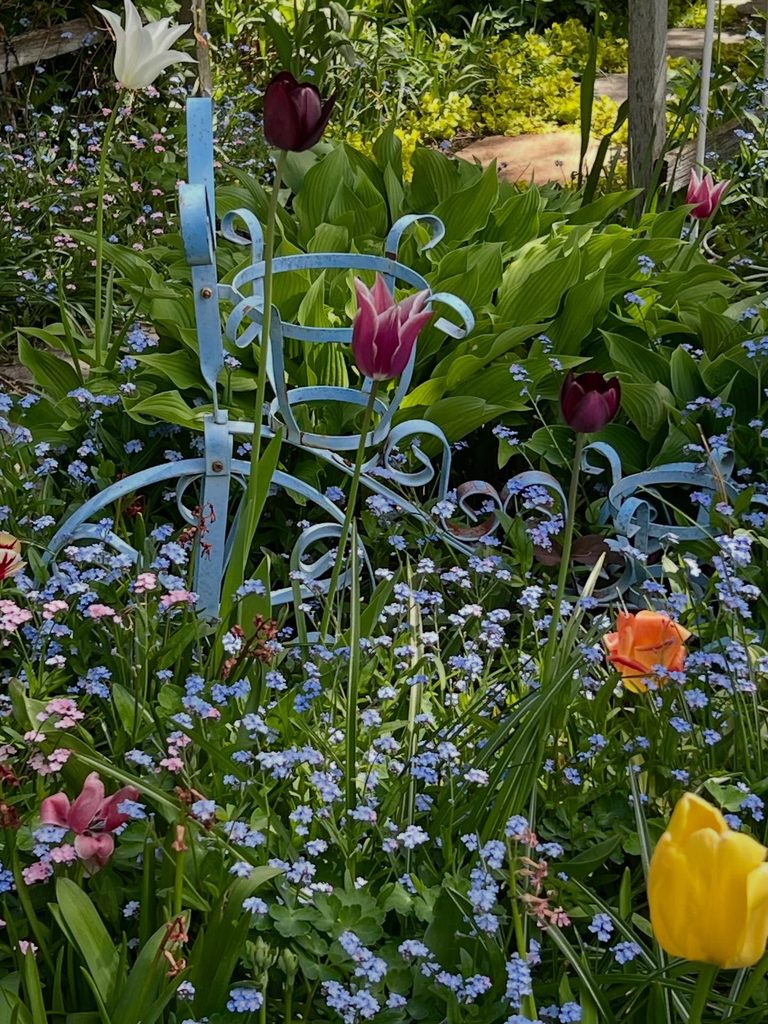
Credit: @oaktreecottage17
An ornamental piece tucked into a blue flower garden bed gives the eye a place to rest between all that beautiful color. A weathered metal garden ornament surrounded by blue forget-me-nots and mixed tulips creates a scene that feels like it belongs in a storybook.
What makes this work so well is the contrast between the soft, loose flowers and the more structured lines of the ornament. You do not need to spend a lot to get this effect. Vintage and antique markets regularly turn up old iron plant stands, gates, and decorative garden pieces for very reasonable prices.
Pots of Blue and Purple Spring Blooms
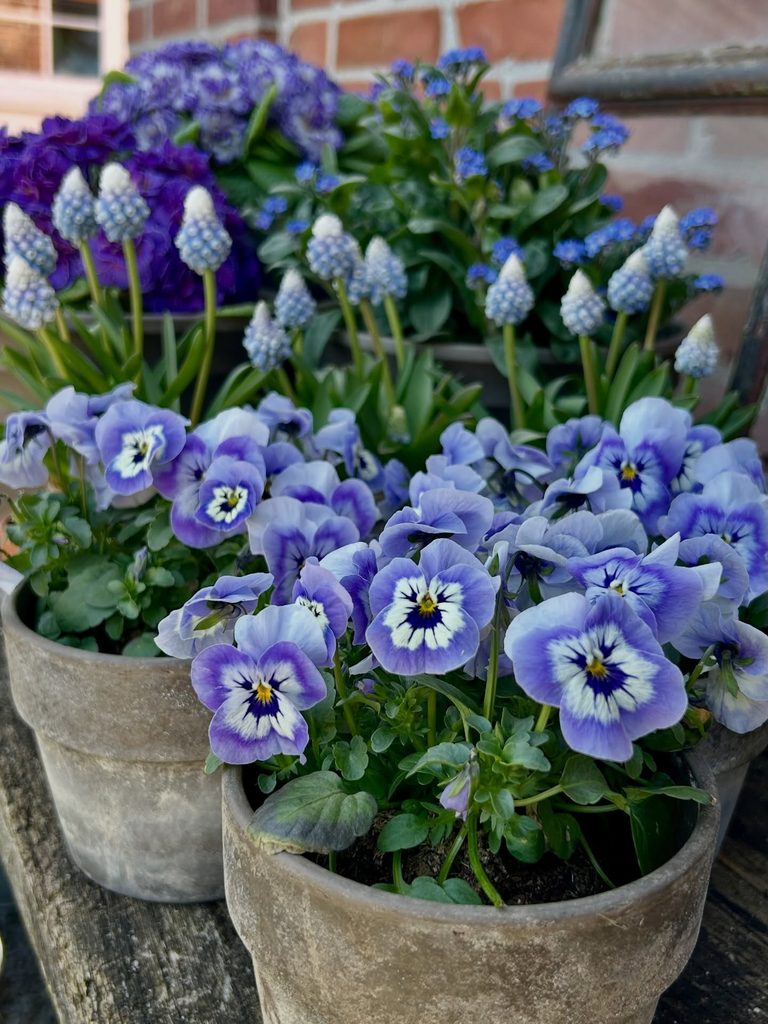
Credit: @janes_cottagegarden
Grouping blue flower garden pots together on a step or terrace edge is one of the simplest ways to create serious impact. Pansies in soft periwinkle blue, paired with grape hyacinths and deeper purple blooms behind them, make a container display that holds its own against any planted border. The staggered heights of the pots add depth without any extra effort.
Aged terracotta or concrete-style pots suit this kind of planting especially well. They have a weight and texture that makes the flowers look even more lush by comparison. You can find good quality aged-look pots at most garden centers in spring for anywhere from ten to thirty dollars each, and they last for years if stored through the coldest winter months. Plant them densely for that full, overflowing look that makes a blue flower garden display feel generous.
A Cottage Garden Path in Blue and Purple
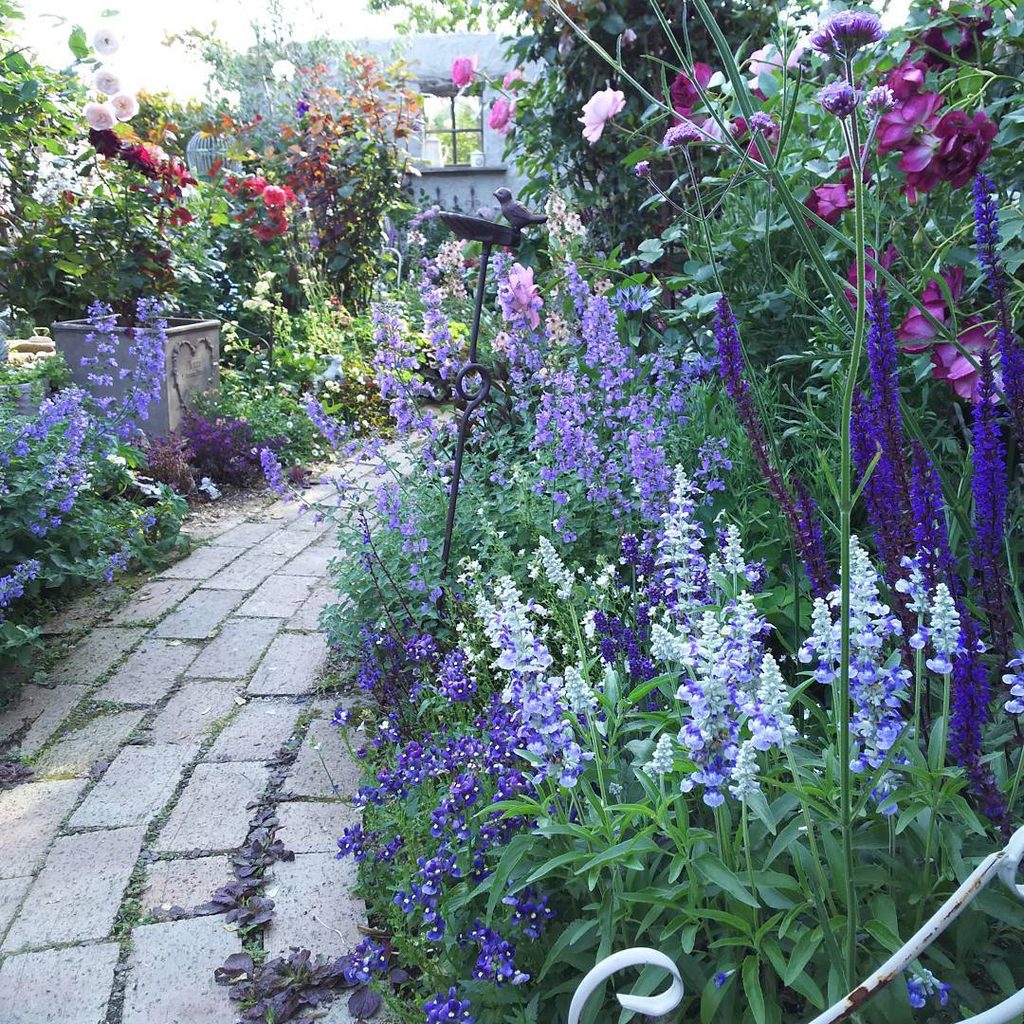
Credit: @aquamarine_march29
A stone path lined with a full blue flower garden border is one of the most rewarding things you can create in an outdoor space. When you mix salvias, cat mint, and tall blue flowering plants along both sides of a simple paved walkway, every trip through the garden becomes something worth savoring.
What gives this kind of border its depth is the mix of flower shapes and stem heights. Tall spires, low mounding plants, and sprawling groundcover varieties all play different roles in making the border feel full and considered. Adding a simple bird ornament or garden stake as a focal point inside the planting gives the eye something to land on and makes the whole space feel curated. This is a blue flower garden idea that rewards patience.
Climbing Blue Roses Over a White Wall
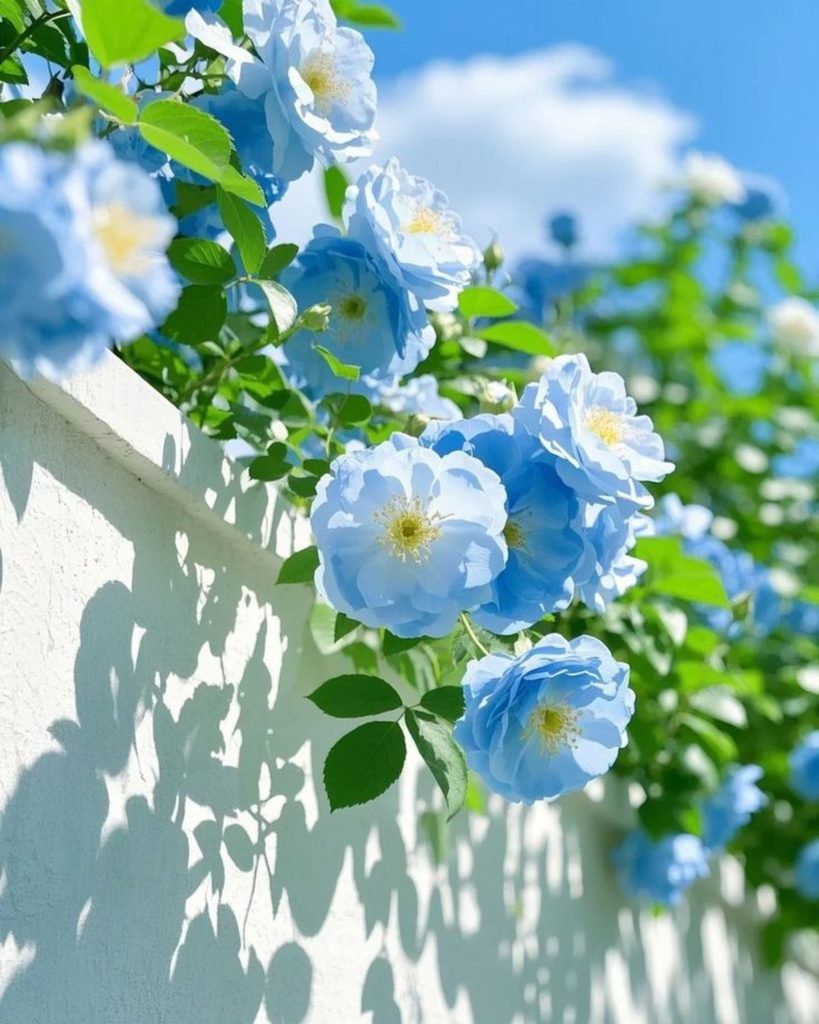
Credit: @jorgelifestyleboutique
Few things in a garden stop you the way a blue flower garden climbing rose against a white wall does. The pale powder blue of the blooms against a clean bright wall and open sky creates a scene that feels almost too good to be real.
The shadow patterns the canes and leaves cast on a white wall add a second layer of beauty that changes with the light through the day. Blue climbing roses are a specialty variety and can require a bit more searching to source. Nurseries that specialize in heritage and climbing roses are your best bet, and many offer mail-order delivery in spring. Once established, this is a blue flower garden feature that comes back year after year with minimal work.
Grape Hyacinths in a Vintage Bowl
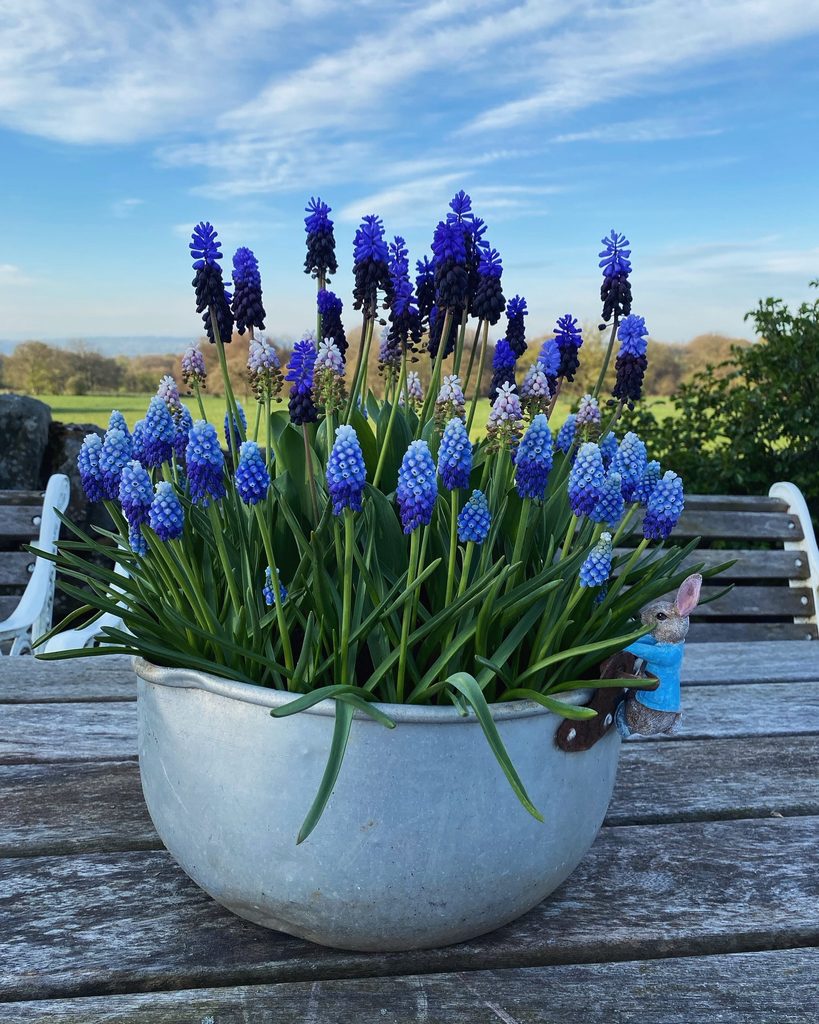
Credit: @the_little_end_cottage
Planting a single variety of blue flowers densely into one beautiful container is an idea that always looks more expensive than it is. A wide galvanized metal bowl overflowing with grape hyacinths in every shade from deep navy to soft powder blue creates a display that feels lush and generous sitting on an outdoor table or bench.
Grape hyacinths are among the easiest blue flowering bulbs you can grow. You plant them in autumn, and they appear reliably every spring, often multiplying and getting better each year. A bag of mixed muscari bulbs costs very little, and a wide vintage bowl or enamel basin from a thrift store or flea market makes the perfect container.
Tall Blue Delphiniums as a Statement Plant
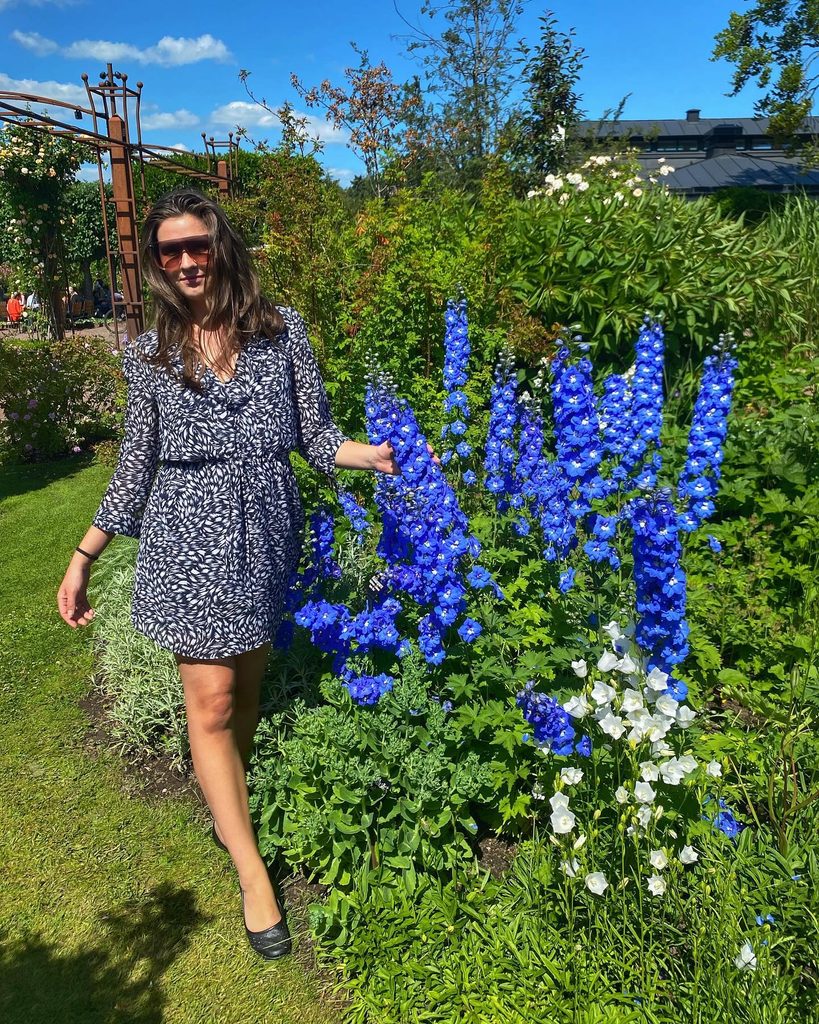
Credit: @anna_exploringtheworld
There is nothing subtle about tall blue delphiniums in a blue flower garden, and that is exactly the point. Their intense cobalt spires reach skyward and create an immediate focal point in any planting.
Delphiniums like full sun and good support once they reach their full height, which can be impressive in a healthy season. They work especially well planted at the back of a border where their height gives structure to everything growing in front of them.
A Blue Evolvulus Overflowing Its Pot
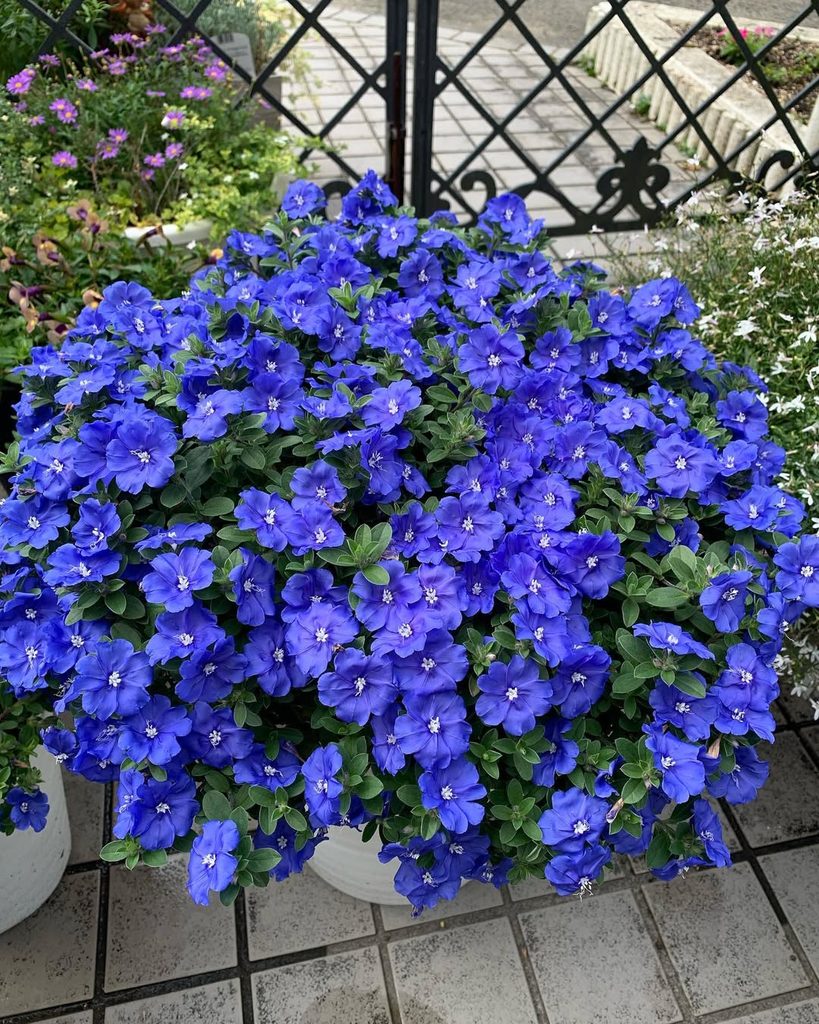
Credit: @lu_na_3397
When a single pot of blue flowers spills over its edges in every direction, it becomes something worth stopping for. Evolvulus, sometimes called blue daze, produces a constant stream of vivid true blue blooms that rarely pause through the warm season. In a simple white pot, the color is so rich and saturated it reads almost like a planted jewel.
What makes evolvulus such a good choice for a blue flower garden in containers is its long blooming season and its low maintenance nature. It asks for full sun and regular watering, and in return it gives you near constant color from late spring well into autumn. You can find it at most well-stocked garden centers during the growing season, often priced at just a few dollars per pot.
How to Keep a Blue Flower Garden Looking Its Best
A blue flower garden does not need to be complicated to look beautiful through the season. What it does need is a little consistent attention to stay at its best. Deadheading spent blooms regularly is the single most effective habit you can build.
Watering deeply and less often encourages roots to grow down rather than staying close to the surface. Plants with deep roots handle dry spells much better and generally stay more robust through the summer.
Watch for signs of powdery mildew on plants like phlox and delphiniums during humid weather. Good air circulation around your plants helps prevent this, so avoid planting too closely even when the fuller look is tempting.
Mulching around the base of border plants in your blue flower garden keeps moisture in the soil, reduces weeding, and gives the whole bed a neat, cared-for appearance.
The Best Blue Flowers to Grow From Seed
Growing your own blue flower garden from seed is one of the most satisfying ways to fill a space with color. Several of the best blue varieties are easy to start at home with very little equipment. Here are some worth trying:
Forget-me-nots self-seed freely once established and come back year after year with almost no effort. Larkspur grows quickly from seed sown directly into the ground in early spring. Blue cornflowers, also called bachelor’s buttons, are one of the fastest and most rewarding blue flowers to grow from seed.
Starting seeds indoors gives you a head start and lets you control the conditions early in the season. Most blue flowering plants benefit from being started about six to eight weeks before your last expected frost date. A simple seed tray, a bag of seed starting mix, and a bright windowsill are all you need to get going.
Labeling your seed trays clearly saves a lot of guessing later. Many blue garden flower seedlings look similar in their early stages, and it is easy to mix them up.
A blue flower garden is one of those ideas that keeps giving back the more attention you put into it. Even one corner planted in blue has the power to shift the whole feel of your outdoor space.

[…] round cushion, or flat woven rug. If you love the calm mix of foliage and deep color found in a blue garden, one leafy houseplant can bring a similar mood indoors, with simple plant care guidance available […]
[…] is also a lovely place to use Blue Flower Garden Ideas when you want cooler shades throughout the growing space. Keep blue and purple flowers together in […]
[…] style works especially well when you enjoy Blue Flower Garden Ideas because blue flowers can be mixed with pink, white, lavender, and soft green foliage. Keep a few […]