
Live Beautifully at Home


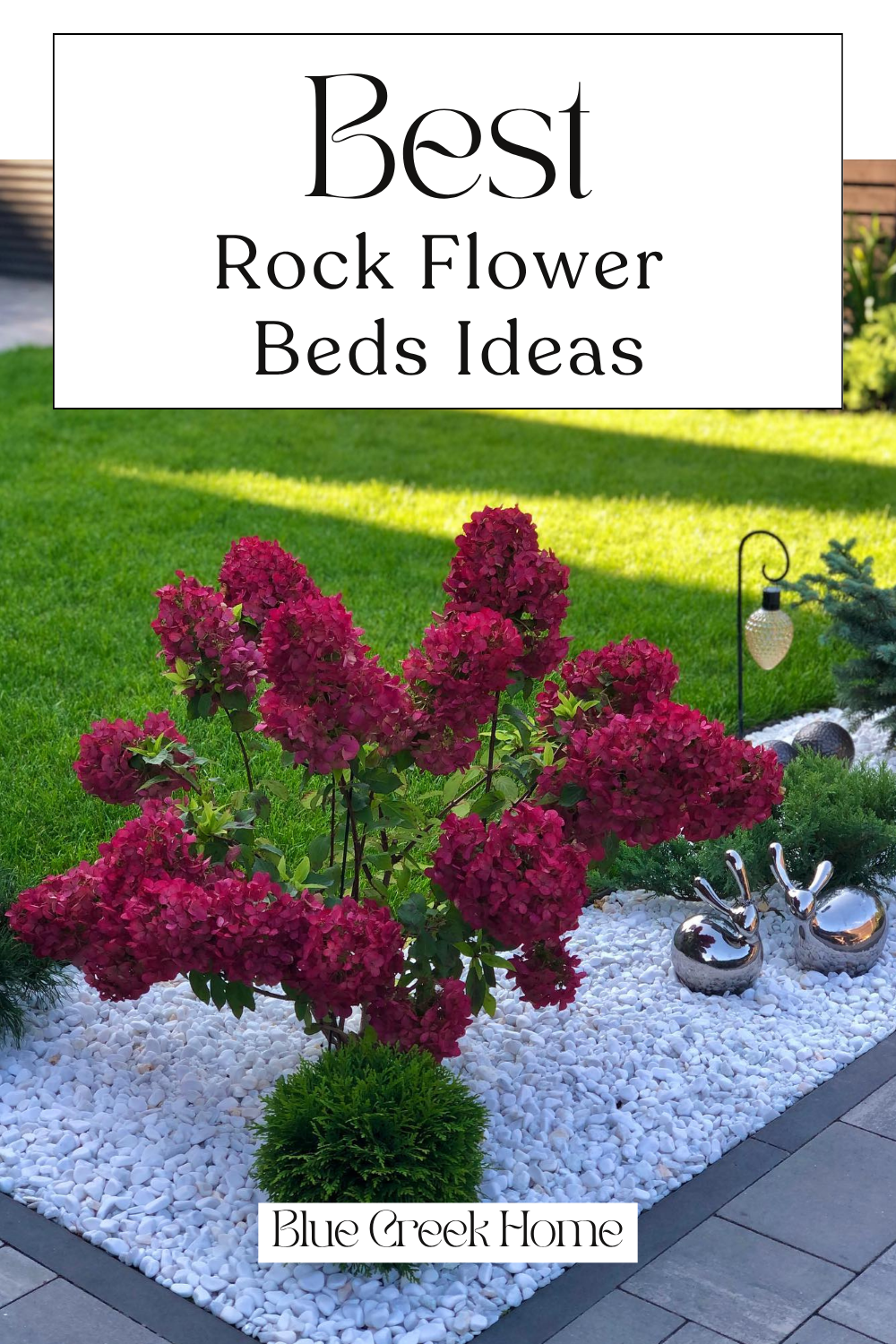
Best Rock Flower Beds Ideas to Try This Year
 Rhonda
My Blue Creek Home Founder & Editor
I spent over 12 years in decorative painting and faux finishing, starting with a faux finishing company I co-owned in Mississippi that...
September 17, 2026
9 min read
3 Comments
Rhonda
Rhonda
My Blue Creek Home Founder & Editor
I spent over 12 years in decorative painting and faux finishing, starting with a faux finishing company I co-owned in Mississippi that...
September 17, 2026
9 min read
3 Comments
Image Notice. Some images featured in this article may originate from third-party sources and are used for illustrative purposes only. Please review our Image Credits Policy for full attribution information.
Rock Flower Beds Ideas can give your garden a clean structure while still leaving plenty of room for flowers, shrubs, and greenery. Rocks create a natural frame around plants, helping the garden feel organized without making it look too formal.
The best Rock Flower Beds Ideas balance stone, soil, and plants so each part has a clear purpose. You can use smooth river rocks, larger landscape stones, gravel, or dark stone to create very different moods, from soft and cottage inspired to modern and simple.
Rock also helps define the edges of a planting area, especially when you want a clear transition between grass, a walkway, patio, or house. With the right plants, even a small bed can feel full and thoughtfully planned.
Color matters just as much as the type of rock. Pale stones can make green foliage stand out, dark gravel can create a strong background for colorful flowers, and warm tan stones can blend beautifully with brick, wood, and natural stone.
Before choosing plants, check how much sun and water the bed receives. The USDA Plant Hardiness Zone Map can also help you choose plants that are suited to your growing area.
Curved Rock Flower Beds
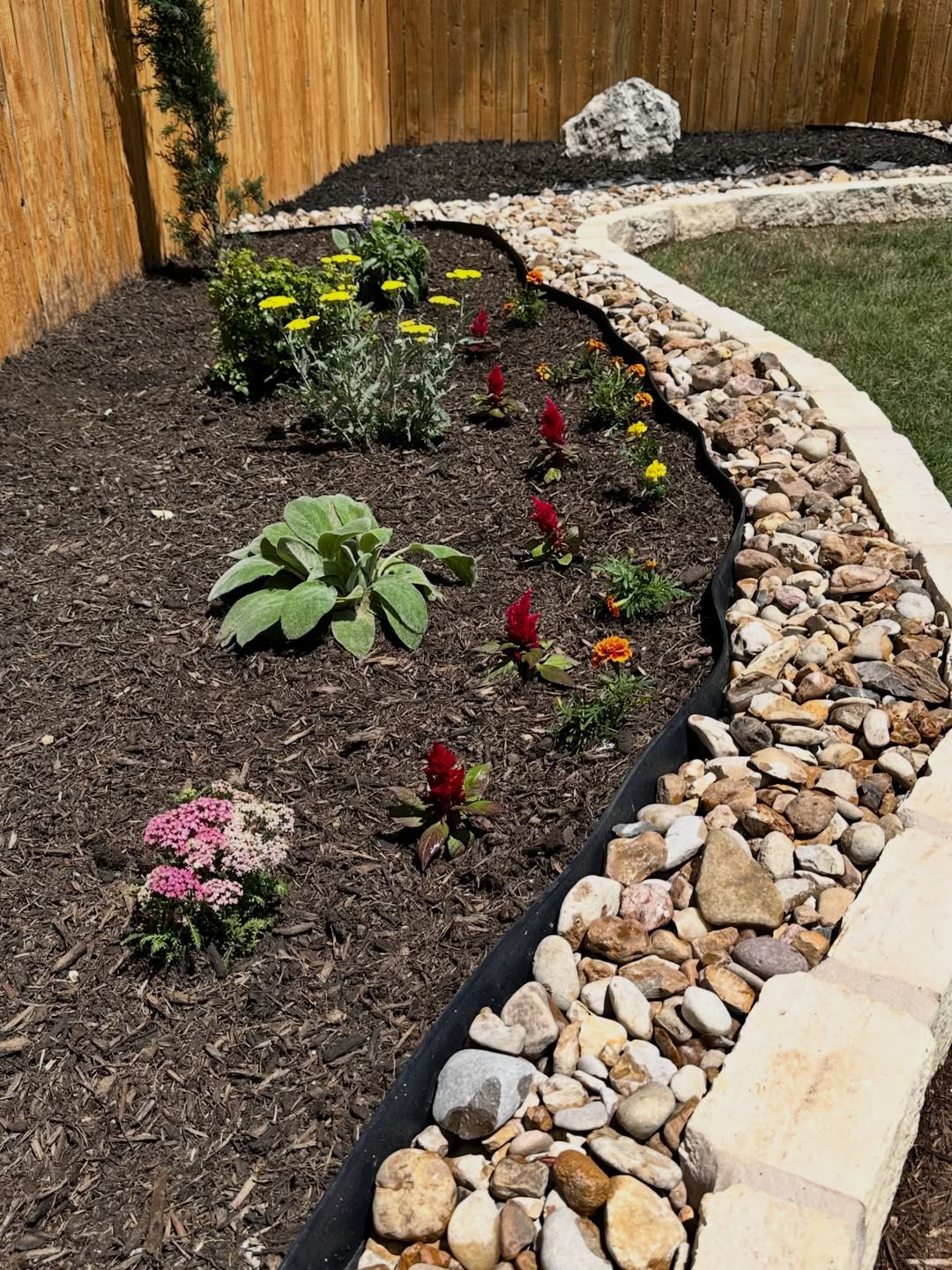
Credit: @austinlandscapesco
Curved borders are one of the easiest ways to make Rock Flower Beds Ideas feel relaxed and natural. A gentle curve can guide the eye through the garden and soften the straight lines of a fence, lawn, patio, or walkway. This approach works especially well when the planting area follows an existing outdoor path.
Keep the curve broad enough that the bed remains easy to maintain. The National Gardening Association offers useful gardening resources that can help when choosing plants for different conditions.
For a similar look, use one main type of stone across the bed and allow the plants to provide most of the color. Small flowers can sit toward the front while taller shrubs or ornamental grasses add height farther back.
Succulent Rock Garden
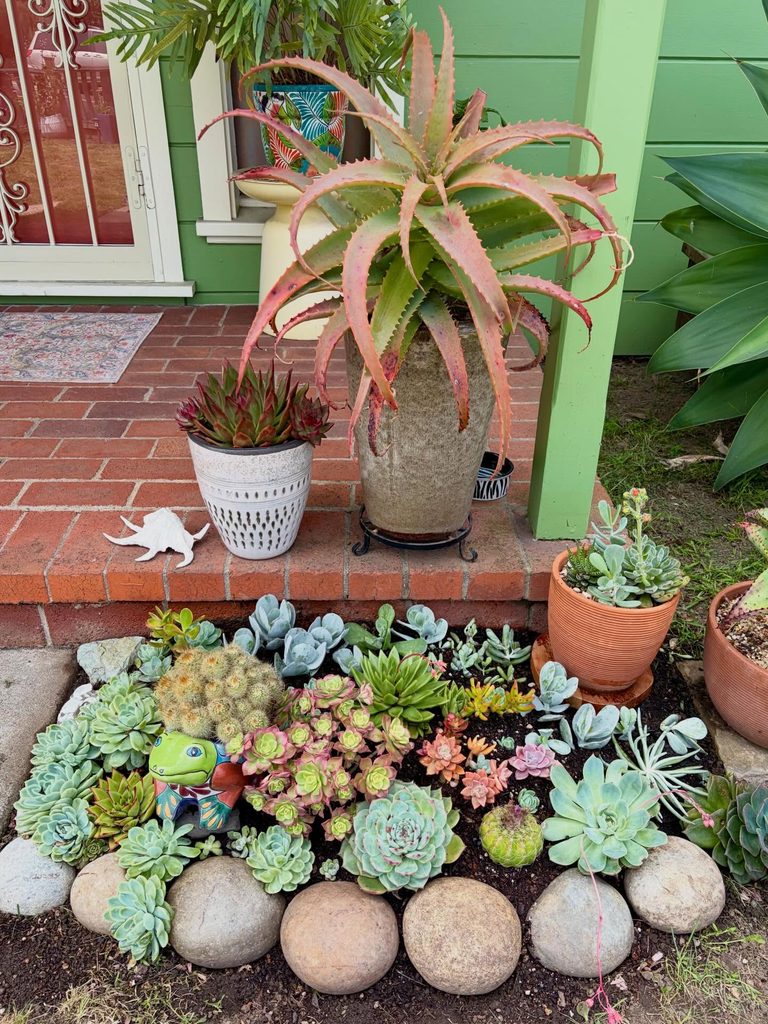
Credit: @kbettisoto
Succulents are a natural match for Rock Flower Beds Ideas because their shapes already bring strong texture to the garden. Rounded rosettes, pointed leaves, and unusual forms create plenty of visual interest even when flowers are not blooming.
Choose rocks that allow excellent drainage and avoid placing moisture loving plants beside succulents. The Royal Horticultural Society has useful information about growing and caring for succulent plants.
Try combining several succulent shapes instead of filling the entire space with one variety. Small clusters can sit between larger stones, while a taller succulent can become the main focal point.
This style can also work beautifully near a porch or entrance where you want an easy care planting area. In colder climates, many tender succulents can be grown in containers and moved indoors when temperatures fall.
Black Stone With Greenery
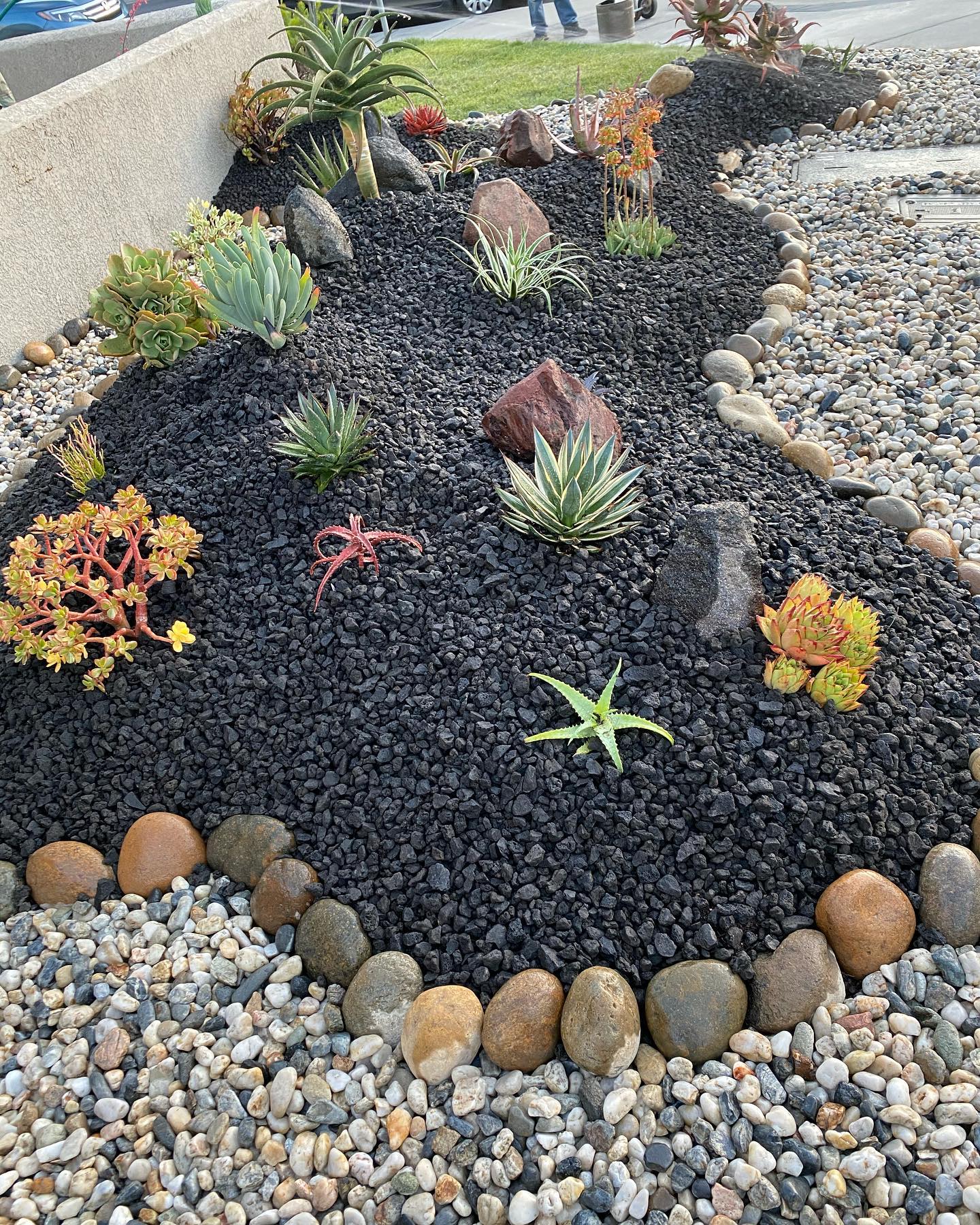
Credit: @mysucculentaddictionisreal
Dark stone creates a dramatic background for green plants, making this one of the more modern Rock Flower Beds Ideas. The strong contrast gives simple plants a crisp presence and can make pale or silver foliage stand out.
Black gravel can become hot in strong sunlight, so plant selection matters. Resources from The Old Farmer’s Almanac can help you understand growing conditions and seasonal planting needs.
Keep the planting pattern open instead of filling every section. Spacing between plants allows the dark stone to remain visible and gives each plant room to grow.
Rock Beds Along A Porch
Credit: @rendon_powledge
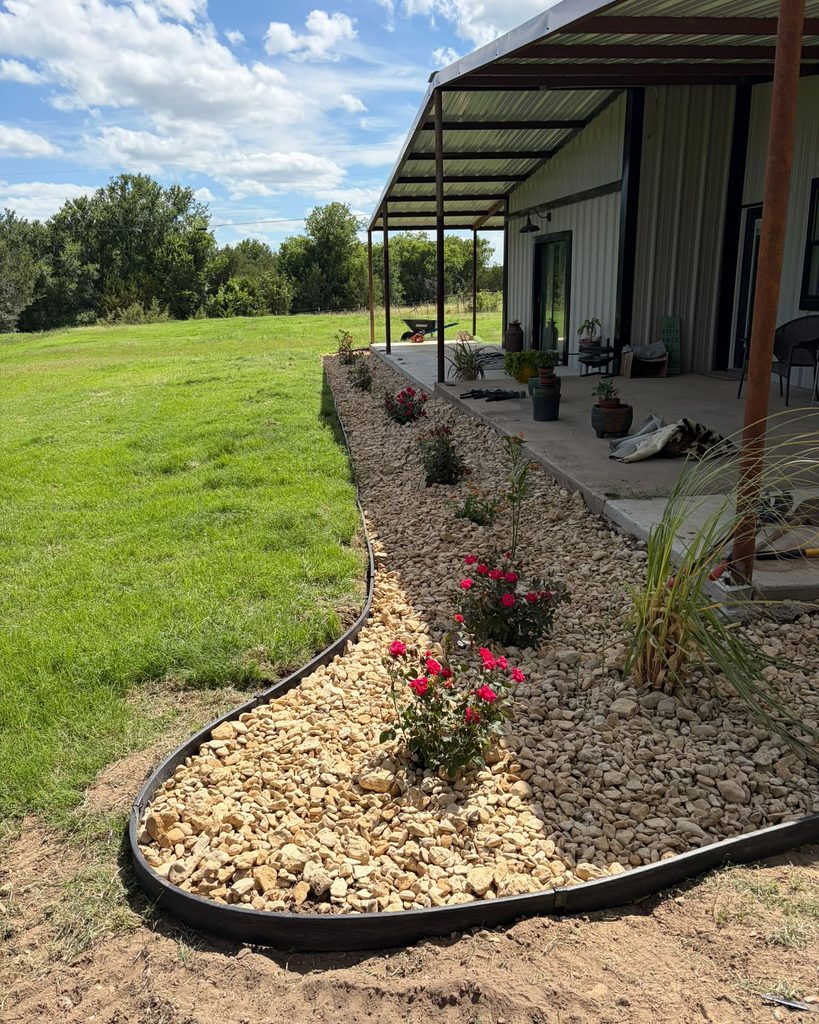
Long planting areas beside a porch can become useful spaces for Rock Flower Beds Ideas when grass feels difficult to maintain. A rock covered bed creates a clear border beside the building while leaving room for small flowering plants and ornamental grasses.
Choose plants according to the amount of sunlight the porch receives. The Missouri Botanical Garden offers a helpful plant database for researching mature size, light needs, and growing conditions.
A long bed benefits from repeating the same few plants along its length. Repetition gives the space a calm rhythm and makes a large planting area easier to plan.
Warm colored gravel can work especially well with metal siding, wood posts, and country style porches. Add a few flowering plants at intervals so the bed has small moments of color without becoming difficult to care for.
White Rock Flower Garden
Credit: @larisa_piligrim
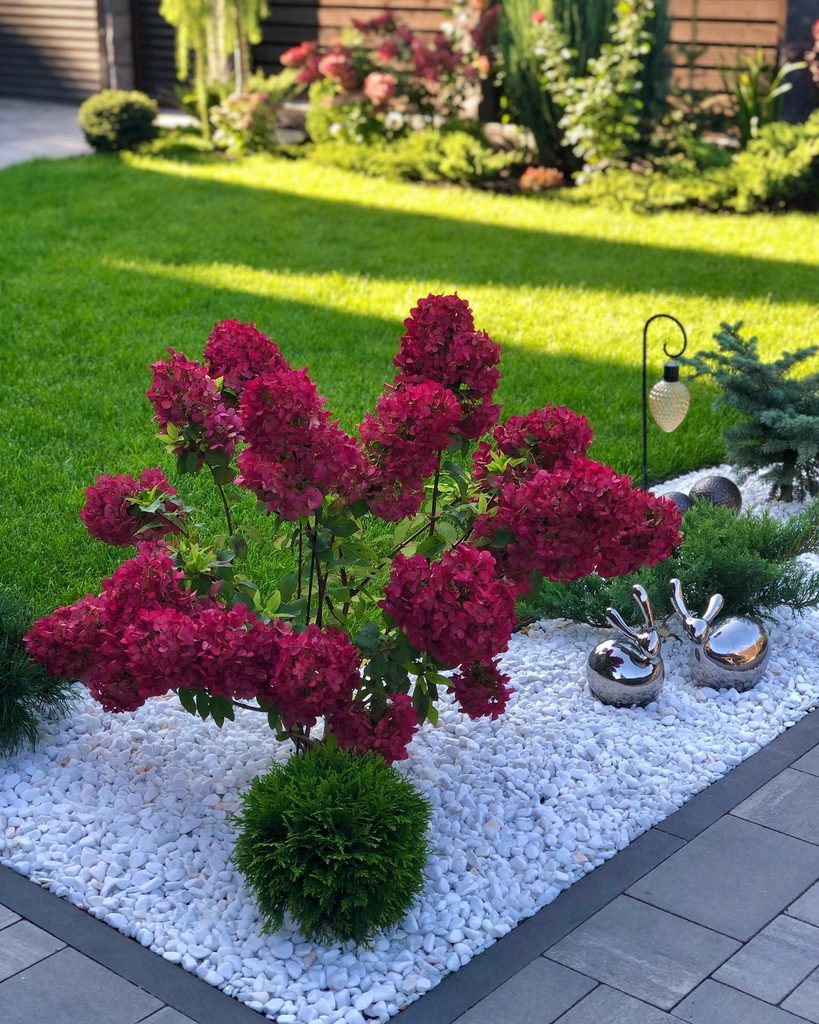
White stone gives Rock Flower Beds Ideas a fresh appearance and creates a bright base for colorful shrubs and flowers. Deep green foliage looks especially rich against white rock, while burgundy and pink flowers add a softer contrast.
A light stone bed can reflect a lot of sunlight, so plants should be selected for the conditions in your garden. The University of Minnesota Extension provides practical gardening guidance for choosing and caring for landscape plants.
Use white rock around a strong central plant to create a simple focal point. A flowering shrub, small evergreen, or ornamental grass can give the bed structure while smaller plants fill the surrounding spaces.
Front Yard Rock Planting
Credit: @texastophardscaping
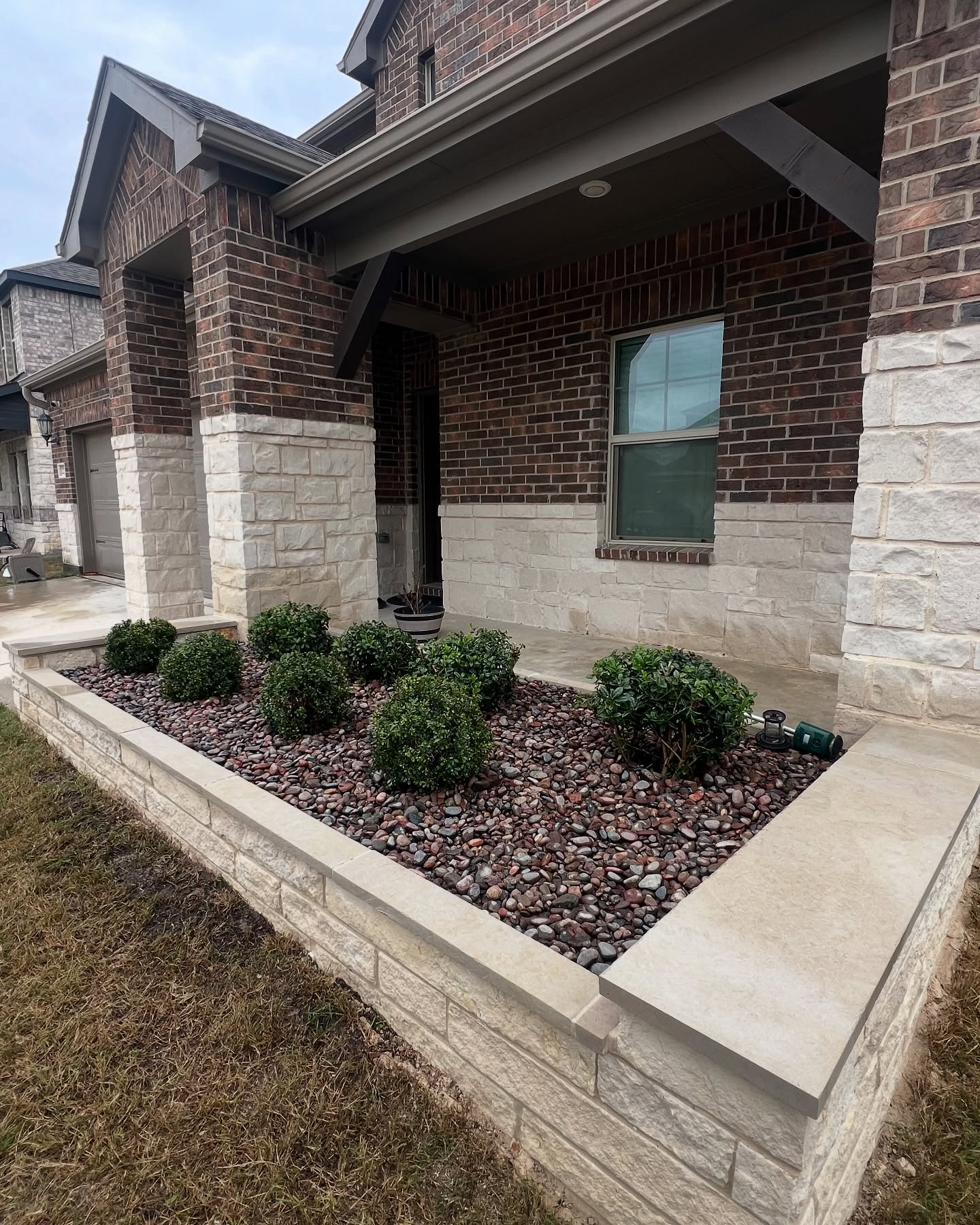
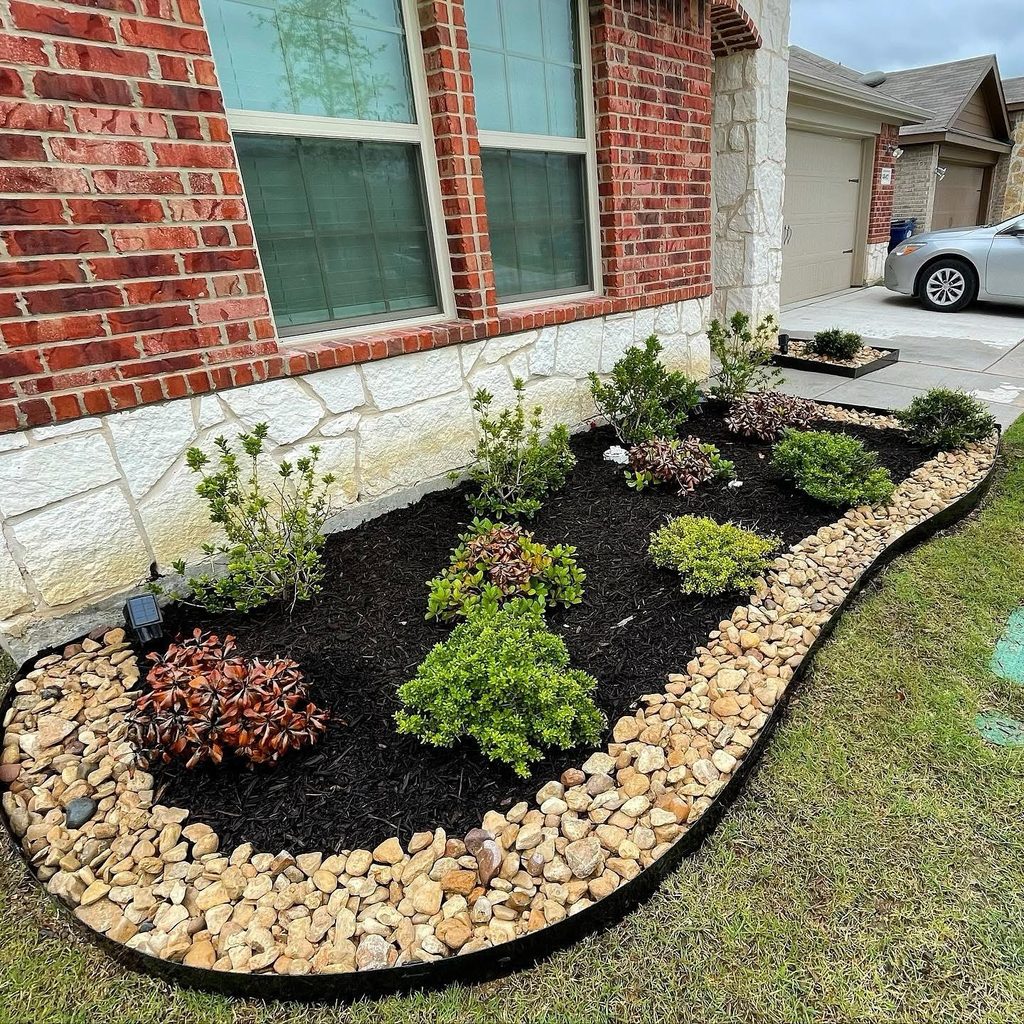
The front yard is an excellent place to use Rock Flower Beds Ideas because stone can define planting areas without taking over the entrance. Low shrubs, flowering plants, and small evergreens can create a welcoming garden that still leaves clear paths to the door.
Think about mature plant size before buying anything. Better Homes and Gardens offers broad gardening guidance that can help you compare plants and understand basic landscape planning.
For a front bed, repeat a few plants instead of choosing a different plant for every spot. Repeated shapes help connect separate sections of the yard and can make the whole landscape feel more settled.
Warm river rock can complement brick homes, while gray stone can work well with concrete and modern exteriors. Keep the plants low near paths and windows so the bed remains easy to see and maintain.
Curved Shrub Rock Bed
Credit: @olga_iv_s_
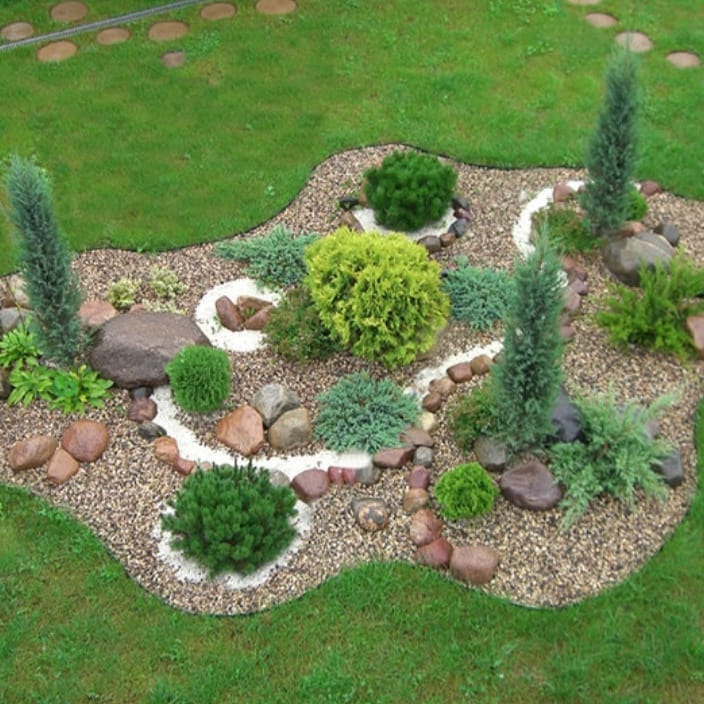
Small shrubs surrounded by stone create a simple version of Rock Flower Beds Ideas that works beautifully when you prefer foliage over lots of flowers. Rounded shrubs can bring structure to the garden while the rock keeps the ground area visually clean.
Leave enough space between shrubs for their mature size. The University of Florida IFAS Extension provides useful information about plant selection, spacing, and landscape care.
This idea is especially useful for homeowners who want a garden that looks organized throughout several seasons. Choose shrubs with different leaf colors or textures if you want more variety without adding many flowering plants.
Natural Stone Flower Garden
Credit: @classicrockstoneyard
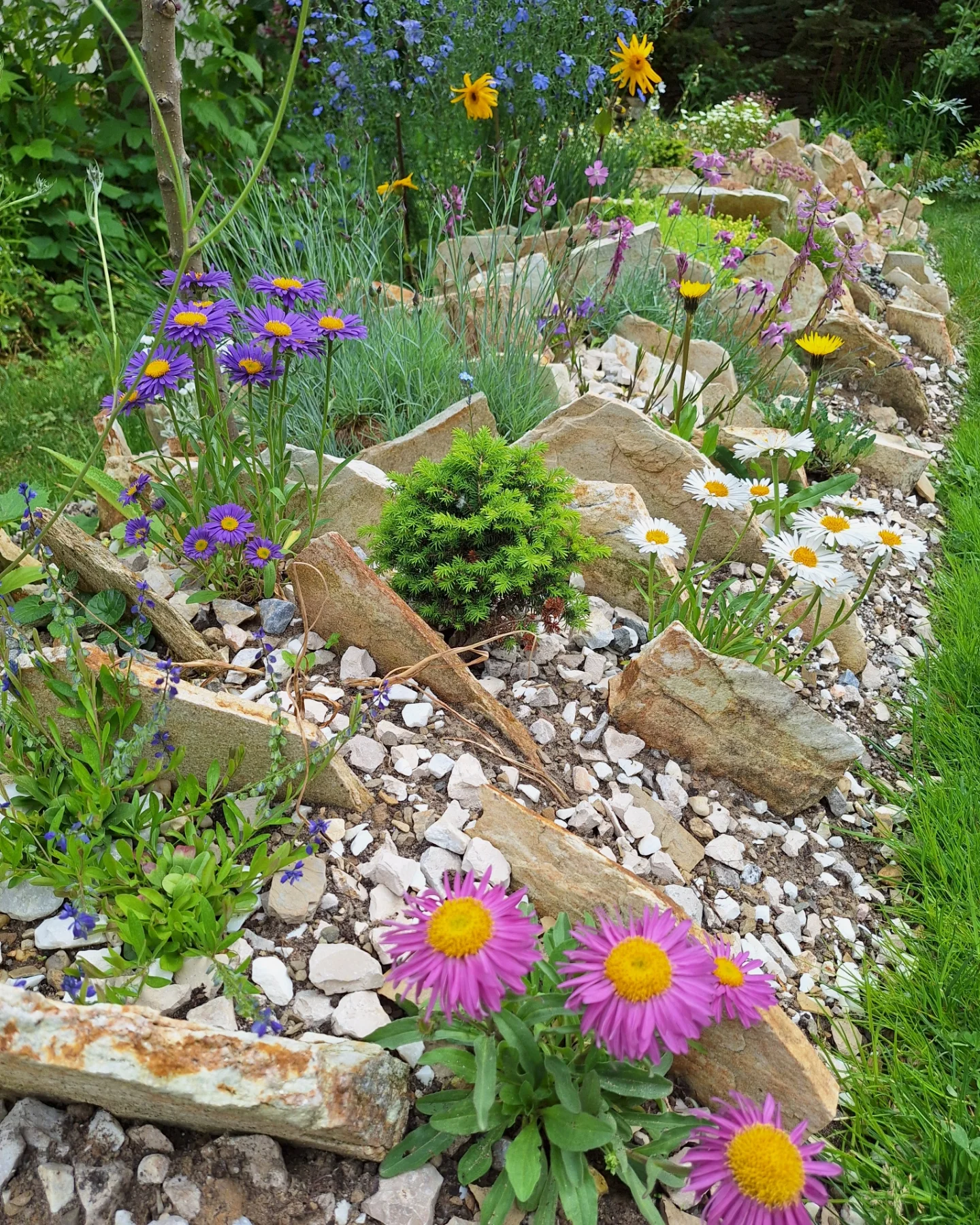
Natural stone brings an earthy feeling to Rock Flower Beds Ideas, especially when the rocks have different shapes and warm neutral colors. Larger stones can be placed among smaller pieces to create the feeling of a garden that has developed naturally over time.
Plants with soft flowers and fine leaves pair well with rough stone. Garden Design has useful inspiration for combining plants, stone, paths, and other landscape elements.
Instead of lining every stone in a perfect row, vary the placement slightly. This gives the bed a more relaxed appearance while still keeping enough structure for the garden to remain easy to understand.
This style is a natural fit for cottage gardens and informal yards. Purple flowers, white daisies, yellow blooms, and fine ornamental grasses can all bring gentle color between the stones.
Flower And Rock Border
Credit: @innfloraa
A mixed flower and stone border brings together the strongest parts of Rock Flower Beds Ideas and traditional planting. Large rocks provide structure, while flowers soften the edges and create seasonal color throughout the bed.
This style gives you plenty of freedom when choosing plants. The Royal Horticultural Society provides helpful guidance on garden design and choosing plants for different growing conditions.
Use larger stones toward the center and smaller pieces around them. Flowers can grow between the stones, creating a natural transition that feels less formal than a straight line of edging.
Color can be kept soft with white and purple flowers, or you can create a brighter garden with yellow, pink, and blue blooms. Beautiful Pink Flower Garden Ideas can work especially well here when pink flowers are repeated in several small groups.
Choosing The Right Rock
The stone you choose can change the entire character of your garden. Before buying several bags, look at the colors already present around your house, including brick, siding, roof materials, fences, paving, and outdoor furniture.
Smooth river rocks create a softer appearance and work well around informal plantings. Crushed stone gives a flatter surface, while larger landscape rocks can become strong focal points inside a planting bed.
Think about how the stone will look when wet as well as dry. Some rocks become much darker after rain, which can change the contrast between the plants and the ground covering.
Landscape fabric can be useful beneath some types of rock, especially where weed control is a concern. The University of California Agriculture and Natural Resources offers practical information about landscape management and garden care.
Planning Plants Around Rocks
Plants should be selected according to the conditions they will receive, not only their flower color. Check sunlight, soil drainage, mature size, watering needs, and winter hardiness before placing plants in your bed.
A simple planting plan can use three levels. Taller shrubs or ornamental grasses can sit toward the back, medium plants can fill the center, and low flowers or ground covers can soften the front edge.
You can also create Rock Flower Beds Ideas with a limited plant palette. Using three to five plant types repeatedly often creates a more connected garden than choosing many unrelated varieties.
Consider bloom timing when choosing flowers. A garden can have spring flowers, summer blooms, and fall color if the plants are selected to provide interest at different times.
Texture is just as important as color. Silver leaves, fine grasses, rounded shrubs, broad leaves, and small flowers can make the garden interesting even when only a few plants are flowering.

[…] is also where Rock Flower Beds Ideas can fit naturally into a larger backyard plan. Use stone or gravel around selected areas to define […]
[…] wood posts if the porch is large enough to support them visually. A few comfortable chairs and flower beds along the steps can make the space feel useful every day, while a simple black lantern adds a […]
[…] your home also has a ground level garden, Rock Flower Beds Ideas can provide inspiration for using stones, gravel, and plants together. Similar natural materials […]