
Live Beautifully at Home


12 Beautiful Kitchen Declutter Ideas for a Tidy Pantry
 Rhonda
My Blue Creek Home Founder & Editor
I spent over 12 years in decorative painting and faux finishing, starting with a faux finishing company I co-owned in Mississippi that...
October 21, 2026
10 min read
Leave a comment
Image Notice. Some images featured in this article may originate from third-party sources and are used for illustrative purposes only. Please review our Image Credits Policy for full attribution information.
Kitchen declutter ideas can make your kitchen feel calmer, cleaner, and easier to use every day. When cupboards are crowded, counters fill with appliances, and food gets lost behind other packages, even simple tasks like preparing breakfast can take longer than they need to. A few thoughtful changes help you make better use of the space you already have.
The secret to a well organized kitchen is giving every item a clear place. You can group everyday ingredients together, keep frequently used tools within reach, and make room for the things your household uses most. These small changes also help you see what you own, reduce food waste, and spend less time searching for cooking essentials.
A tidy kitchen does not need matching containers or expensive storage systems. With practical kitchen declutter ideas, you can create a space that suits your routine, whether you have a generous walk in pantry, a few narrow cabinets, or a compact kitchen with limited shelves. The most helpful changes are the ones that make everyday life easier and feel simple to maintain.
Before organizing, empty one shelf or drawer at a time so you can see what belongs there. This makes it easier to remove expired food, duplicates, and items that no longer serve a purpose.
Kitchen Declutter Ideas With Built In Shelves
Credit: @agv_my_lifestyle
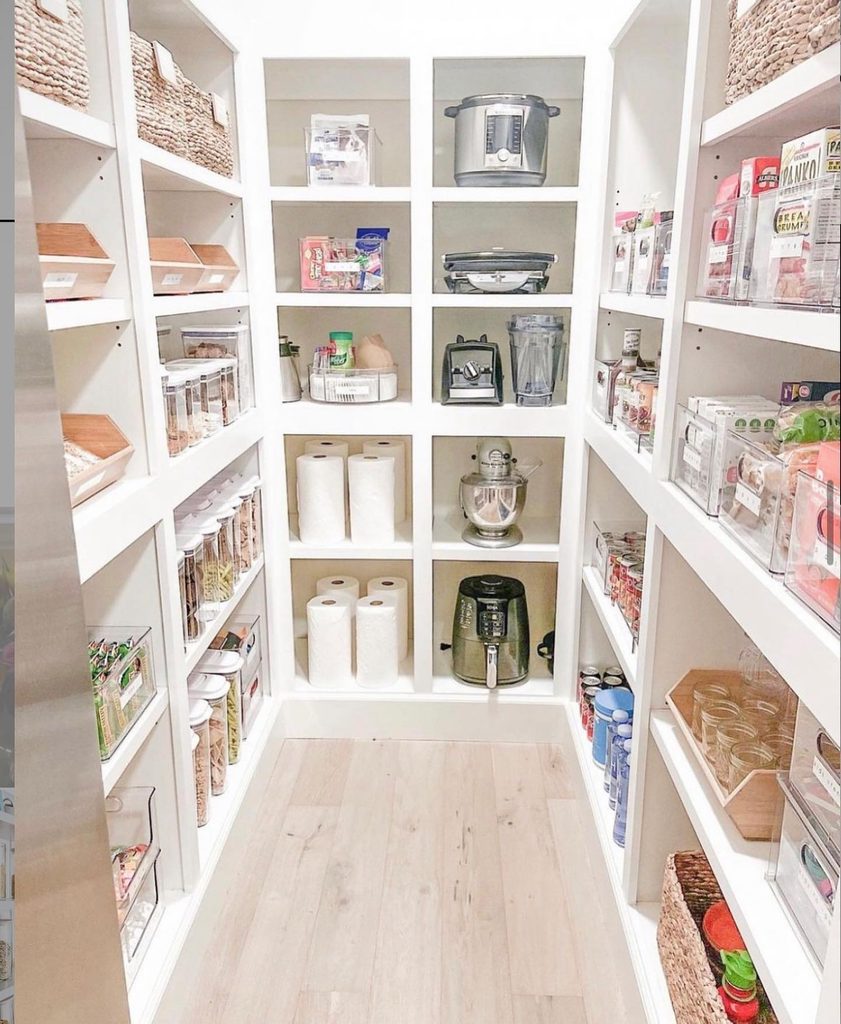
A pantry with built in shelves gives you a useful place for food, small appliances, baking supplies, and household essentials. Dividing the space into separate sections helps prevent one crowded shelf from becoming a home for everything that has nowhere else to go. This approach makes kitchen declutter ideas especially useful when you have many different items to store.
Give each shelf a clear purpose, such as breakfast supplies, cooking appliances, paper products, or baking ingredients. Keep heavier appliances on sturdy lower shelves, and use baskets for small packages that tend to slide behind larger items. This simple arrangement helps you find what you need without moving half the pantry around.
Bottle Lids in Clear Organizers
Credit: @agv_my_lifestyle
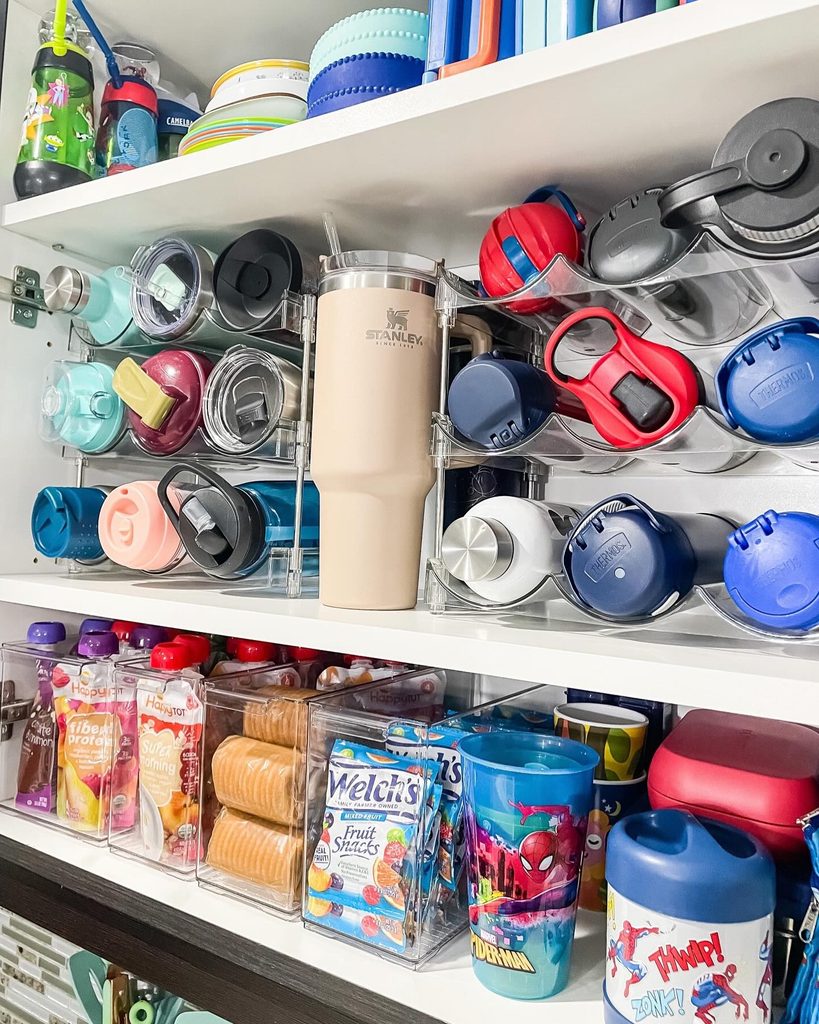
Reusable water bottles are useful, but their lids, straws, and drinking cups can quickly take over a kitchen cabinet. A dedicated bottle storage system keeps these pieces together and makes it easier to find the right lid when you are packing drinks for school, work, or a day out. It also gives oddly shaped items a clear home.
Choose clear organizers with curved sections or adjustable dividers to keep bottles from rolling around. Group lids by size or bottle type, and place the cups you use most often at the front. If you have limited shelf space, remove bottles that leak, no longer fit your needs, or rarely leave the cupboard.
Labeled Bins for Family Snacks
Credit: @amy.darley
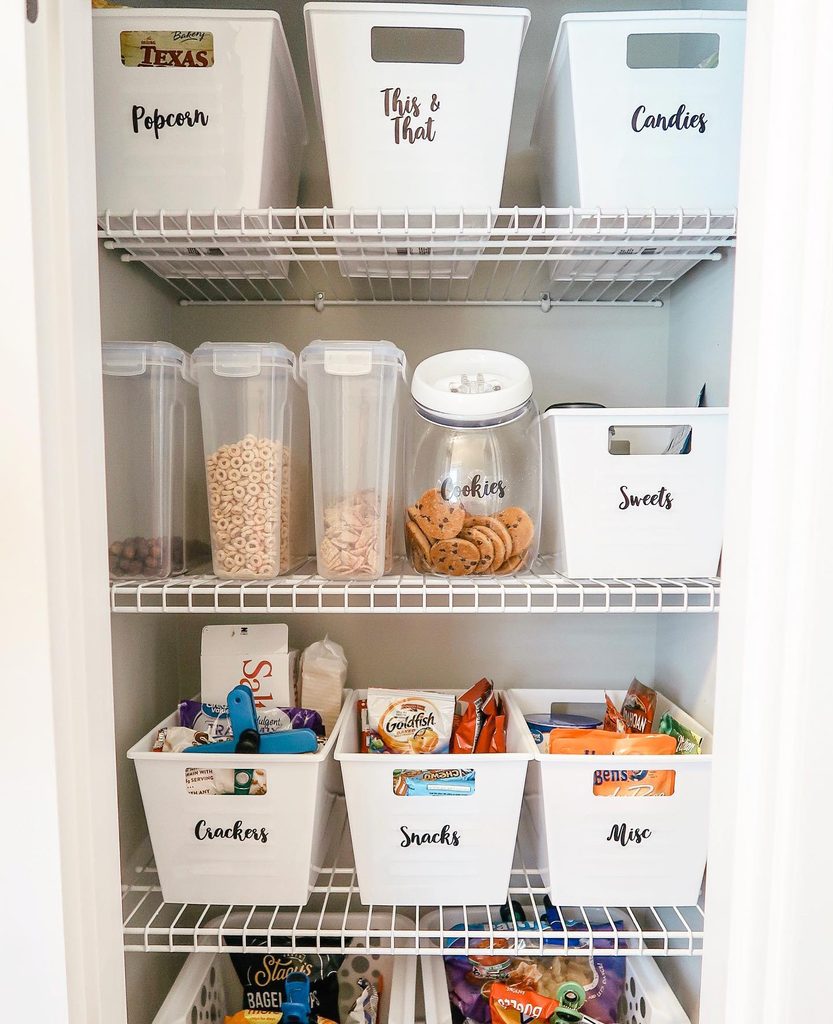
Family snacks often arrive in different shapes and sizes, making them difficult to stack neatly. Separate bins for crackers, sweets, popcorn, and packaged snacks create clear boundaries and make it easier for everyone to return items to the right place. This is one of the simplest kitchen declutter ideas for a busy household because it gives small packages a home without requiring new cabinets.
Choose lightweight bins with handles so you can pull them forward without disturbing the rest of the shelf. Use labels that describe the contents clearly, and place frequently requested snacks on a lower shelf where family members can reach them safely. Leave a little empty space in each bin so new groceries fit without forcing everything inside.
A Dedicated Baking Station
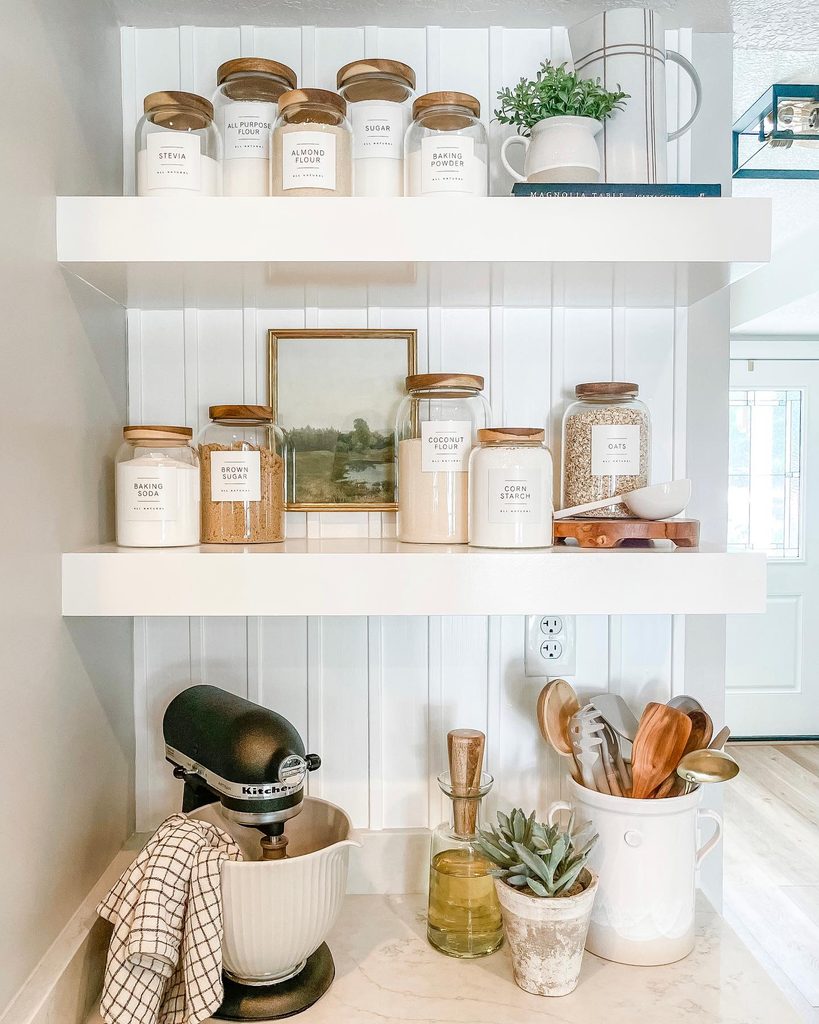
Credit: @dwelingco
Baking becomes easier when flour, sugar, measuring tools, and mixing equipment sit close together. A dedicated baking station keeps these supplies in one convenient area, reducing the need to walk between cupboards while preparing a recipe. It also helps you spot duplicate ingredients before buying another package.
Store flour, sugar, oats, and other dry ingredients in airtight containers with easy to read labels. Keep measuring cups and frequently used utensils in a nearby holder, and place heavier mixers on a stable counter or accessible shelf. If your kitchen is small, one shelf for baking essentials can provide many of the benefits of a full baking cabinet.
A Refrigerator With Clear Zones
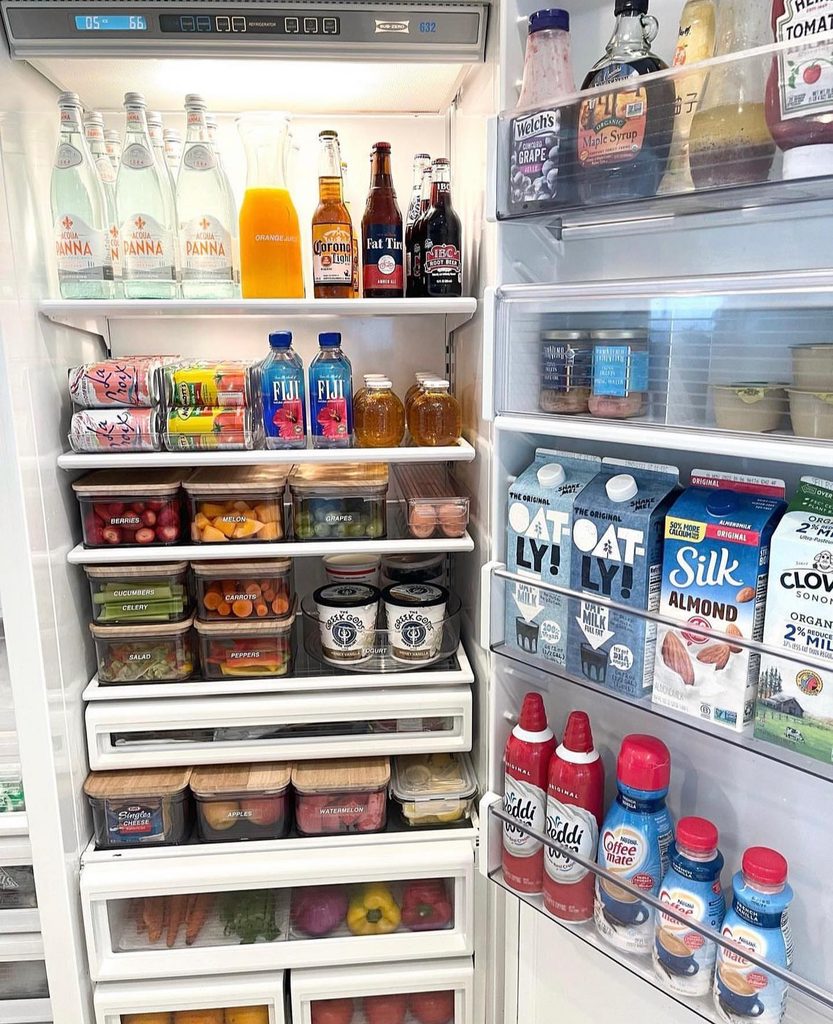
Credit: @less.is.a.new.more
A refrigerator is easier to manage when every shelf has a purpose. Grouping drinks, ready to eat snacks, washed produce, and dairy products helps you find ingredients quickly and reduces the chance of forgotten food sitting at the back. Clear containers make it easier to check what remains before writing your shopping list.
Use refrigerator safe bins that fit the available shelf depth, and label them if several family members share the space. Keep raw meat separated from ready to eat foods, and follow your refrigerator manufacturer’s storage guidance for the coldest areas. Since different foods need different storage conditions, arrange your zones around food safety as well as convenience.
Matching Containers for Dry Goods

Credit: @less.is.a.new.more
Dry goods become easier to manage when containers have consistent shapes and fit neatly along the shelves. Clear storage lets you see how much rice, cereal, lentils, flour, or pasta remains, so you can plan meals and shopping with less guesswork. It also reduces the number of half open bags taking up valuable space.
Before buying containers, measure shelf height and depth, then choose sizes that make good use of the available room. Add labels with the ingredient name and, when helpful, the opening date or cooking instructions. For practical kitchen declutter ideas, start with the foods you buy most often and expand the system only when you know it suits your routine.
A Cabinet for Baby Feeding Supplies
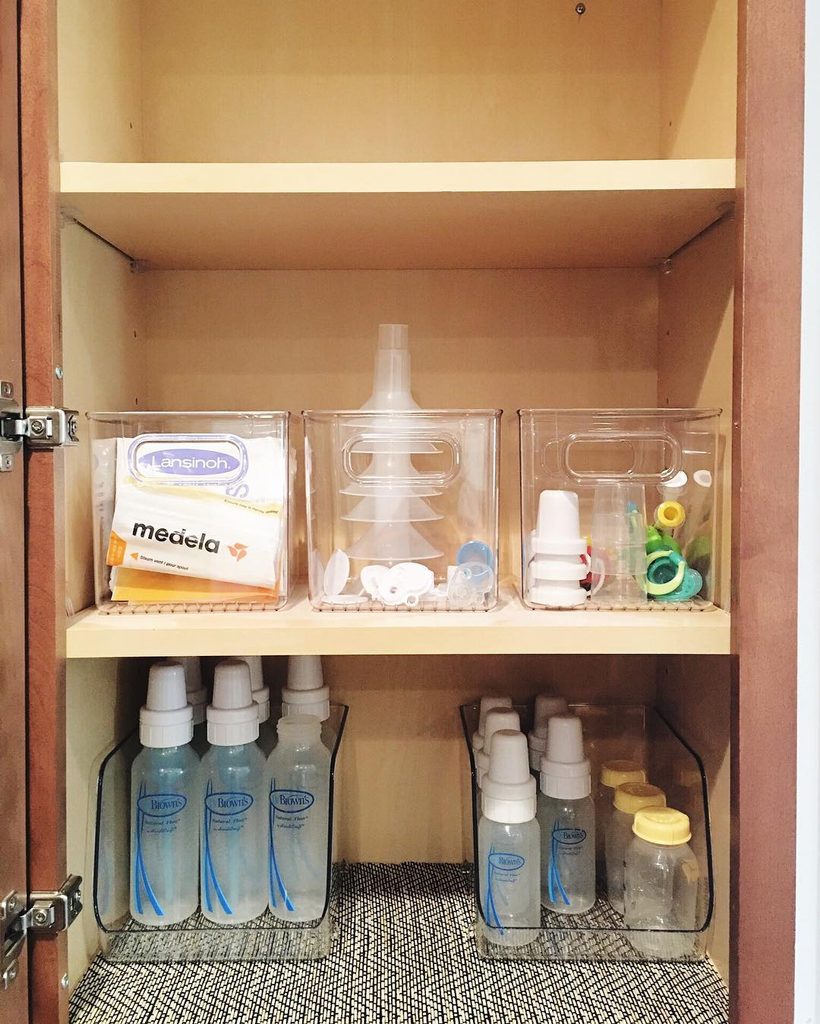
Credit: @organized_simplicity
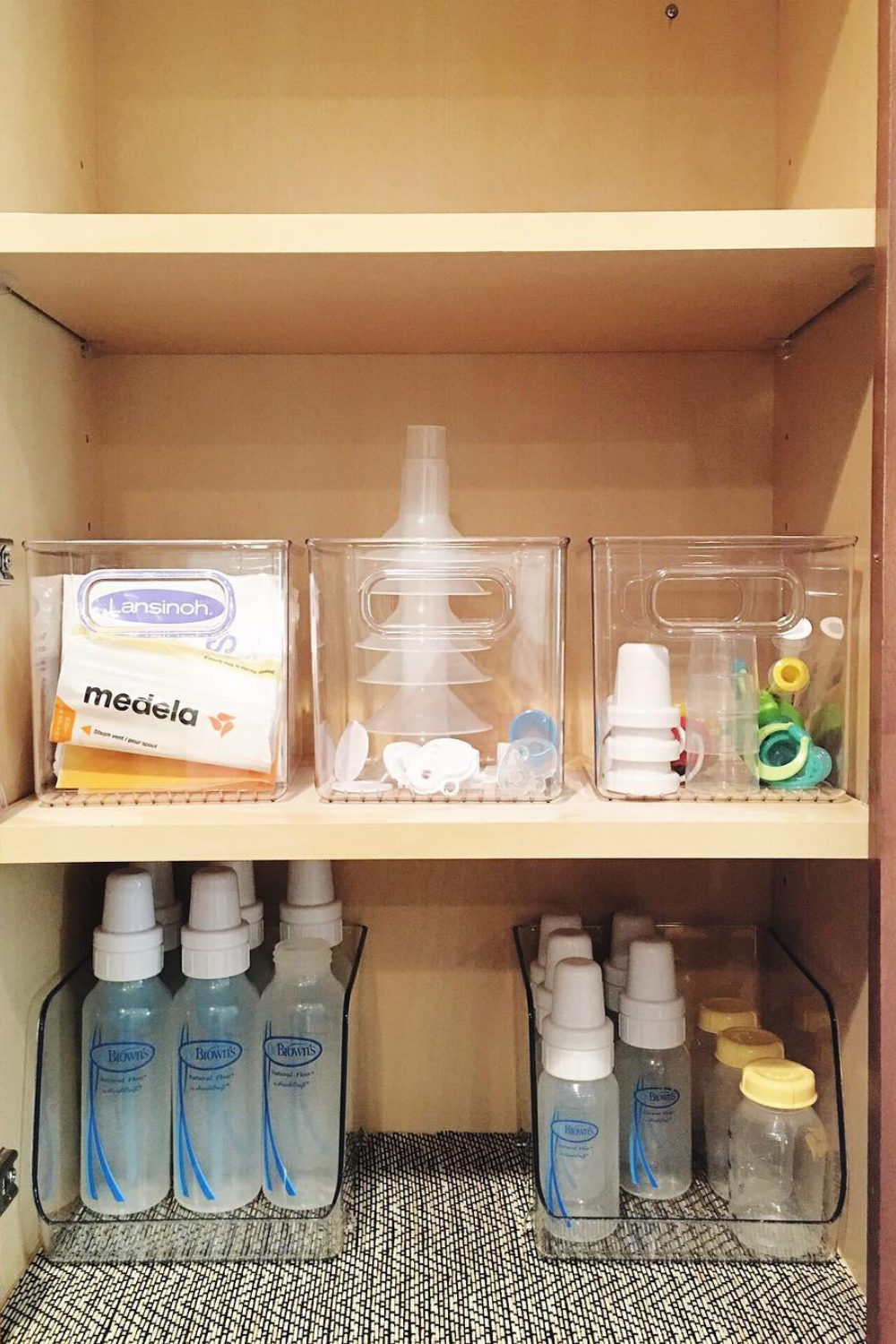
Baby bottles, lids, teats, and feeding accessories are much easier to manage when they have separate storage areas. A cabinet divided into a few clear sections helps you keep clean parts together and reduces the time spent searching for a missing piece during a busy morning or late night feed.
Choose bins that are easy to remove and wash, and allow feeding parts to dry completely before storing them. Keep clean equipment away from household cleaners and other items that could contaminate it. This arrangement also makes it easier to notice damaged bottle parts and replace them when needed.
Grouping Pantry Supplies by Category
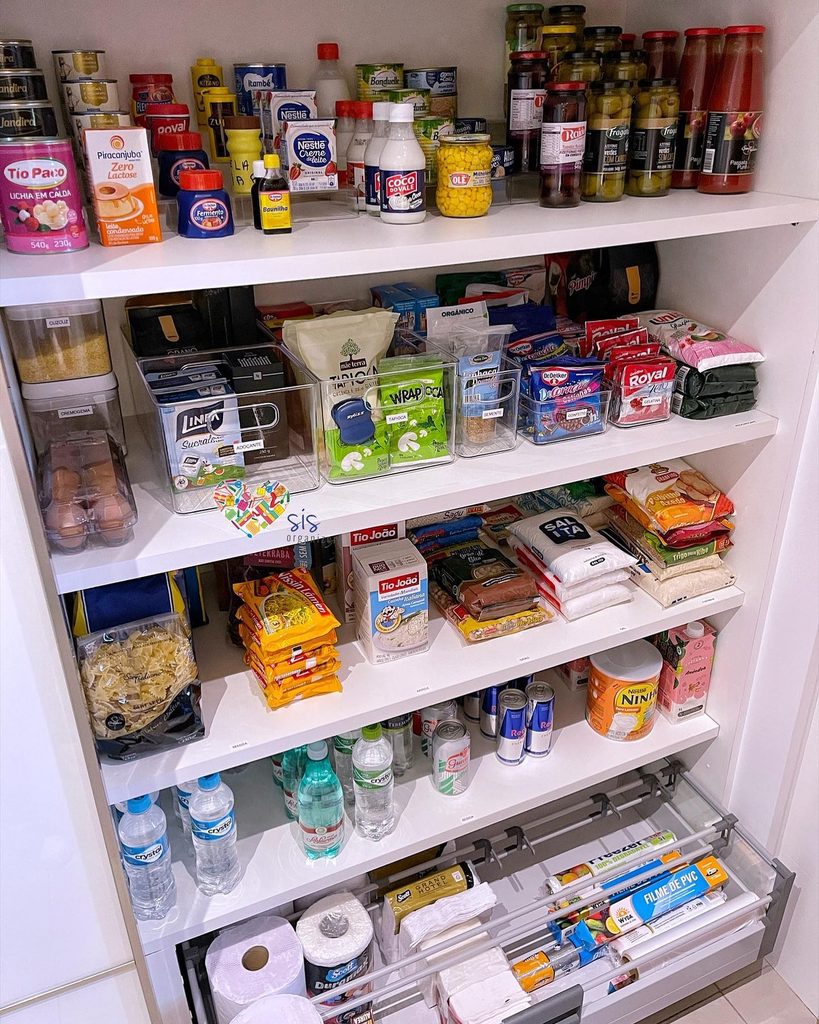
Credit: @sis_organizers
A pantry with clear categories makes grocery shopping and meal preparation feel more manageable. Keep similar ingredients together, such as grains, baking products, canned food, sauces, and snacks, so you can find what you need without checking every shelf. This method also helps prevent duplicate purchases when several packages are hidden behind one another.
Use bins for flexible packages and containers for ingredients that benefit from airtight storage. Turn labels toward the front, place newer groceries behind older products, and keep frequently used supplies within comfortable reach. These kitchen declutter ideas work in both large pantries and narrow cupboards because they rely on clear groups instead of extra space.
Storage Under the Kitchen Sink
Credit: @sonyameares
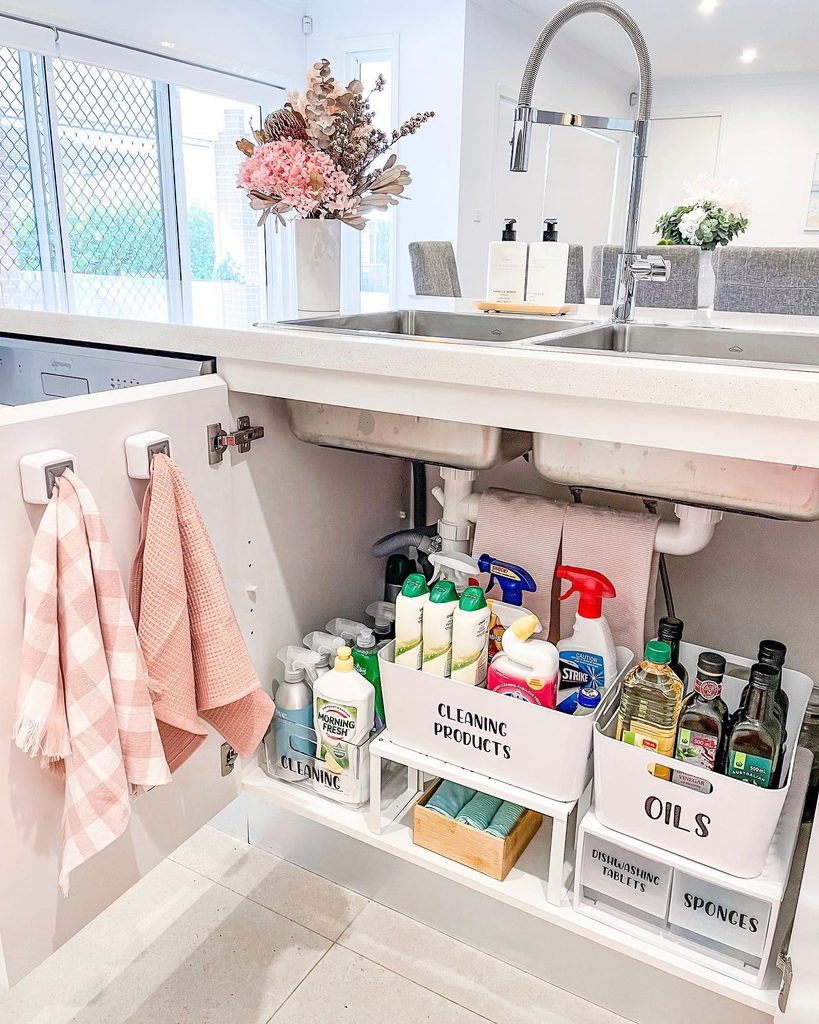
The cabinet beneath the sink often becomes a catchall for cleaning sprays, dishwashing supplies, spare cloths, and other household products. A few carefully chosen organizers can turn this awkward area into a useful storage space without blocking pipes or making everyday items difficult to reach.
Use a small raised shelf or removable bins to separate cleaning products from sponges, cloths, and dishwasher supplies. Check for leaks before arranging the cabinet, and keep products in their original containers with labels intact. Store cleaning chemicals securely away from children and pets, and keep them separate from food, utensils, and other kitchen essentials.
A Warm Wooden Pantry

Credit: @agv_my_lifestyle
Open wooden shelves bring warmth to a pantry while keeping ingredients easy to reach. This style works especially well when dry goods, jars, and everyday appliances each have their own place. A thoughtful arrangement also makes it easier to notice when you are running low on flour, pasta, or breakfast staples.
Use matching jars for ingredients you buy regularly, but keep their sizes suited to the amount you store. Larger containers work well for rice, oats, and pasta, while smaller jars are useful for seeds and baking extras. Soft shelf lighting can make the pantry easier to use in the evening, especially when the shelves sit in a corner away from natural light.
Clear Containers for Kitchen Cabinets
Credit: @theorganizedlife
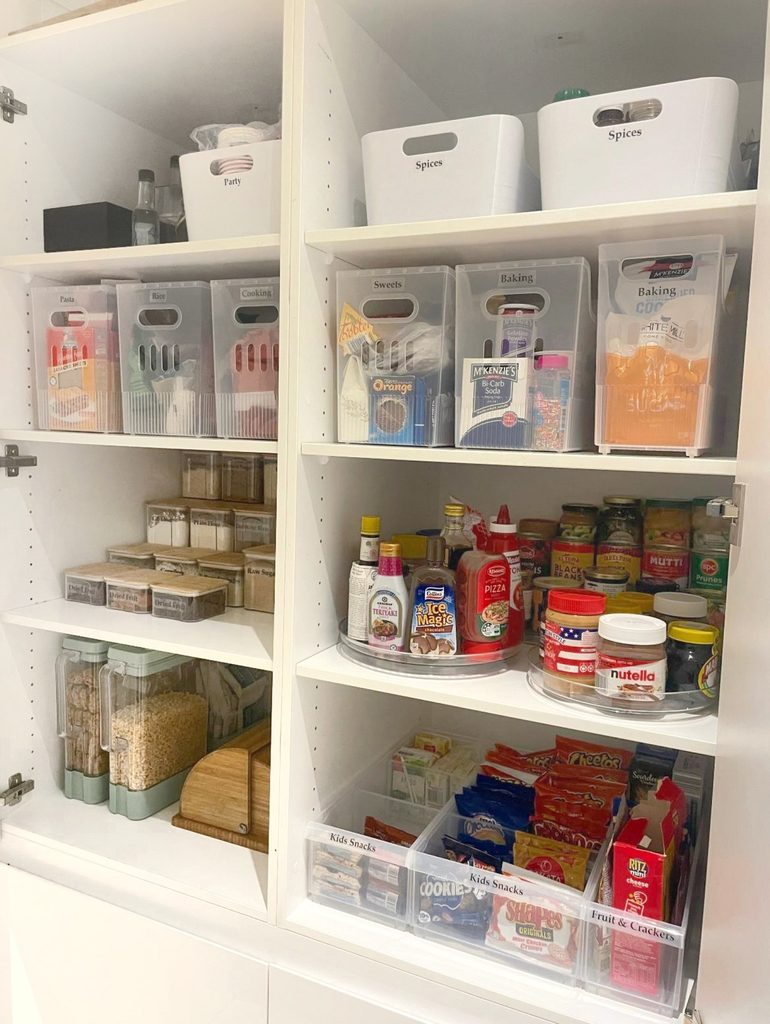
Clear containers make it easier to see small packets, baking ingredients, and cooking supplies inside deep cabinets. Instead of stacking loose packages in several rows, group similar items into containers that slide out when needed. This arrangement keeps the shelf easier to maintain and makes the contents visible at a glance.
For Kitchen Cabinet Organization Ideas that suit your home, begin by measuring each shelf and checking which items are used together. Use turntables for bottles and jars, narrow bins for packets, and larger containers for bulky supplies. Avoid filling every available inch, since a little breathing room makes it easier to remove items and return them to their places.
Organized Appliance and Ingredient Storage
Credit: @time4organizing
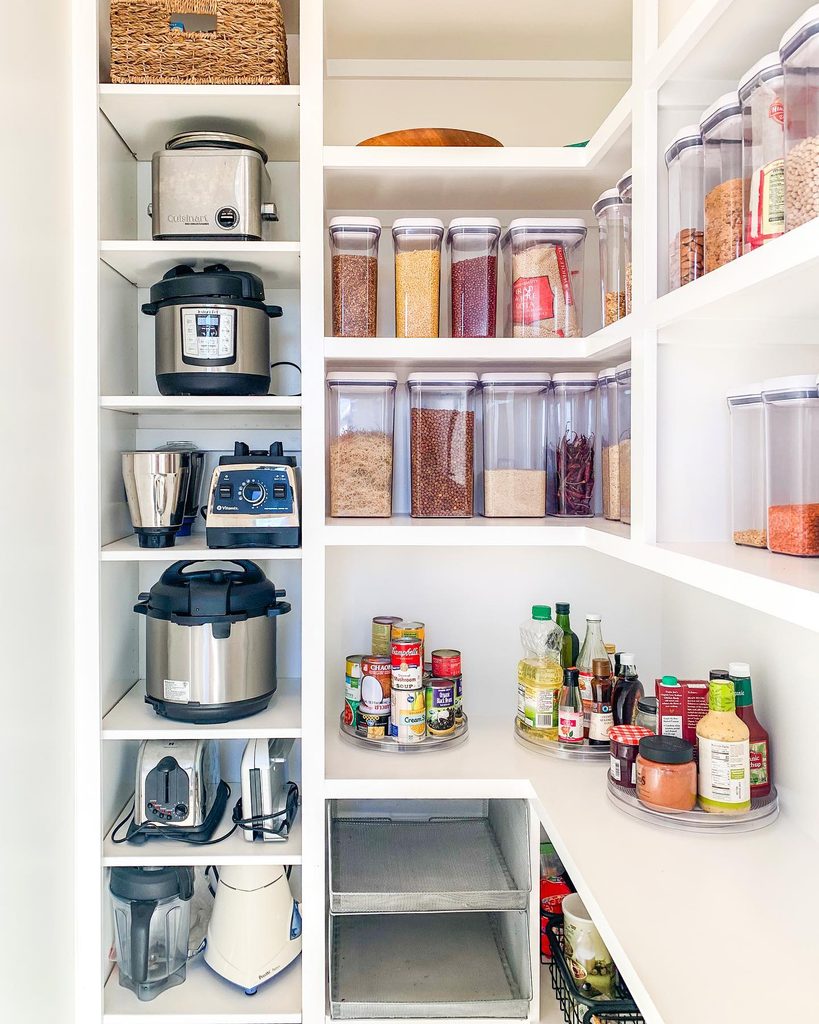
Small kitchen appliances can take up a surprising amount of cabinet space, especially when blenders, pressure cookers, toasters, and food processors compete with everyday ingredients. Giving appliances a dedicated section keeps the food storage area less crowded and makes it easier to reach the tools needed for cooking.
Sort appliances by how often you use them, keeping daily essentials nearby and occasional equipment in a less accessible cabinet. Before storing anything, make sure it is clean, dry, and cool, with cords secured safely. Keep heavy appliances on sturdy shelves at a comfortable lifting height, and remove accessories that belong to equipment you no longer use.
How to Start Decluttering Your Kitchen
Begin with one small area, such as a single drawer, one pantry shelf, or the cabinet beside your stove. Trying to organize the entire kitchen at once can feel tiring, while a smaller task gives you a clear goal and an easy place to begin.
Take everything out of the chosen space and sort the contents into groups. Keep the items you use, move things that belong elsewhere, and set aside duplicates, damaged tools, and expired food for proper disposal.
Think about how you use your kitchen throughout the day. Breakfast ingredients may belong near your bowls and mugs, while cooking oils, spices, and frequently used utensils work well close to the stove, provided they remain away from heat.
Once you have sorted your belongings, clean the shelves and measure the available space. These simple steps help you choose storage containers that fit properly, avoiding purchases that create another problem inside an already crowded cabinet.
Keeping Your Kitchen Clutter Free
A well organized kitchen needs a simple routine to keep it that way. Spend a few minutes returning items to their assigned places after cooking, and clear the main work surfaces before finishing for the day.
Make a quick pantry check before shopping for groceries. Look at flour, pasta, canned goods, snacks, and other regular purchases so you can use what you have and avoid bringing home items that already fill your shelves.
Review storage areas every few weeks, especially those used for snacks, spices, and baking supplies. Remove empty packages, check expiration dates, and move older products toward the front so they are easier to use first.
You can also make kitchen declutter ideas work better by choosing storage that suits the space you have. A small cabinet may need two useful bins, while a large pantry may benefit from labeled zones, adjustable shelves, or a separate place for appliances.
Keep your system flexible as your needs change. Seasonal baking supplies, lunchbox snacks, and special cooking equipment may need different amounts of space throughout the year, so adjust your storage without feeling that every shelf needs to stay exactly the same.