
Live Beautifully at Home


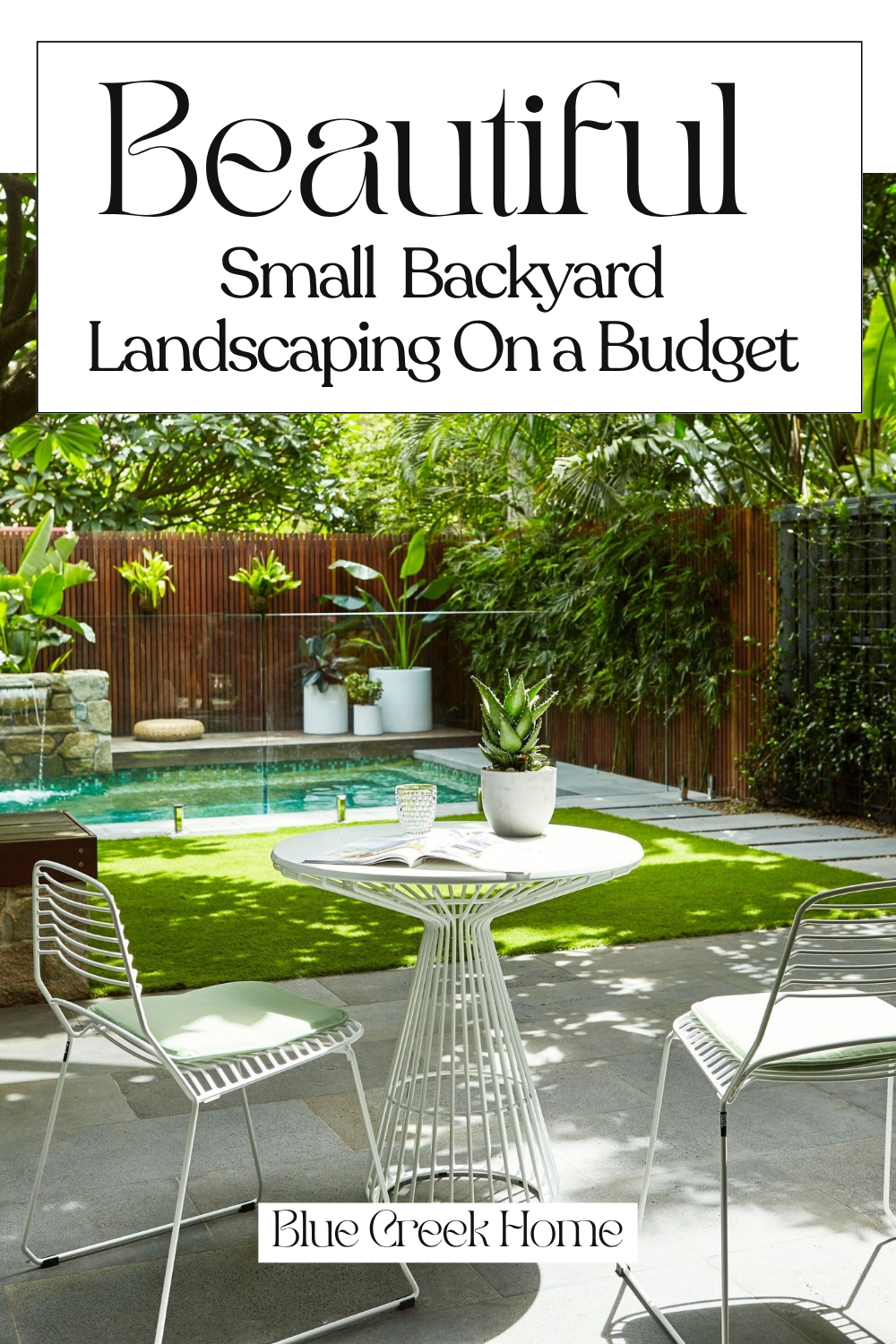
Beautiful Small Backyard Landscaping On a Budget Ideas
 Hanna
Hanna
My Blue Creek Home Author
A contributor at My Blue Creek Home passionate about home decor, organization, and beautiful living spaces.
September 16, 2026
8 min read
Reviewed by Rhonda
Hanna
Hanna
My Blue Creek Home Author
A contributor at My Blue Creek Home passionate about home decor, organization, and beautiful living spaces.
September 16, 2026
8 min read
Reviewed by Rhonda
 Rhonda
Founder & Editor, My Blue Creek Home
Rhonda reviews every article published on My Blue Creek Home to make sure it meets our editorial standards for accuracy, quality and genuine helpfulness.
Our Editorial Process
Leave a comment
Rhonda
Founder & Editor, My Blue Creek Home
Rhonda reviews every article published on My Blue Creek Home to make sure it meets our editorial standards for accuracy, quality and genuine helpfulness.
Our Editorial Process
Leave a comment
Image Notice. Some images featured in this article may originate from third-party sources and are used for illustrative purposes only. Please review our Image Credits Policy for full attribution information.
Small Backyard Landscaping On a Budget can make a compact outdoor space feel useful, welcoming, and well planned without requiring a huge renovation. When every square foot matters, the smartest approach is to give each area a clear purpose and choose materials that can work hard without taking over the yard.
A small backyard can include a walking path, planting area, seating spot, lawn, privacy screen, or even a fire pit. The secret is to keep the layout simple, repeat a few materials, and spend money where it will have the biggest effect.
Before buying plants, measure the space and mark where sunlight falls during the day. A simple sketch can prevent costly purchases that do not suit the available space or growing conditions.
Think about maintenance before choosing your materials. Gravel, mulch, compact plants, and simple paving can help create a practical yard that does not demand constant attention.
Small Backyard Landscaping On a Budget
Credit: @bc_landscapingllc
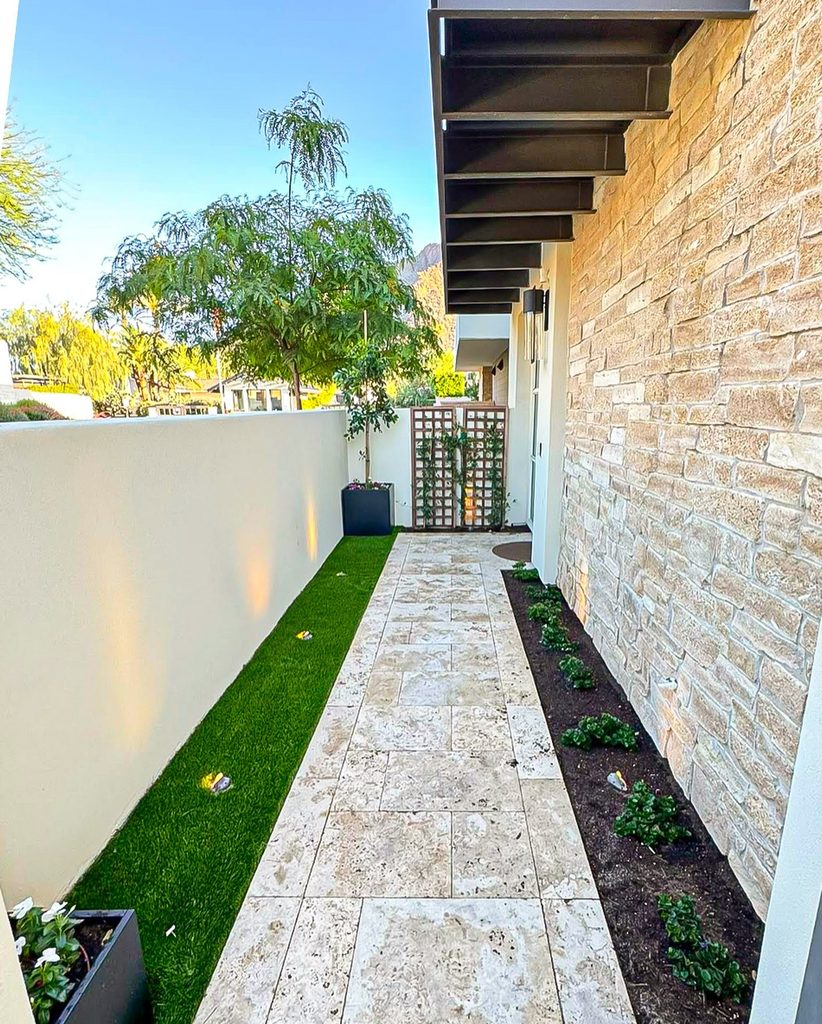
A narrow side yard can become a useful garden path when the design gives the walkway most of the visual structure. Keep the planting beds slim, use one paving material throughout, and leave enough clear space for comfortable movement.
For a lower cost version, consider concrete pavers instead of natural stone and use a narrow strip of gravel or mulch beside the path. The EPA landscaping guide is also useful when choosing plants and planning a lower maintenance landscape.
Create A Courtyard Garden
Credit: @dietdanolahraga
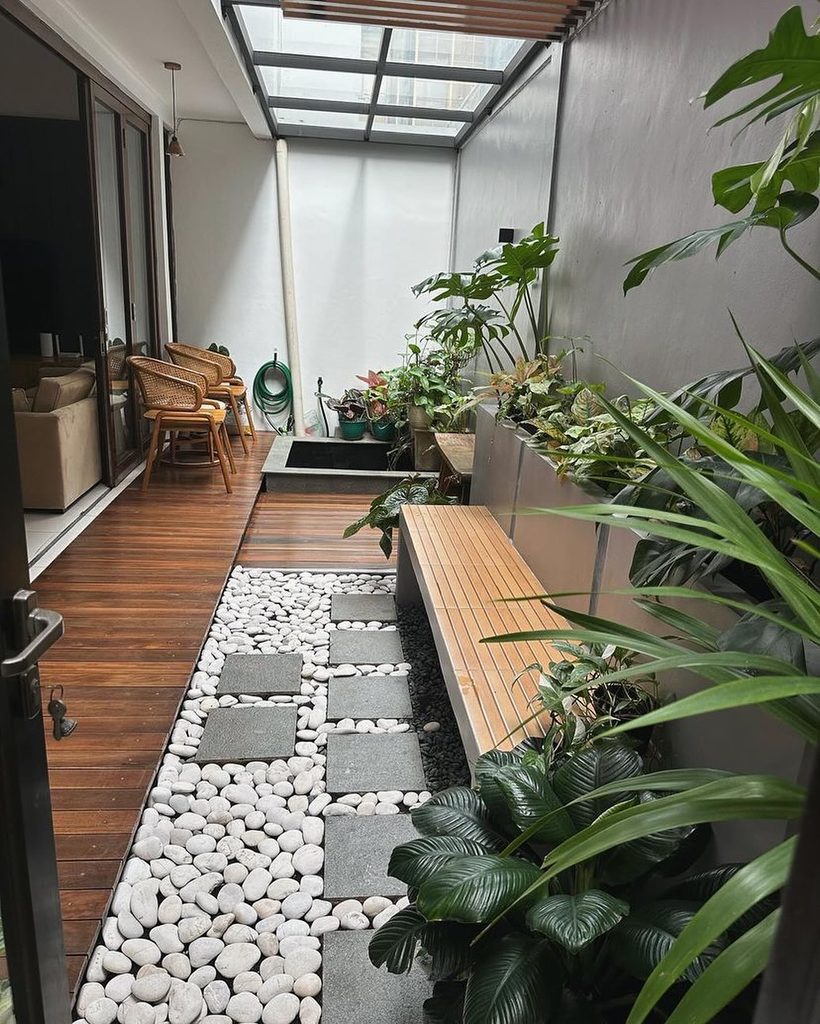
A small enclosed courtyard can feel much larger when planting is pushed toward the edges. Keep the center open for walking and use raised planters, narrow beds, or built in benches to make every section serve a purpose.
Wood decking paired with light gravel can give you two clear surfaces without filling the yard with furniture. For more inspiration on planting vertically in compact gardens, the Royal Horticultural Society guide offers useful ideas for using walls and fences.
Build Simple Garden Steps
Credit: @coastline_pavers
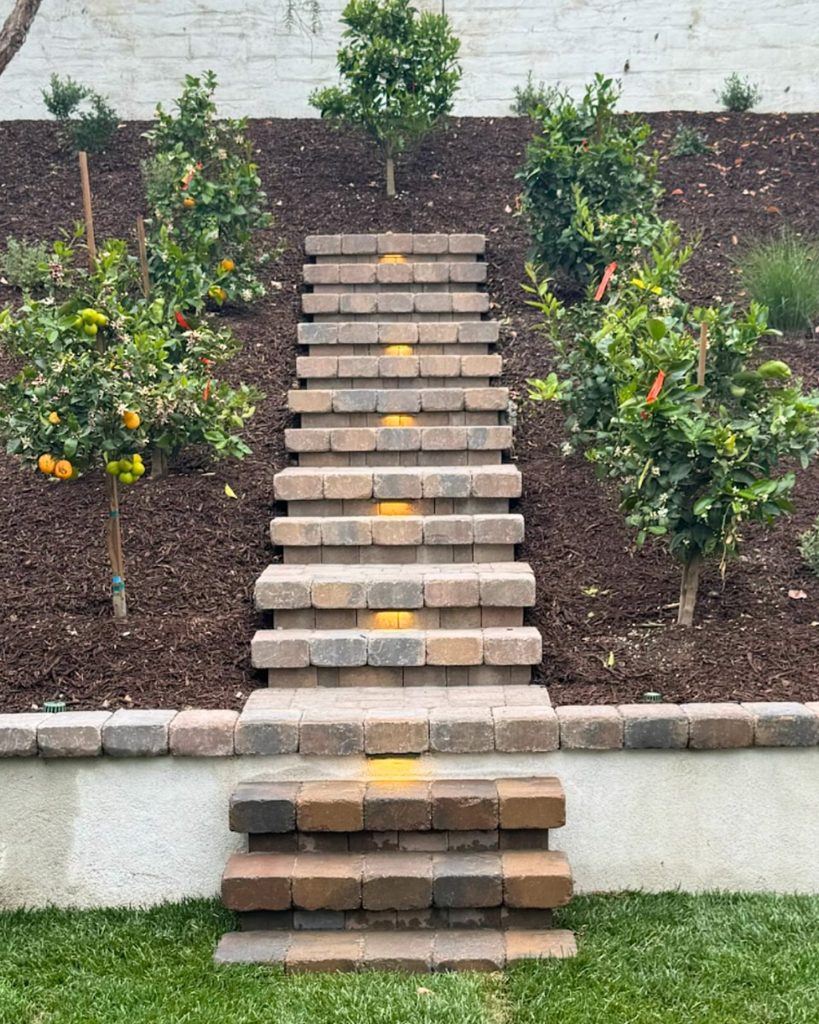
Steps can become part of the landscape instead of feeling like a purely practical feature. Using the same pavers for the steps and nearby edging creates a connected look, while small lights can make the route easier to use after sunset.
You do not need expensive lighting to create this effect. Solar lights placed between or beside the steps can add a soft glow, while standard concrete or reclaimed pavers can keep the material cost manageable. This garden stair guide offers more ideas for working with compact changes in level.
Add A Compact Fire Pit
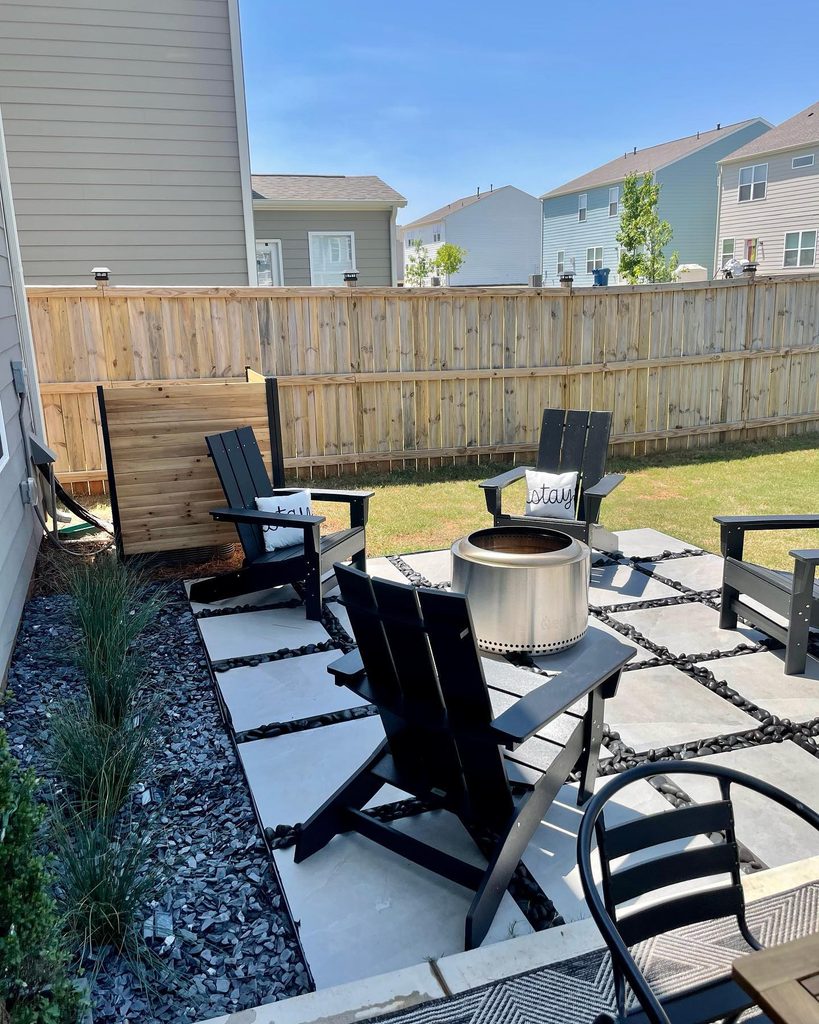
Credit: @the.multipotentialite
A small seating zone can give a backyard a clear destination without requiring a large deck. Use large square pavers to define the area, then surround them with gravel or small stones to create a simple border around the seating.
Keep furniture limited to pieces that are easy to move and store. A compact fire pit can become the center of the space, while four simple chairs provide enough seating for casual evenings. HGTV has a helpful collection of small backyard ideas for creating useful outdoor zones.
Plant Along The Fence
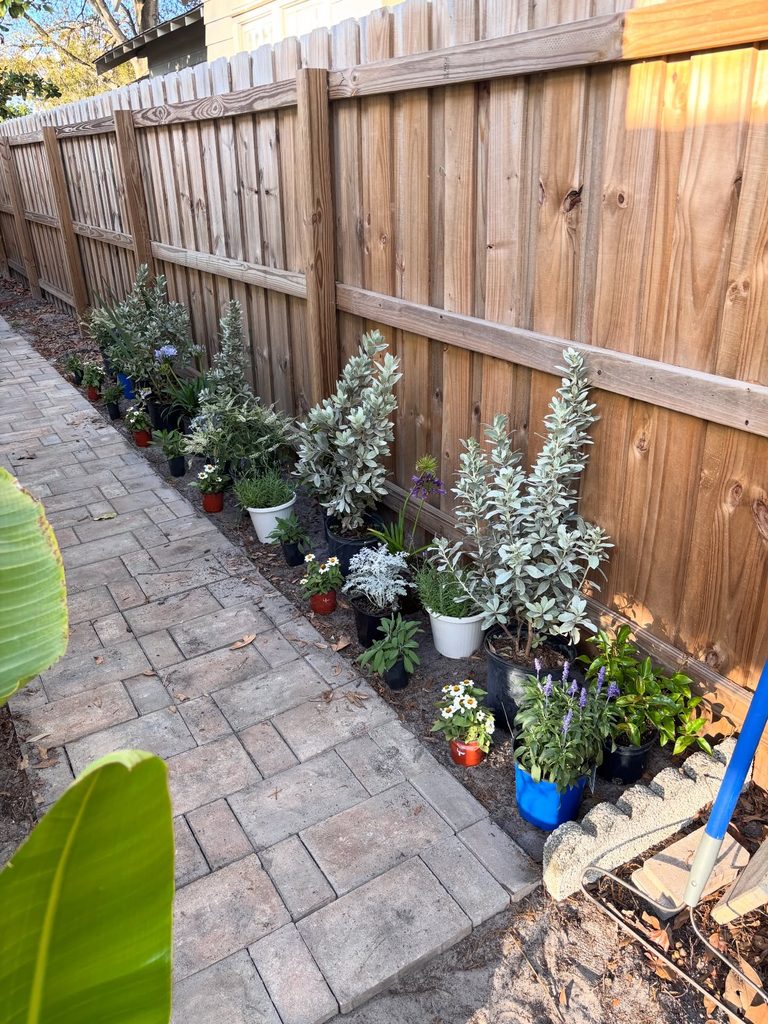
Credit: @sunday__market
A fence line can become a garden border without taking much usable space from the yard. Choose a small number of repeated plants and place them at different heights so the border feels full without needing dozens of varieties.
Young plants are often easier on the budget than mature specimens, and you can give them room to grow into the space. Add mulch around the planting area to help reduce weeds and hold moisture. The EPA guide to landscaping explains how mulch can support soil moisture and reduce maintenance.
Use A Dark Garden Fence
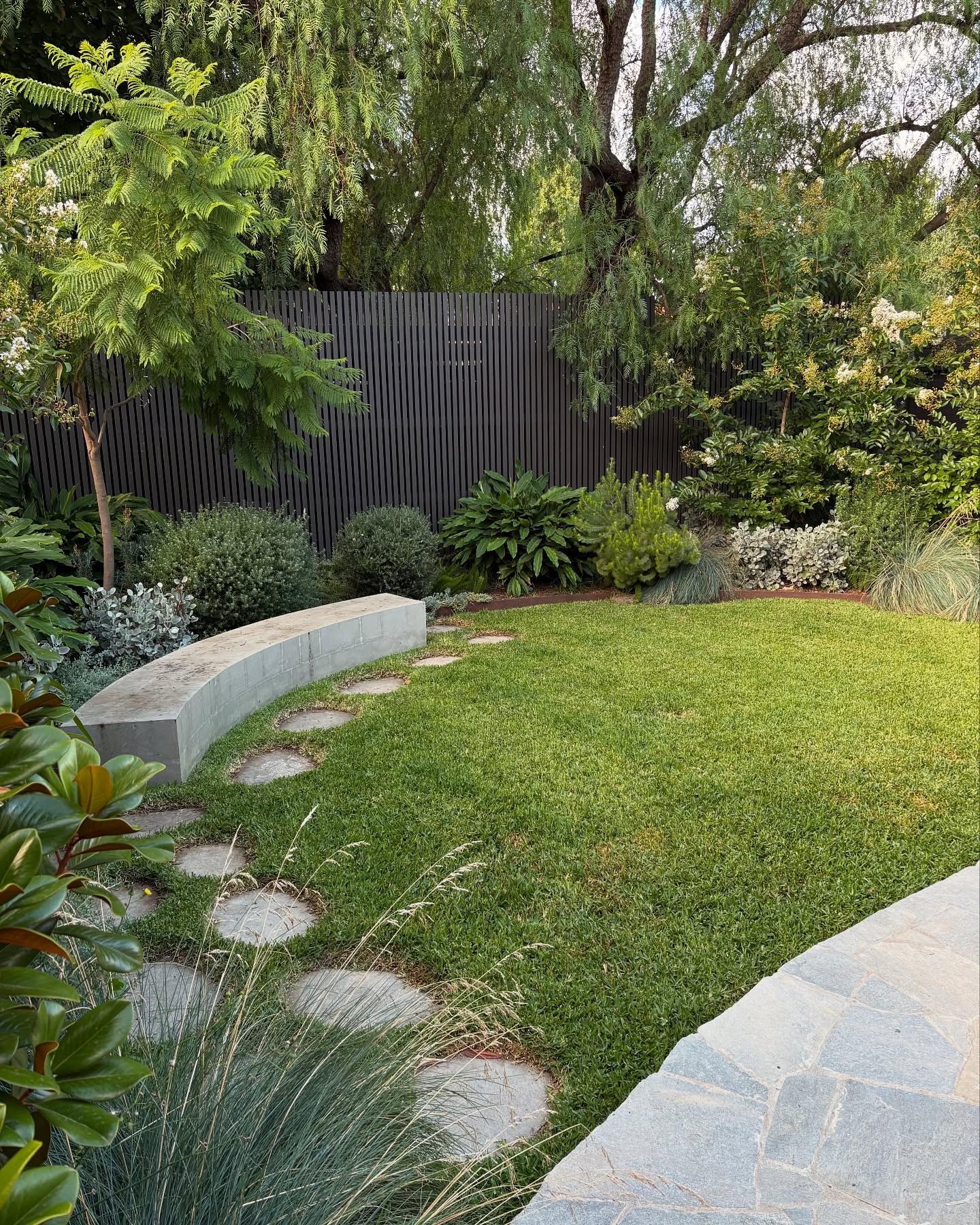
Credit: @paulpritchardlandscapedesign
A dark fence can create a strong background for green planting while giving a compact yard a more enclosed feeling. Instead of filling the fence line with decorations, let foliage provide most of the texture and keep the surrounding lawn open.
This approach can work especially well when you want Blue Fence Ideas but prefer a darker garden backdrop. A simple painted timber fence can cost less than replacing the entire boundary, and adding a few stepping stones can create a path without installing a full walkway. This Old House has practical backyard privacy ideas that can help when planning a boundary.
Create A Garden Bench Nook
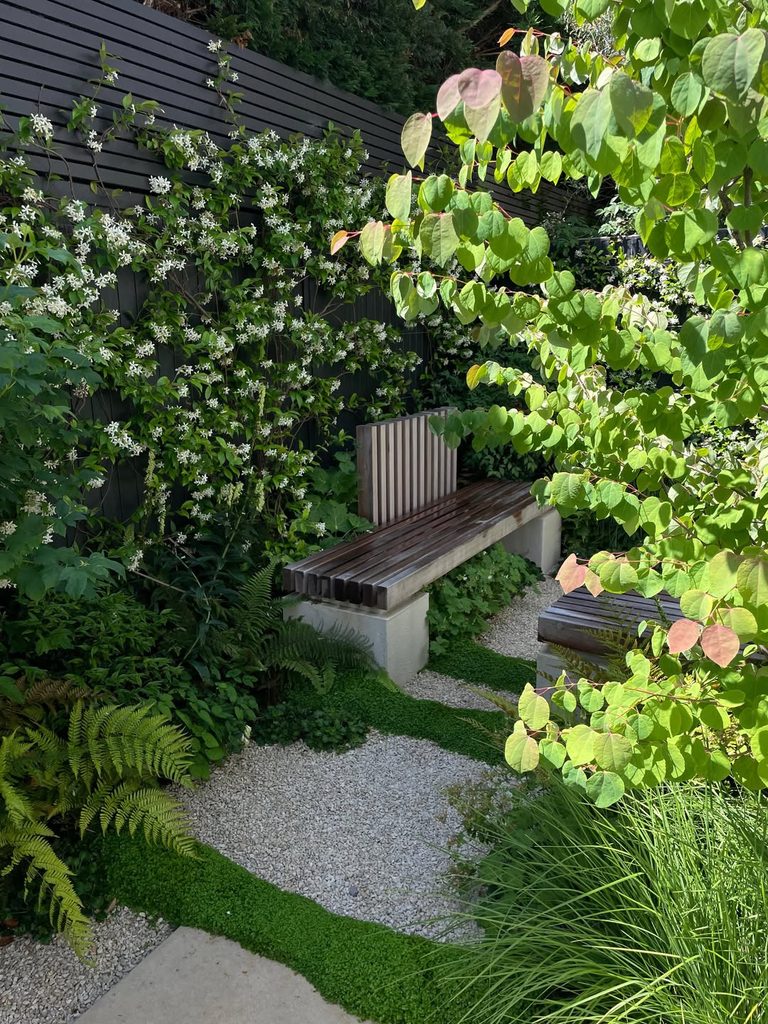
Credit: @kawauchirowe
A built in bench can make a small backyard feel like a destination without using much floor space. Place the bench along a boundary and surround it with soft planting, gravel, or ground cover to create a quiet place for reading and relaxing.
You can keep the cost down by building a simple timber seat between two sturdy supports. The planting can stay informal, with ferns, grasses, and climbing plants providing texture around the seating. The RHS small garden planting guide includes useful advice for making vertical surfaces part of a garden design.
Try A Slatted Privacy Screen
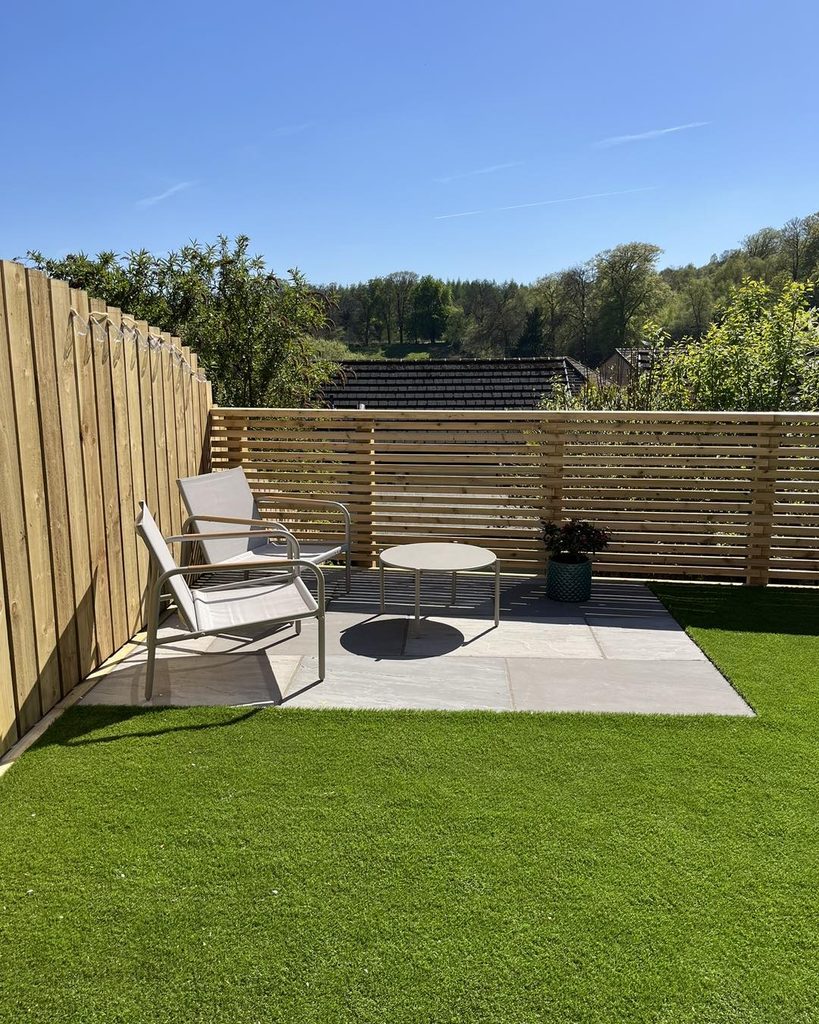
Credit: @gardenmode_landscaping
A horizontal slatted screen can give a seating area more privacy while still allowing light and air through the garden. This is useful when a full solid fence would make a small backyard feel too closed.
Use the screen only where privacy is needed instead of replacing every boundary. That can reduce material costs while giving the seating area its own sense of separation. This Old House offers several practical ways to improve backyard privacy with fencing and planting.
Keep A Simple Lawn Center
Credit: @harrisonslandscaping
A small lawn can make a backyard feel open when the planting stays around the edges. This layout works especially well for households that want a little green space for relaxing, pets, or children without giving the entire yard to grass.
Keep the lawn shape simple and use planting beds to define the perimeter. If watering is a concern, choose grass suited to your local conditions and place it only where it has a clear purpose. EPA WaterSense provides guidance for creating more water conscious outdoor spaces.
Add Tropical Layers
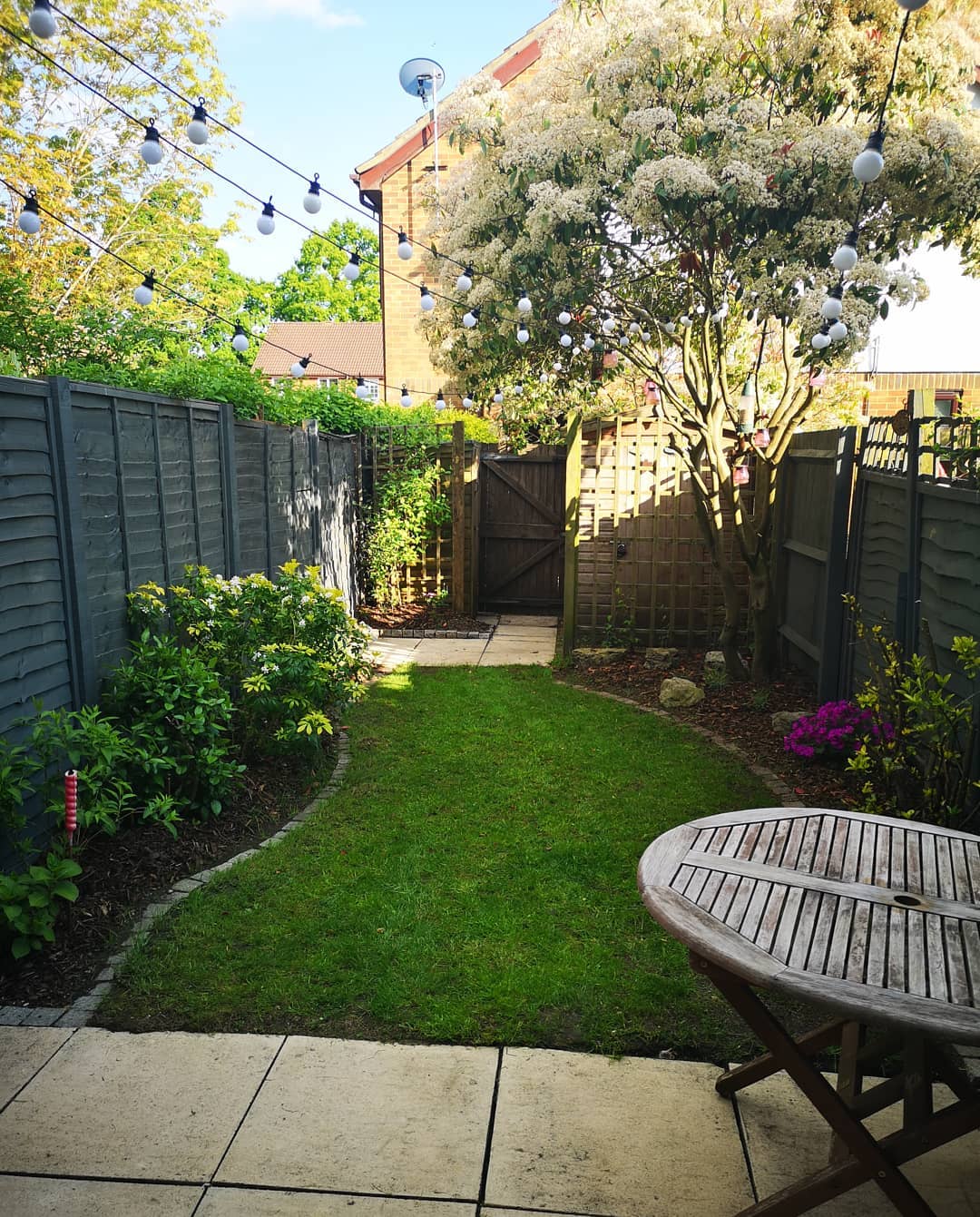
Credit: @thetomicityproject
Layered planting can make a compact backyard feel rich without filling every part of the ground. Place taller plants toward the boundary, medium plants in front, and smaller ground covers around the edges to create depth.
You can build this look slowly instead of buying everything at once. Start with a few reliable plants, then add more as the garden develops. The RHS guide to small garden planting recommends making good use of vertical surfaces and choosing plants suited to the space.
Small Backyard Landscaping On a Budget
Small Backyard Landscaping On a Budget works best when the layout is planned before materials are purchased. A small yard does not need several different paving styles, dozens of plant varieties, or expensive outdoor furniture to feel complete.
Start by deciding what you want the space to do. You may need a place for meals, a little lawn, a garden path, a private seating corner, or simply an attractive view from inside the house.
Once the purpose is clear, divide the yard into simple zones. A narrow strip can become a planting border, a small paved section can hold chairs, and an unused corner can become a garden feature.
Think about the parts of the yard that are seen most often. If the view from the kitchen or living room looks directly toward one fence, spending a little more on that area can have a greater effect than upgrading a hidden corner.
Plan Your Yard Before You Buy
Small Backyard Landscaping On a Budget becomes easier when you measure first and shop second. Draw the basic shape of the yard and mark doors, windows, fences, trees, sunny areas, shaded areas, and places where water collects.
Next, decide where you need a clear walking route. A simple path can make the whole garden feel more organized, while too many separate paths can consume valuable space.
When choosing plants, think about mature size instead of the size of the plant at the garden center. A small shrub may eventually become wide enough to block a path or crowd a seating area.
If privacy is important, consider both fences and planting. Backyard Privacy Ideas can include timber screens, slatted panels, hedges, climbing plants, or a combination of several simple features.
You can also use Small Garden Ideas that rely on vertical planting. Walls and fences can support climbers and trained plants, allowing you to add greenery without using much ground space. (RHS)
For paved areas, buy enough material for the planned footprint instead of covering the whole yard. A small patio surrounded by gravel or planting can provide the same useful seating function while keeping the hard surface limited.