
Live Beautifully at Home


How to make wall decor That Makes Every Room
 Rhonda
My Blue Creek Home Founder & Editor
I spent over 12 years in decorative painting and faux finishing, starting with a faux finishing company I co-owned in Mississippi that...
November 9, 2026
11 min read
Leave a comment
Image Notice. Some images featured in this article may originate from third-party sources and are used for illustrative purposes only. Please review our Image Credits Policy for full attribution information.
There is something about an empty wall that can make an otherwise lovely room feel unfinished. The furniture may be in the right place, the cushions look comfortable, and the colors work together, yet something still feels missing. I think wall decor is often that missing piece. It gives a room personality, brings the colors together, and makes the space feel like it belongs to the people who live there.
The tricky part is knowing where to begin. A large wall can feel intimidating, especially when you are worried about buying artwork that looks too small, choosing frames that do not match, or putting everything in the wrong place. I understand why so many people leave their walls empty for months. It is easy to keep putting off a decision when you are not sure what will work.
My favorite approach is to take a little time to understand the room before buying anything. Good wall decor does not need to be expensive, complicated, or perfectly matched. It needs to feel connected to the furniture, colors, and everyday life of the room.
Why I Think Wall Decor Changes a Room
Credit: Canva
Walls take up a large part of what we see when we enter a room. When they are completely bare, the furniture can feel disconnected, even when everything else is lovely. A few well chosen pieces help create a visual connection between the different parts of the space.
I also love how wall decor gives you a chance to show your taste without changing the entire room. Artwork, mirrors, framed photographs, shelves, and decorative objects can bring warmth into a space without replacing your furniture.
The secret is choosing pieces that belong together. That does not mean everything needs to have the same color or frame. It means the different elements need a reason to sit beside one another.
My Quick Tips Before You Start
• Measure the wall before shopping, especially if you are buying large artwork.
• Choose artwork that connects with at least two colors already present in the room.
• Keep the center of a main artwork around 57 to 60 inches from the floor.
• Use paper templates to plan a gallery wall before making holes.
• Leave some empty wall space so the room has room to breathe.
What You Will Need
• Measuring tape, approximately $8 to $15.
• Painter’s tape, approximately $5 to $8.
• Pencil and notebook for recording measurements.
• Picture hanging hooks, approximately $6 to $12 per pack.
• A small level, approximately $8 to $15.
• Picture frames, approximately $10 to $35 each, depending on size and material.
• Artwork or printable art, approximately $10 to $80 per piece.
• Wall anchors suitable for your wall type, approximately $5 to $12.
• A soft cloth for cleaning frames and mirrors.
How I Would Read the Wall Before Buying Anything
I always think the first step should happen before you visit a shop or start saving artwork online. Stand back and look at the wall you want to change. Notice its width, height, natural light, nearby furniture, and the amount of empty space around it.
A wall above a sofa needs a different arrangement from a narrow wall beside a doorway. The same artwork can look lovely in one position and completely out of place in another.
Start by measuring the full wall. Write down its width and height, then measure the furniture underneath it if there is any. If you are decorating above a sofa, bed, console table, or dining table, that furniture becomes part of your design.
How I Would Choose Wall Decor That Feels Personal
This is where I think decorating becomes enjoyable. You have the measurements, you understand the room, and now you can start choosing the pieces that give it character.
I would begin with one main piece of artwork. It might be an abstract painting, a landscape, a large photograph, or a print with colors that connect to the rest of the room.
The main piece does not need to be expensive. You can find affordable framed prints for around $20 to $50, while larger original artwork can cost considerably more. I would spend more on something that has a strong connection to your taste, not simply because it comes with a high price tag.
Credit: Canva
How I Would Find the Right Size and Position
One of the biggest reasons wall decor looks disappointing is incorrect sizing. Beautiful artwork can lose its effect when it is too small for the wall.
I would rather see one generous piece of artwork than several tiny pictures scattered across a large empty surface. The right scale makes a room feel more balanced.
For a large wall above a sofa, consider a single artwork measuring approximately 40 to 50 inches wide. If you prefer several pieces, make sure their combined width creates a similar visual presence.
For a smaller wall, a picture around 16 by 20 inches may be enough. A narrow hallway can also work beautifully with a vertical artwork measuring approximately 18 by 24 inches.
Height matters just as much as width.
A common mistake is hanging pictures too close to the ceiling. I prefer to position artwork at eye level, with its center approximately 57 to 60 inches from the floor.
When hanging a picture above furniture, leave around 6 to 10 inches between the bottom of the frame and the top of the furniture. This keeps the arrangement visually connected.
Here is a simple reference:
| Wall location | Suggested placement |
|---|---|
| Above a sofa | 6 to 10 inches above |
| Above a console table | 6 to 10 inches above |
| Above a bed | 8 to 12 inches above the headboard |
| Hallway artwork | Center around 57 to 60 inches from the floor |
| Gallery wall | Keep approximately 2 to 3 inches between frames |
These measurements are helpful starting points, not strict rules. A very tall headboard, a large artwork, or unusual furniture proportions may call for a little adjustment.
Before hanging anything, cut pieces of paper to match the sizes of your frames. Use painter’s tape to attach them to the wall. Step back, look from the doorway, and check the arrangement from different parts of the room.
I love this simple trick because it allows you to change your mind without leaving unnecessary holes in the wall.
How I Would Create a Gallery Wall Without Making It Busy
A gallery wall can bring so much personality into a room. It is also one of those decorating projects that can feel confusing when you are staring at several empty frames.
My advice is to choose a theme before arranging anything. You might use family photographs, landscapes, botanical prints, abstract artwork, or a mixture of personal photographs and illustrations.
The theme does not need to be obvious. It simply gives the collection a common thread.
For a relaxed arrangement, I would choose five to seven frames in different sizes. A mixture of 8 by 10, 11 by 14, and 16 by 20 inch frames gives you enough variation without making the wall feel chaotic.
How I Would Use Mirrors to Bring More Light Into a Room
Mirrors are one of my favorite ways to add interest to an empty wall. They are useful, decorative, and can help a smaller room feel more open.
A mirror placed opposite or at an angle to a window can reflect natural light into the room. This is particularly helpful in darker hallways, small dining rooms, and living spaces that do not receive much direct sunlight.
I would choose the size according to the wall and the furniture nearby. A round mirror measuring 30 to 36 inches across can look lovely above a console table. A larger rectangular mirror can work well in a narrow entryway.
If you are decorating a small dining area, a large mirror can also help create a sense of depth. Just make sure it is securely attached, especially if it is heavy.
Blue Creek Note
If you are unsure whether a mirror will work on a particular wall, hold a smaller mirror in that position during the day. Watch what it reflects before choosing the final size. It is a simple way to avoid an expensive mistake.
How I Would Add Shelves and Texture Without Cluttering the Wall
Not every wall needs framed artwork. Sometimes a little depth and texture make a room feel much more welcoming.
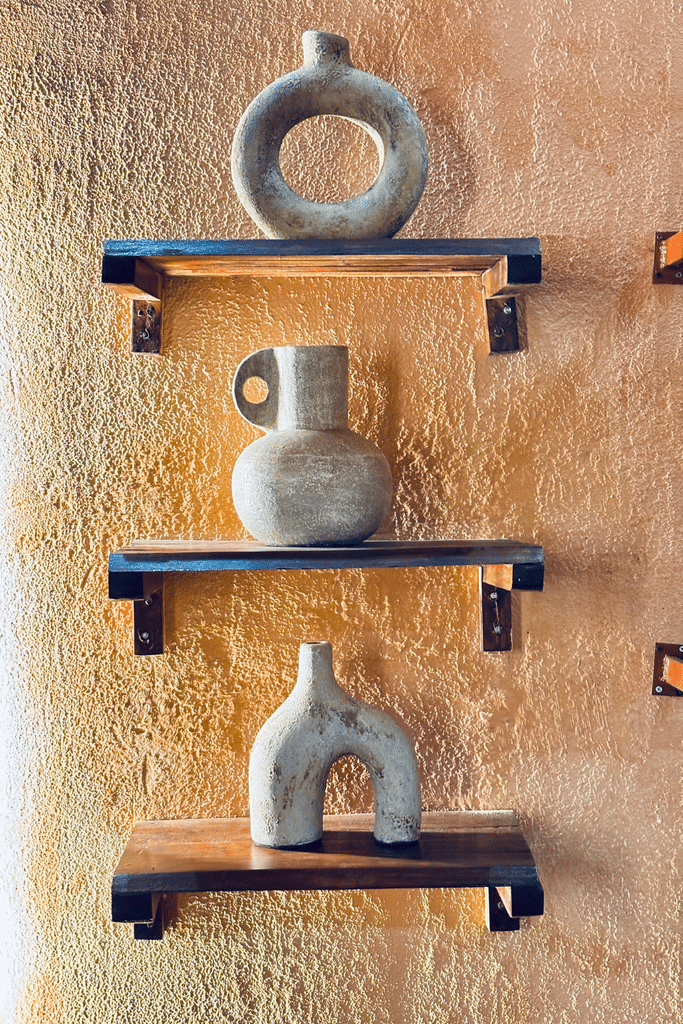
Floating shelves are a lovely option when you want to display small decorative objects, books, plants, or framed prints. They work particularly well in living rooms, bedrooms, and home offices.
For a simple arrangement, I would begin with one or two shelves. A shelf around 24 to 36 inches wide is often a practical size for a small display.
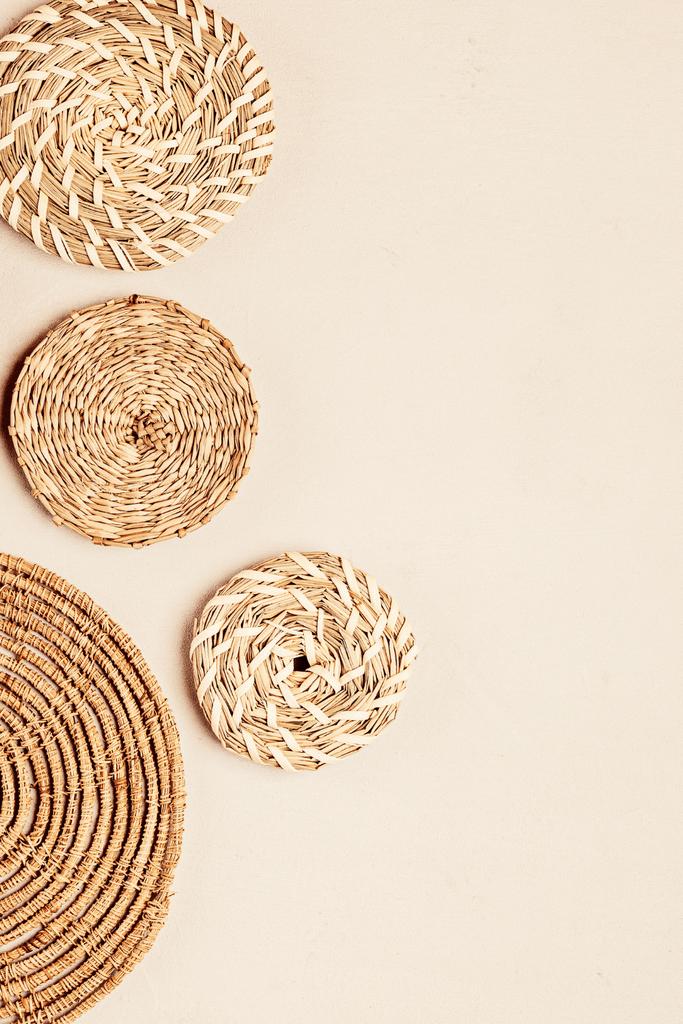
If you prefer something with a little more character, consider woven wall baskets or decorative textiles. These pieces bring natural texture into neutral rooms, especially when paired with linen curtains, wooden furniture, and warm lighting.
Before installing shelves, check the wall construction. Use appropriate wall anchors or secure the brackets to studs. The fixing method needs to support the combined weight of the shelf and everything placed on it.
Credit: Canva
How I Would Finish the Wall So Everything Belongs Together
Once the main artwork, mirrors, or shelves are in place, take a moment to look at the whole room.
This is where small details matter. The artwork may be beautiful on its own, but does it connect with the rest of the space?
Look at the colors in your cushions, rug, curtains, lamps, and furniture. If your wall decor includes warm brown tones, a wooden picture frame or natural basket nearby can help repeat that color.
You do not need to match everything exactly. In fact, I prefer a little variation because it makes a room feel more relaxed.
What I Would Avoid When Decorating My Walls
I think the smallest mistakes can make the biggest difference when choosing wall decor. Here are four things I would watch carefully before calling the project complete.
Buying artwork before measuring the wall.
It is easy to fall in love with a picture online, only to discover that it looks tiny above a large sofa. Measure the wall and furniture first. Keep the measurements on your phone when shopping.
Hanging everything too high.
Artwork that sits too close to the ceiling can feel disconnected from the furniture. Start with the center around 57 to 60 inches from the floor, then adjust according to the room.
Choosing too many different frame finishes.
Mixing frames can be lovely, but too many finishes can make a gallery wall feel scattered. I would stick to two or three related materials or colors.
Filling every empty space.
An empty section of wall is not a decorating problem. Give the artwork room to stand out. If the room already has patterned furniture, decorative cushions, and busy curtains, a quieter wall arrangement may be exactly what it needs.
How I Would Know When My Wall Decor Is Complete
There is a point when adding another accessory stops improving the room. Learning to recognize that moment is one of the most useful parts of decorating.
Stand at the entrance and look at the wall as a whole. Does your eye move comfortably across the arrangement? Does the artwork feel connected to the furniture? Is there enough empty space around the main pieces?
Then look at the room from your usual seating position. Sometimes an arrangement looks lovely from the doorway but feels too busy when you are sitting on the sofa.
I would also check that frames are straight, shelves are secure, and hanging hooks are suitable for the weight of each piece.
Give yourself a day or two before making any final changes. Living with an arrangement for a little while can help you notice whether something feels out of place.
Why I Believe the Right Wall Decor Feels Like Home
I think the loveliest rooms have something personal about them. They do not look as if every item came from the same shop or was chosen at the same time.
That is what makes wall decor so special. It gives you a chance to bring together artwork, photographs, colors, textures, and objects that mean something to you.
You can start with one framed print above a sofa. You can add a mirror to a dark hallway, or create a small gallery wall with photographs you love. There is no need to change everything in one afternoon.
How much should I spend on wall decor?
I would start with around $50 to $150 for a small wall arrangement, including affordable frames and prints. A larger gallery wall or original artwork may cost more, but you can build it gradually.
How high should I hang wall art?
I generally recommend placing the center of the artwork around 57 to 60 inches from the floor. Above furniture, leave approximately 6 to 10 inches between the furniture and the frame.
How do I decorate a large empty wall?
I would begin with one large artwork or a balanced gallery wall. A large mirror or a combination of artwork and floating shelves can also work beautifully, depending on the room.