
Live Beautifully at Home


7 Stunning Composite deck ideas With Stylish Colors and Finishes
 Rhonda
My Blue Creek Home Founder & Editor
I spent over 12 years in decorative painting and faux finishing, starting with a faux finishing company I co-owned in Mississippi that...
October 24, 2026
8 min read
Leave a comment
Image Notice. Some images featured in this article may originate from third-party sources and are used for illustrative purposes only. Please review our Image Credits Policy for full attribution information.
Composite decking gives your outdoor space a clean, welcoming look while keeping regular maintenance simple. The right composite deck ideas help you create a backyard that feels connected to your home, whether you have a small patio, a raised deck, or a spacious area for outdoor dining.
Color, board direction, edging, stairs, and privacy features all play a part in the final design. Warm brown boards bring a natural wood feel, while soft gray decking pairs beautifully with white fences, dark siding, and modern garden furniture. You can also use different board colors to define separate areas without adding walls or bulky dividers.
The most successful composite deck ideas balance good looks with everyday comfort. Think about how you use your outdoor space, how much sunlight it receives, and how the decking connects to your doors and garden. With a thoughtful layout, your deck can become a comfortable place for morning coffee, family meals, and relaxing evenings outside.
Before choosing a color, request samples and check them in both direct sunlight and shade. Composite boards can look quite different depending on the light and the colors around them.
Gray Composite Decking With Wide Stairs
Credit: @aztec_decks
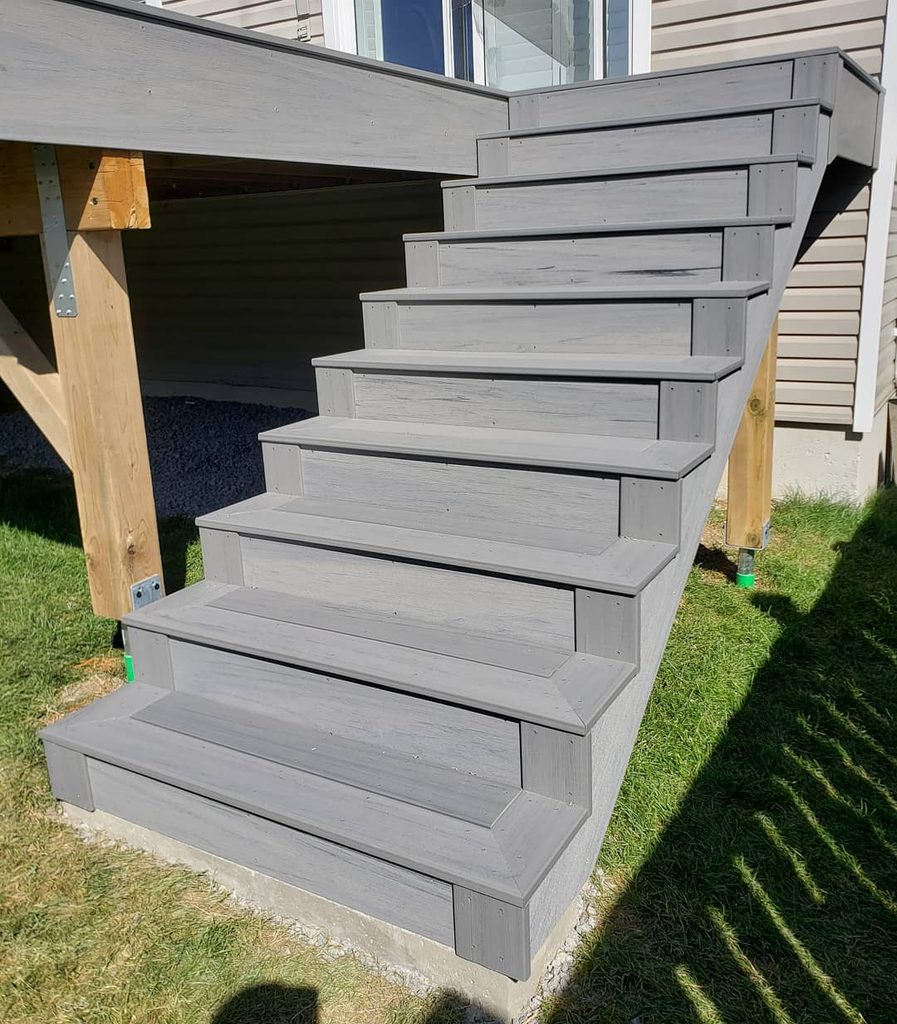
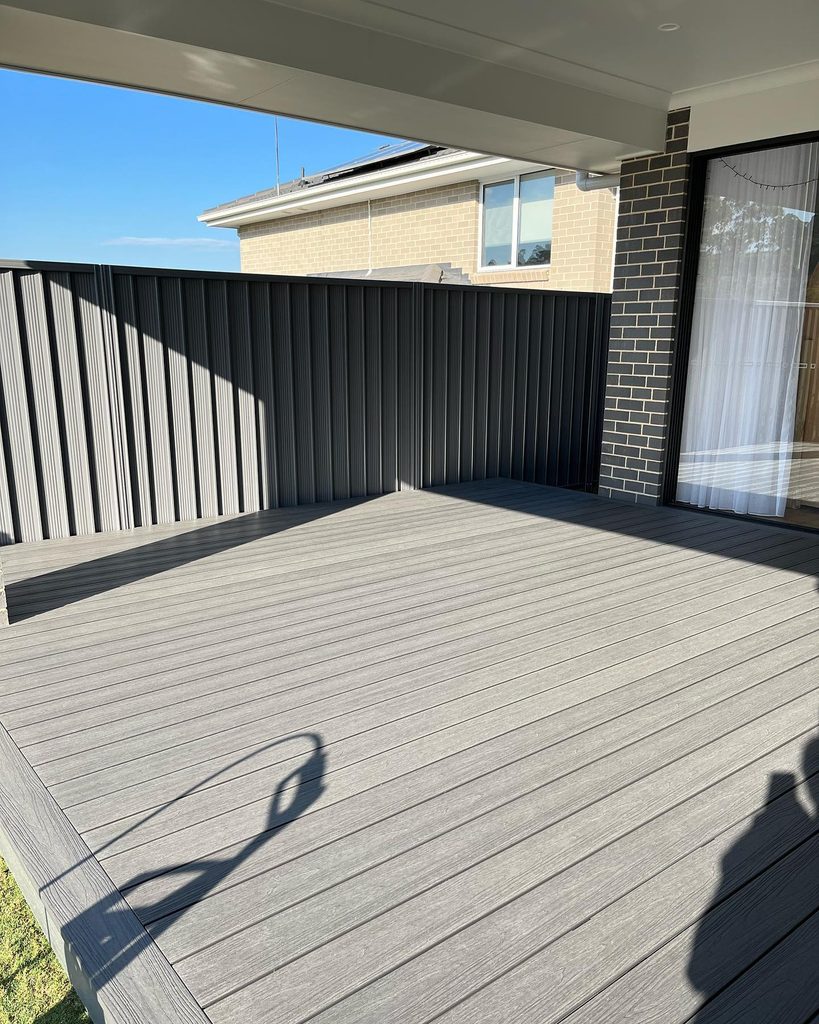
Gray composite deck ideas bring a calm, modern feel to a raised outdoor space, especially when the decking matches the home’s exterior trim. A light gray finish works well with white siding, charcoal accents, and green lawns, creating a simple color scheme that feels easy to live with throughout the year. Wide stairs also give the deck a welcoming entrance and help connect the upper level with the garden.
For a comfortable result, consider using matching composite boards across the stair treads, risers, and deck surface. Keep the steps wide enough for everyday use and check that the rise and depth meet local building requirements. This style suits homeowners who want a neat, coordinated outdoor area without the frequent staining associated with many traditional wood decks.
Warm Brown Composite Decking
Credit: @ballardscarpentry
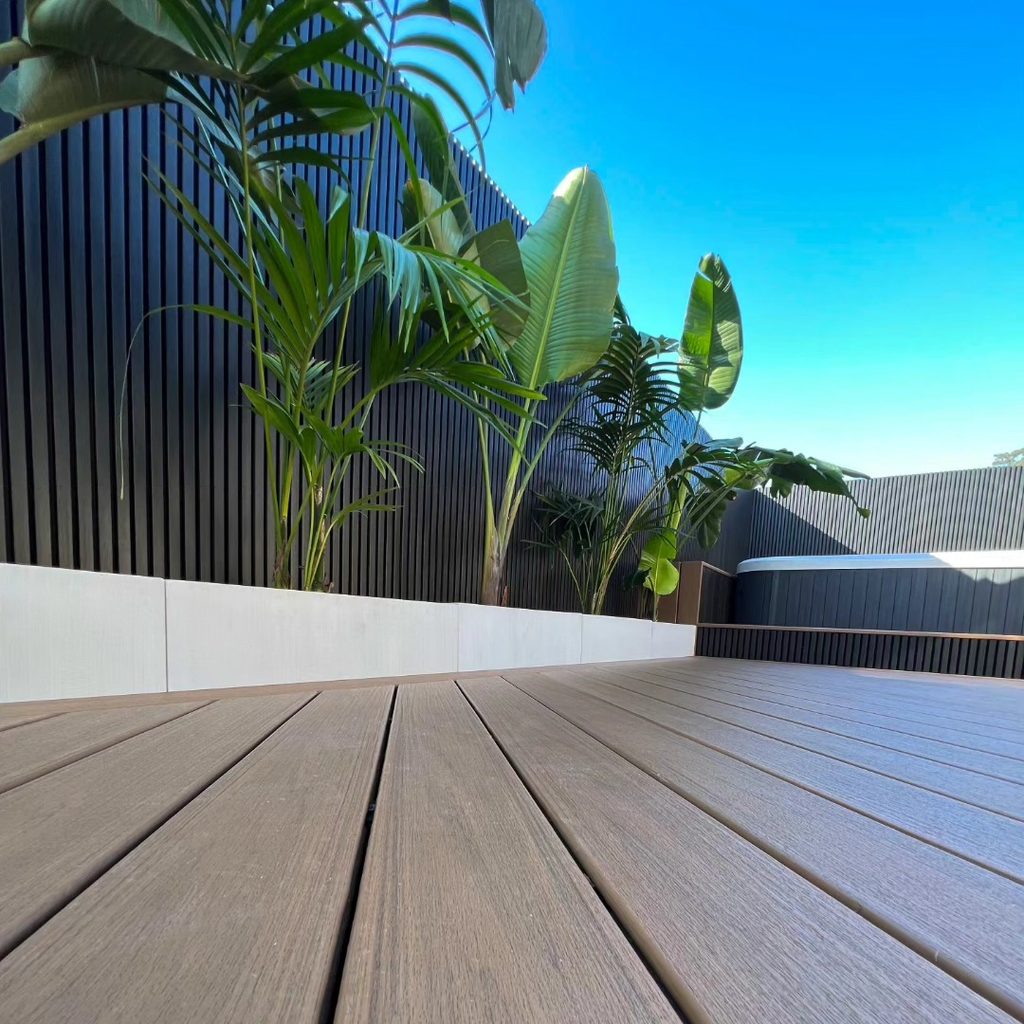
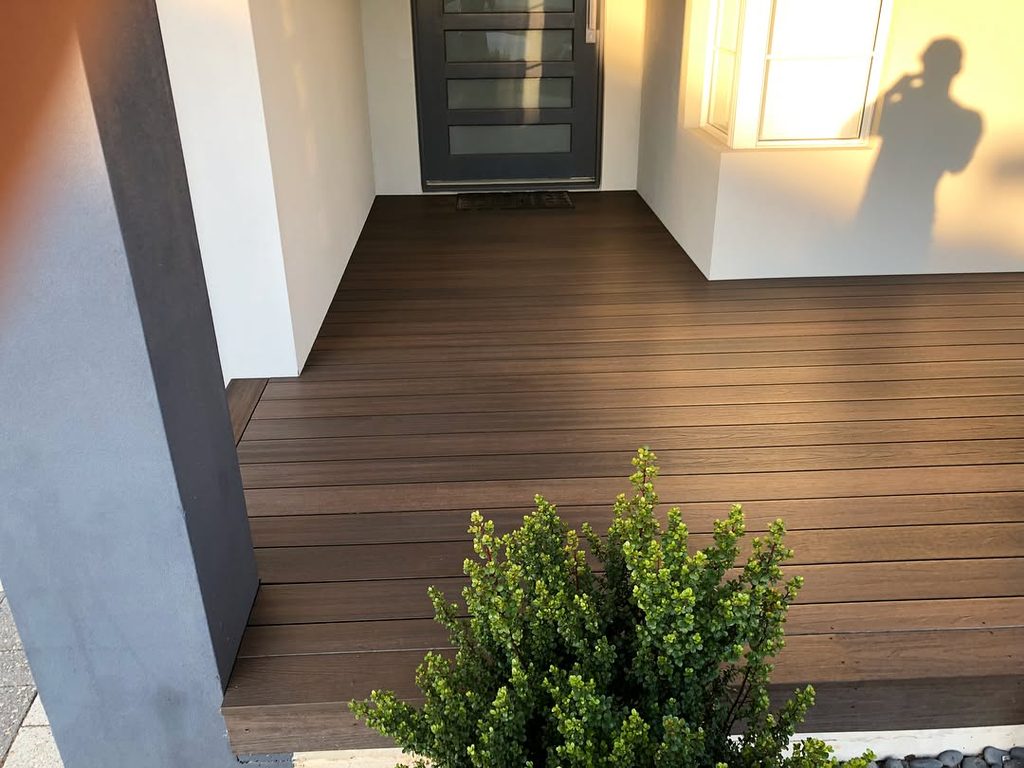
Warm brown composite deck ideas offer the familiar appearance of timber with a more consistent finish. This color works beautifully with white garden walls, black metal details, leafy plants, and neutral outdoor furniture. It creates a comfortable setting for casual meals, weekend gatherings, and quiet moments outside, while adding warmth to a garden with lots of hard surfaces.
Choose a shade that complements the colors already around your home. Honey brown and light oak tones create an airy feeling, while deeper walnut shades bring more contrast and can suit contemporary homes. If you are comparing Wooden Deck Railing Ideas, consider how a natural wood railing might look alongside composite boards, particularly when you want a blend of traditional character and easier deck maintenance.
Composite Decking With Clean Edges
Credit: @cladcoprofiles
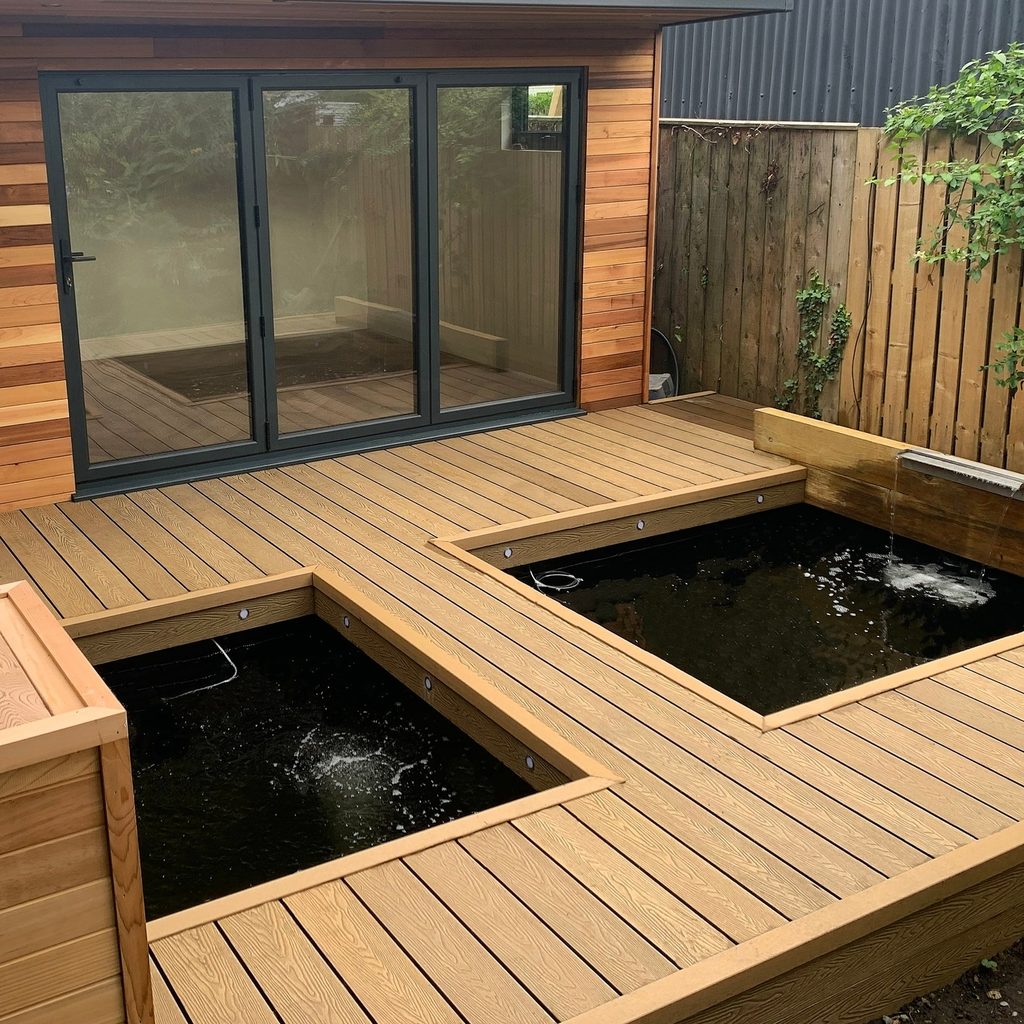
Carefully finished deck edges make a noticeable difference to the appearance of an outdoor platform. Picture framing, which uses a border of boards around the main deck surface, creates a defined outline and can make the installation feel more considered. This detail works with both light and dark composite decking, particularly when the border contrasts gently with the main boards.
A contrasting edge can also help distinguish the walking surface from the outer boundary. Choose a border color that complements your fence, exterior walls, or garden furniture instead of introducing a completely unrelated shade. When planning composite deck ideas with picture framing, discuss board widths, corner cuts, and fastening methods with your installer so the finished edges remain secure and tidy.
Spacious Composite Decking With Plant Borders
Credit: @composite_decking_ireland_msq
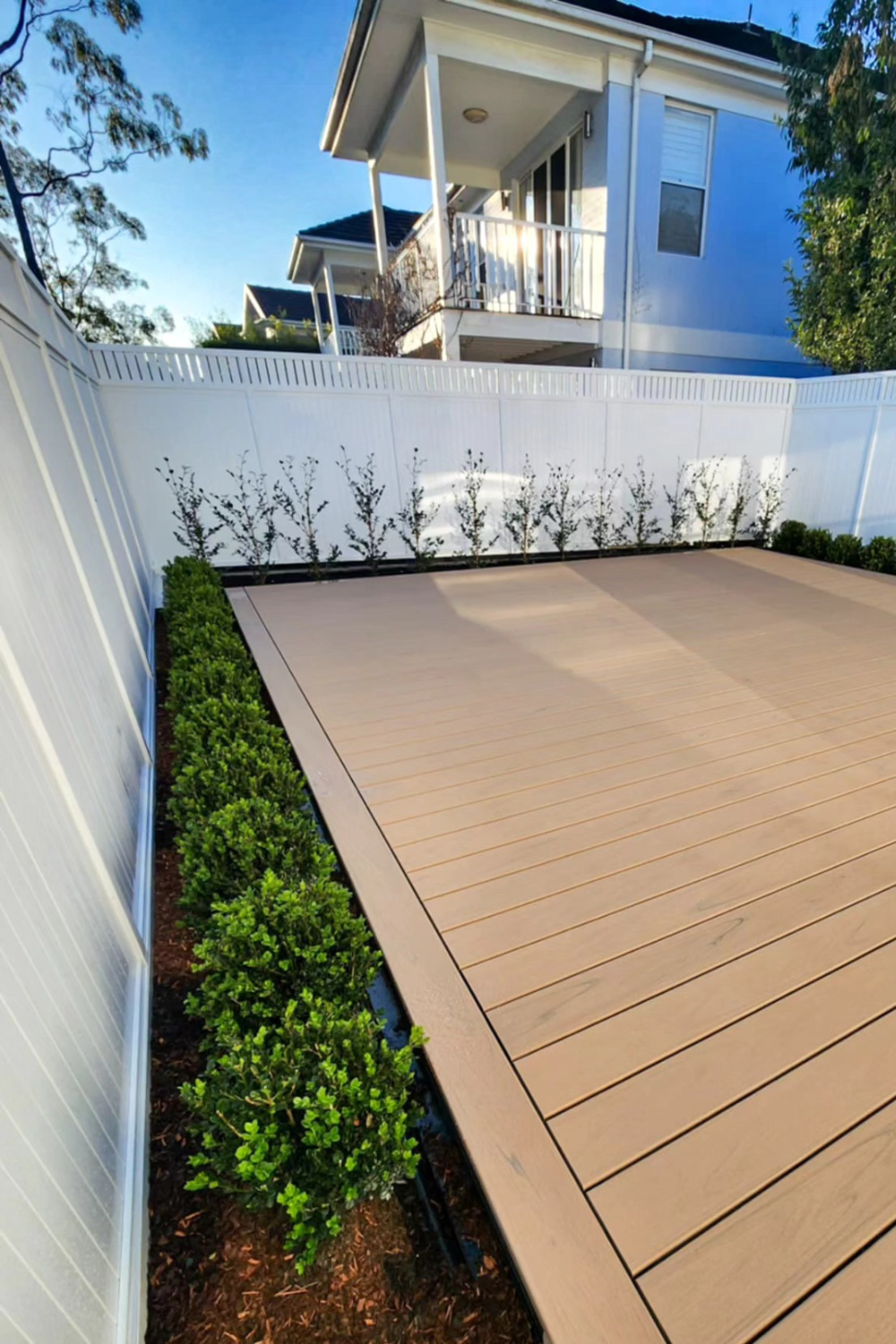
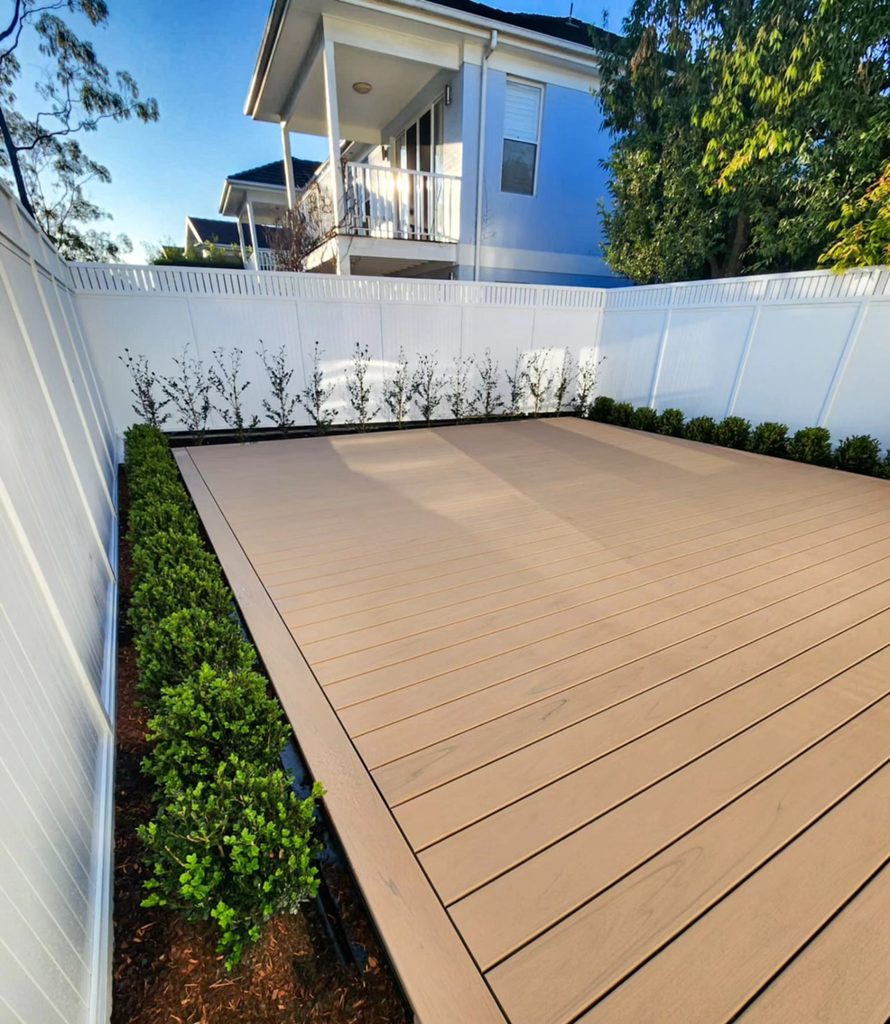
A generous deck surrounded by greenery feels welcoming without needing much extra decoration. Low shrubs along the edges soften the straight lines of the decking and fence, while the open center provides room for dining furniture, sun loungers, or children’s outdoor activities. This layout works particularly well when you want a garden that feels organized but still has plenty of usable floor space.
Keep the planting beds separate from the deck structure and allow room for drainage, pruning, and mature plant growth. Evergreen shrubs provide year round greenery, while ornamental grasses bring movement and a softer shape. Among practical composite deck ideas, this combination makes a plain backyard feel more connected to nature without filling every available corner with pots and furniture.
Warm Composite Decking Around Water
Credit: @outdoorcarpentryanddesign
Warm brown decking creates a relaxed setting around a plunge pool, spa, or other water feature. The natural wood look adds warmth to the surrounding architecture, while the continuous floor surface helps connect different parts of the outdoor area. This arrangement can make a compact backyard feel like a private retreat for relaxing after work or enjoying a peaceful weekend.
When planning composite deck ideas near water, safety deserves special attention. Select boards with suitable slip resistance for the intended location, check the manufacturer’s guidance for wet conditions, and plan for proper drainage around the water feature. Leave access to pumps, filters, and other equipment, and choose furniture that withstands moisture and sun exposure so the area stays practical as well as inviting.
Gray Composite Decking With Built In Lighting
Credit: @sanmarino_interiors
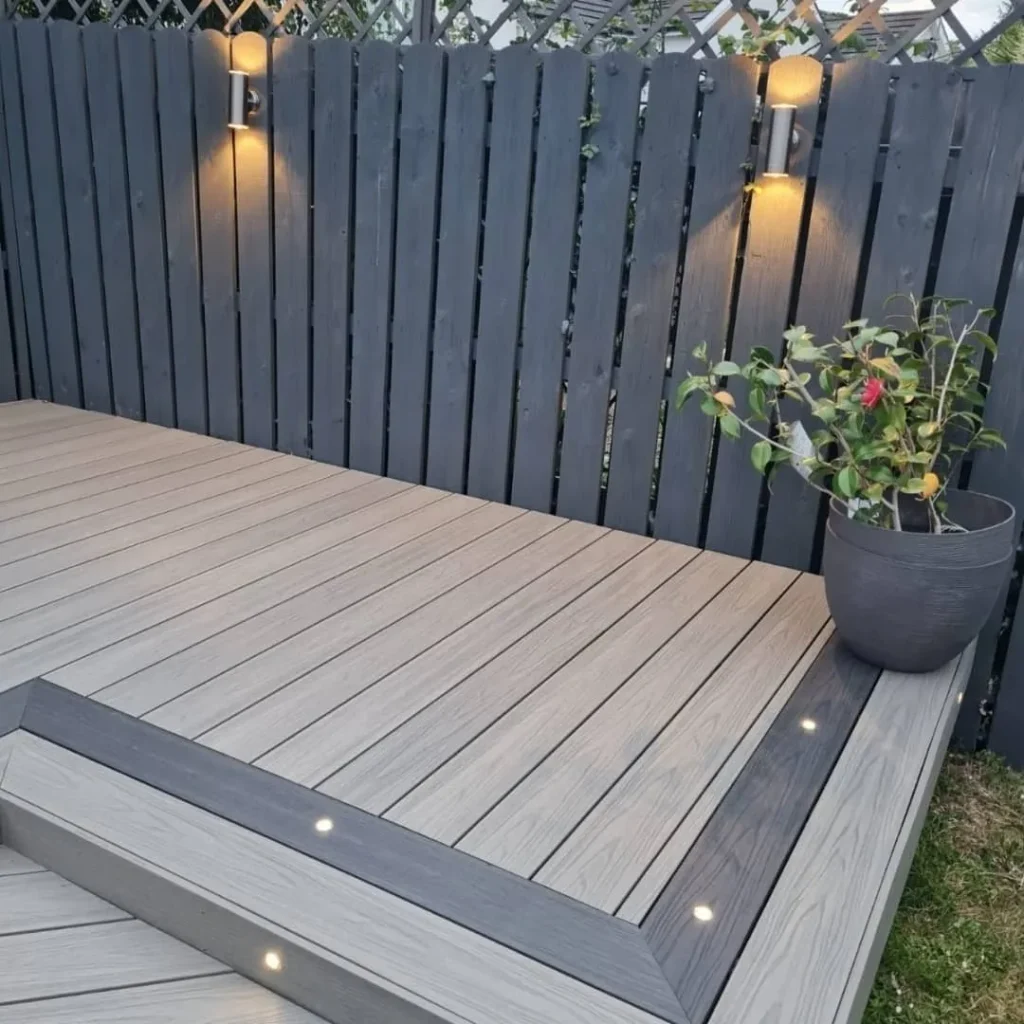
Soft gray decking paired with dark borders creates a contemporary outdoor space that feels comfortable during the day and after sunset. Small lights set into the deck can highlight the edges, mark changes in level, and make the space feel welcoming when you spend time outside in the evening. Dark fencing adds contrast, while a simple planter or two keeps the design from feeling too stark.
For these composite deck ideas, plan the lighting before the boards are installed. This makes it easier to position wiring, select suitable outdoor rated fittings, and avoid unnecessary changes to the finished surface. Use gentle, low glare lighting near steps and pathways, and include a separate light source for dining or reading so the deck remains useful for different activities.
Minimalist Composite Decking
Credit: @ballardscarpentry
A simple deck with uninterrupted boards gives your outdoor space a clean, spacious appearance. This approach works especially well in small backyards where too many patterns, colors, or decorative details could make the area feel busy. A single decking color also provides a flexible base for lounge chairs, dining tables, planters, and seasonal accessories.
Pay close attention to the direction of the boards when planning this type of deck. Running them along the longest dimension can make a narrow area feel more open, while a different direction can help separate a seating zone from a dining space. For composite deck ideas with a minimalist feel, matching the fascia to the decking creates a consistent edge that keeps the overall design simple.
Choosing the Right Composite Decking
The color and finish of your boards influence how the entire outdoor area feels. Before ordering materials, compare samples against your siding, fence, patio doors, and existing garden features. Looking at them in morning light and afternoon sun helps you understand how the color changes throughout the day.
Composite decking generally combines wood fibers or wood flour with plastic and other ingredients. The exact materials vary by product, so check the manufacturer’s information for durability, warranty coverage, cleaning instructions, and the conditions under which the boards perform well.
Think about the level of maintenance that suits your household. Many composite products need routine cleaning with water and a suitable cleaner, but they still benefit from care around spills, leaves, dirt, and standing water. Some products also have specific instructions for removing grease, dealing with stains, or clearing snow.
Your budget needs to cover more than the visible boards. Framing, joists, fasteners, fascia, stairs, railings, delivery, labor, and any required permits can add to the final cost. Request a detailed estimate so you can compare complete projects instead of looking at the price of decking boards alone.
Planning a Deck That Fits Your Garden
Start by deciding how you want to use your outdoor space on a typical day. A deck for family dinners needs room for a table and chairs, while a quiet sitting area might benefit from two lounge chairs, a small side table, and a few plants. Allow space for people to walk comfortably between these areas.
Measure the available ground and note where doors, windows, drains, and existing garden paths sit. These details affect the shape of your deck and the easiest route between the house and the garden. For smaller spaces, a simple rectangular layout often makes better use of the available area than a design with many corners.
Privacy can also influence the layout. A slatted screen or a suitable fence can help shield a seating area from nearby homes, while leaving the upper portion open can preserve light and airflow. Before adding a tall structure, check local rules and consider how the screen affects shade and views from inside the house.
If the deck sits above ground level, plan the stairs and railing early. The position of the stairs affects how easily you reach the lawn, and a railing can help define the outdoor seating area. Check local building requirements for stair dimensions, handrails, guardrails, and foundations before work begins.