
Live Beautifully at Home


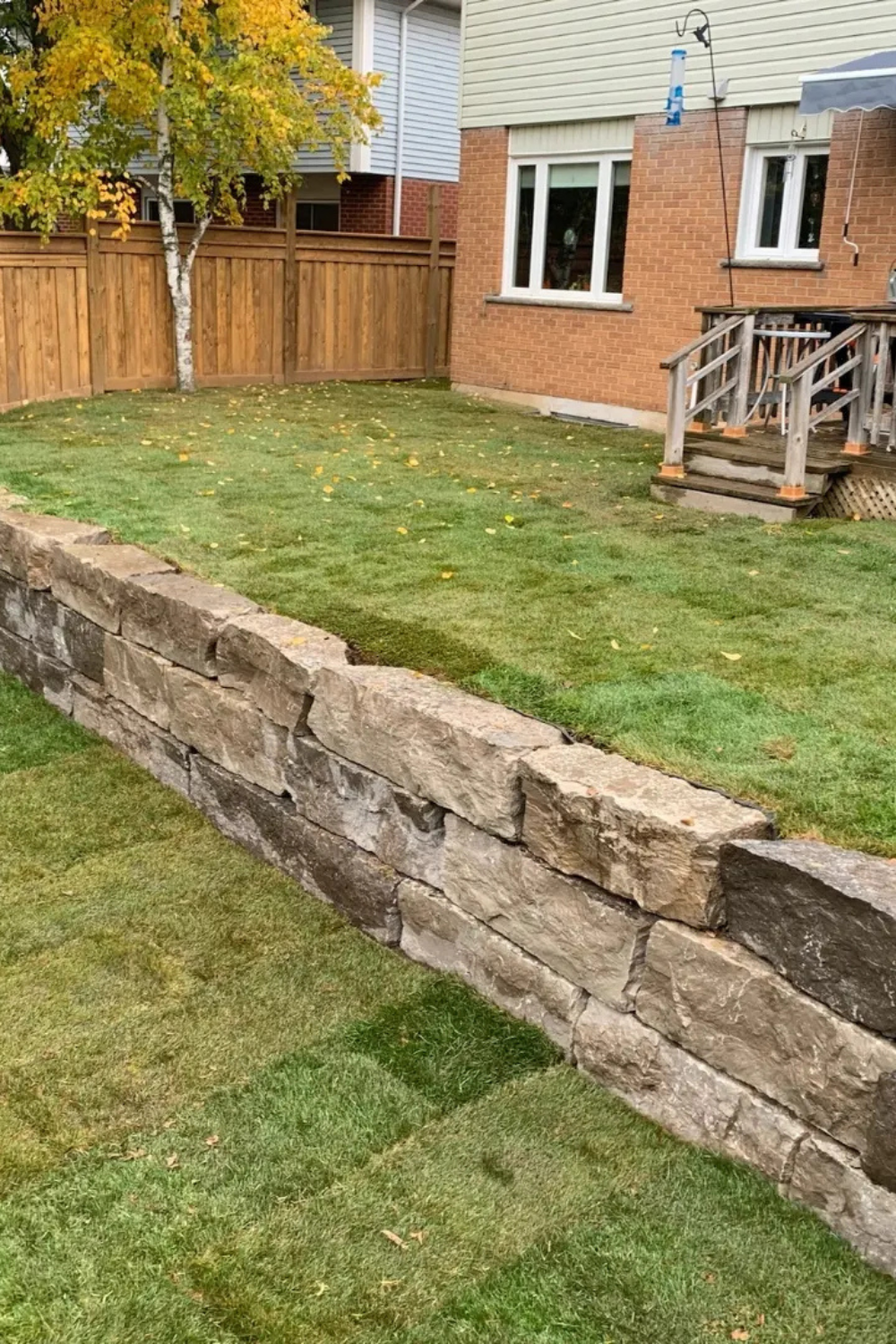
9 Modern Sloped Backyard Landscaping Ideas With Terraces and Garden Beds

Image Notice. Some images featured in this article may originate from third-party sources and are used for illustrative purposes only. Please review our Image Credits Policy for full attribution information.
A sloped yard can become one of the most useful and inviting parts of your property with the right sloped backyard landscaping Ideas. Changes in height create opportunities for raised garden beds, stone retaining walls, layered flower gardens, and separate lawn areas that give your outdoor space more character.
The key is to work with the shape of your yard. Instead of trying to make every part of the ground flat, you can use terraces, carefully placed plants, and natural materials to make the space easier to maintain and more enjoyable to use. Even a steep slope can become a welcoming garden when the layout suits the land.
With thoughtful planning, sloped backyard landscaping Ideas can also help manage rainwater, reduce soil erosion, and make awkward corners feel useful. Whether you prefer a green lawn, colorful flowers, or a modern garden with clean lines, there are plenty of ways to create a yard that feels connected to your home.
Stone Retaining Wall Garden
Credit: @3dlandscapearchitect
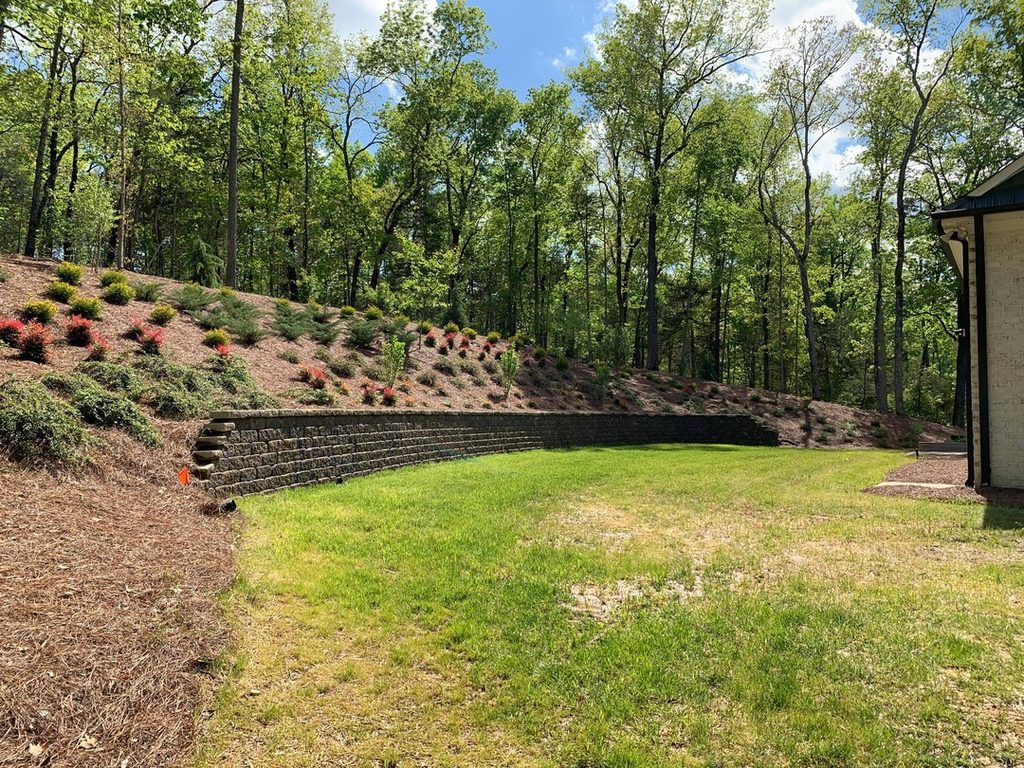
A stone retaining wall gives sloped backyard landscaping Ideas a strong starting point because it creates a clear edge between the higher garden and the lower lawn. The wall also provides space for planting beds, allowing you to bring color and texture to a hillside without covering every inch with grass. Choose stone that complements your home’s exterior for a garden that feels connected to the rest of your property.
For a natural look, plant low growing shrubs along the upper edge and leave enough room for them to spread as they mature. Ground covers and small ornamental grasses soften the hard lines of the stone while helping protect exposed soil. If the wall needs to hold back a substantial amount of earth, have its design, drainage, and foundation assessed before construction.
Raised Planter Garden
Credit: @dirtlocker_official
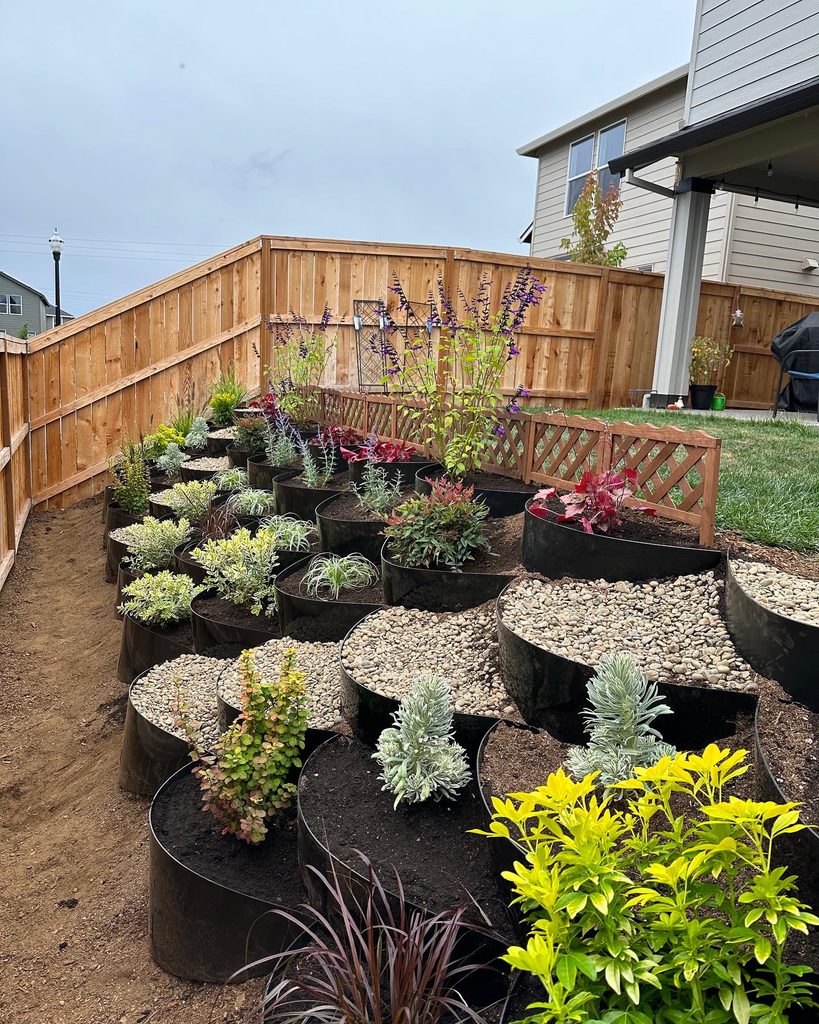
Raised planters offer a flexible approach to sloped backyard landscaping Ideas, particularly when the ground rises sharply behind your home. Different planter heights create a layered garden with plenty of room for flowering perennials, ornamental grasses, and compact shrubs. The result feels organized without losing the variety that makes a garden interesting.
Curved or rounded planters can soften a narrow side yard, while repeated shapes give the planting area a consistent appearance. Fill the beds with suitable soil and choose plants according to their sunlight and watering needs. For an extra touch of texture, incorporate Perfect Outdoor Planter Ideas into the design by combining different plant shapes, leaf colors, and heights, keeping the overall arrangement balanced.
Terraced Stone Garden
Credit: @elkssmith
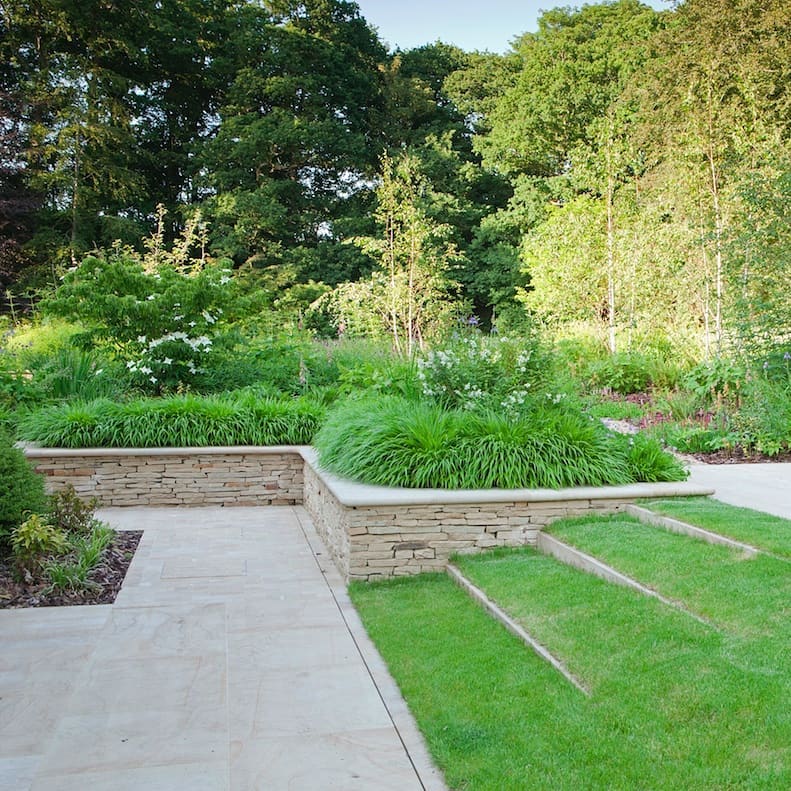
Terracing divides a steep garden into flatter levels that feel easier to use and care for. This approach to sloped backyard landscaping Ideas creates natural places for planting, walking, and enjoying the garden, while making a large change in elevation feel less overwhelming. Low stone walls can also introduce a sense of order without taking away the relaxed character of the landscape.
Choose stone in warm beige or soft gray tones if you want a timeless outdoor setting. You can use the upper terrace for ornamental grasses, the middle level for flowering plants, and the lower area for a simple lawn or paved seating space. Each level needs suitable drainage, and the height and construction of the walls should match the slope and soil conditions.
Colorful Hillside Flower Beds
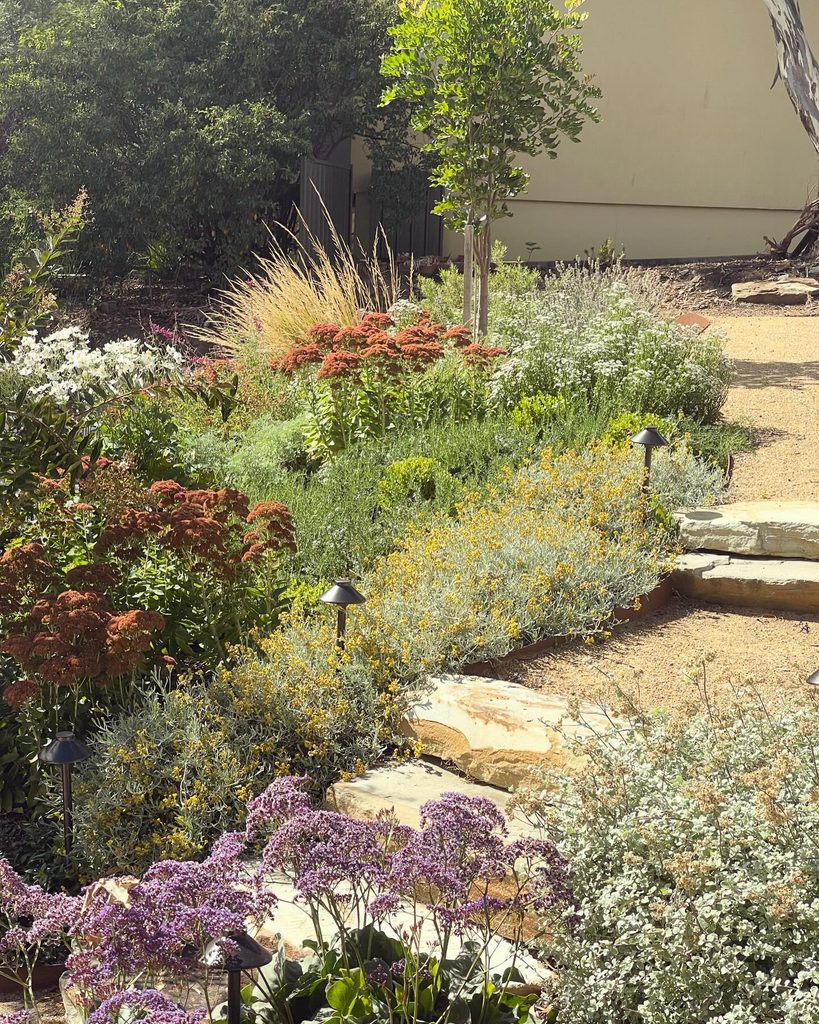
Credit: @grounddesignlandscaping
A hillside covered with flowering plants brings softness and seasonal color to a yard that might otherwise be difficult to maintain. This version of sloped backyard landscaping Ideas works especially well when you want the garden to feel natural instead of highly structured. Groups of plants create a gentle flow across the slope, while different bloom times keep the space interesting through the growing season.
Start with dependable plants that suit your local climate, soil, and light levels. Ornamental grasses add movement, flowering perennials provide color, and evergreen shrubs give the garden structure during colder months. Arrange plants in generous groups instead of scattering single specimens everywhere, and leave enough space for mature growth so you can maintain the beds without damaging nearby plants.
Tiered Wooden Deck Garden
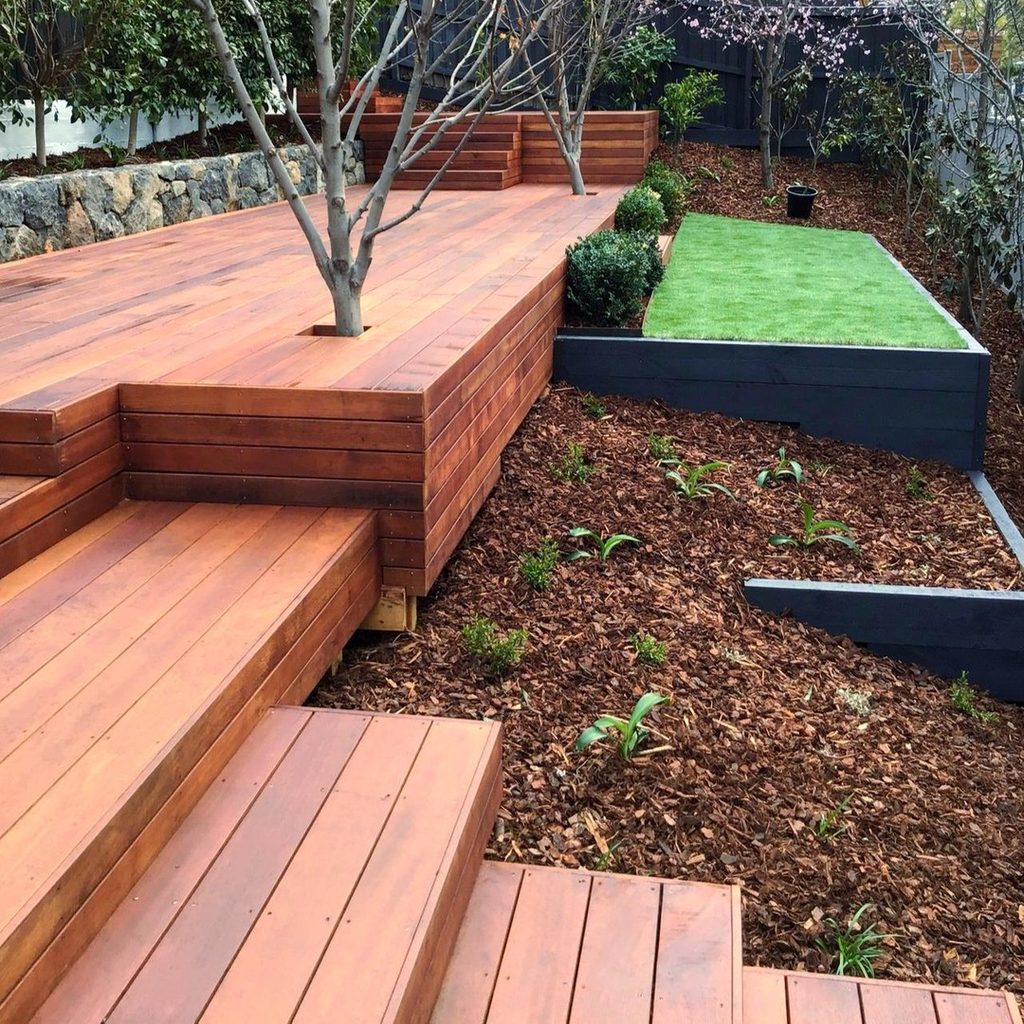
Credit: @loveitlandscaping
A tiered wooden deck can turn a steep backyard into a practical outdoor living area. These sloped backyard landscaping Ideas are especially useful when a flat patio would require extensive excavation or major changes to the existing ground. Separate deck levels can create space for outdoor dining, relaxed seating, or a small garden, giving each part of the yard a clear purpose.
Use durable outdoor materials and choose a finish that works with your home’s exterior. Built in planters can soften the edges of the deck, while small shrubs and mulch beds help connect the structure to the surrounding landscape. Make sure stairs, railings, foundations, and drainage are designed for the site’s conditions, particularly where the deck sits above a steep drop.
Layered Shrubs and Grasses
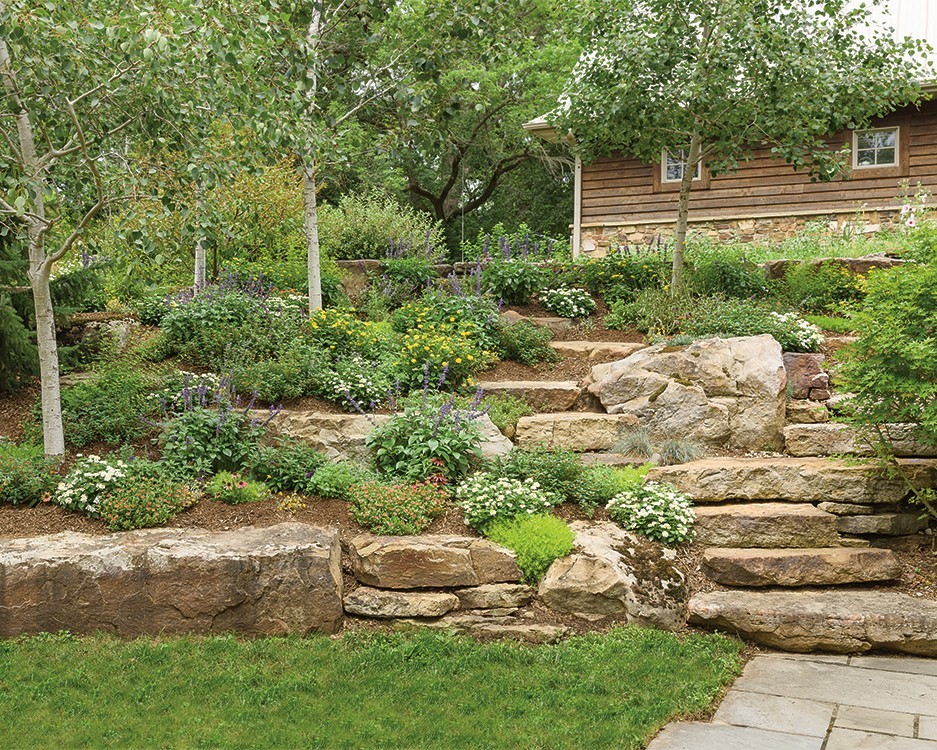
Credit: @provenwinners
Layering shrubs, ornamental grasses, and flowering plants creates a hillside garden with plenty of visual interest throughout the year. This style of sloped backyard landscaping Ideas suits homeowners who prefer a planted landscape over a large lawn. Contrasting leaf colors and plant heights help the garden feel full, even when only a few plants are in bloom.
Place taller plants toward the back or upper sections of the bed, with medium sized shrubs in the middle and lower plants near the front. Golden foliage, silvery leaves, deep green shrubs, and purple flowers can create an attractive mix without requiring too many different varieties. Select plants with similar water needs for each section, and use suitable ground covers to help protect the soil between larger plants.
Natural Stone Garden Steps
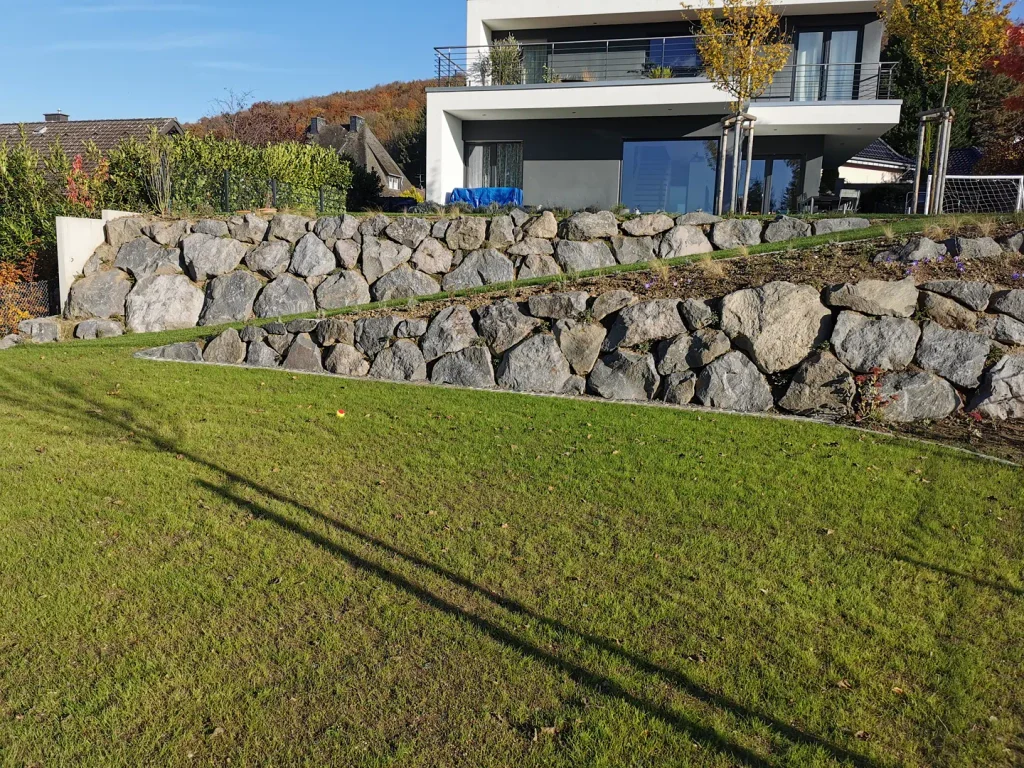
Credit: @richarz_gartengestaltung
Stone steps make a sloped garden easier to navigate while adding a natural feature that suits both traditional and contemporary homes. They work well in sloped backyard landscaping Ideas where you want to connect the lawn, garden beds, and upper parts of the property without making the entire yard flat. Broad steps can feel welcoming, especially when surrounded by low plants and natural stone borders.
Choose stone with a suitable walking surface, and plan the height and depth of every step for comfortable use. Low growing plants beside the stairs can soften the edges, while small path lights improve visibility after sunset. Avoid placing loose gravel where it is likely to spill onto the steps, and make sure water drains away from walking surfaces instead of collecting on them.
Multi Level Lawn Garden
Credit: @thegardentamer
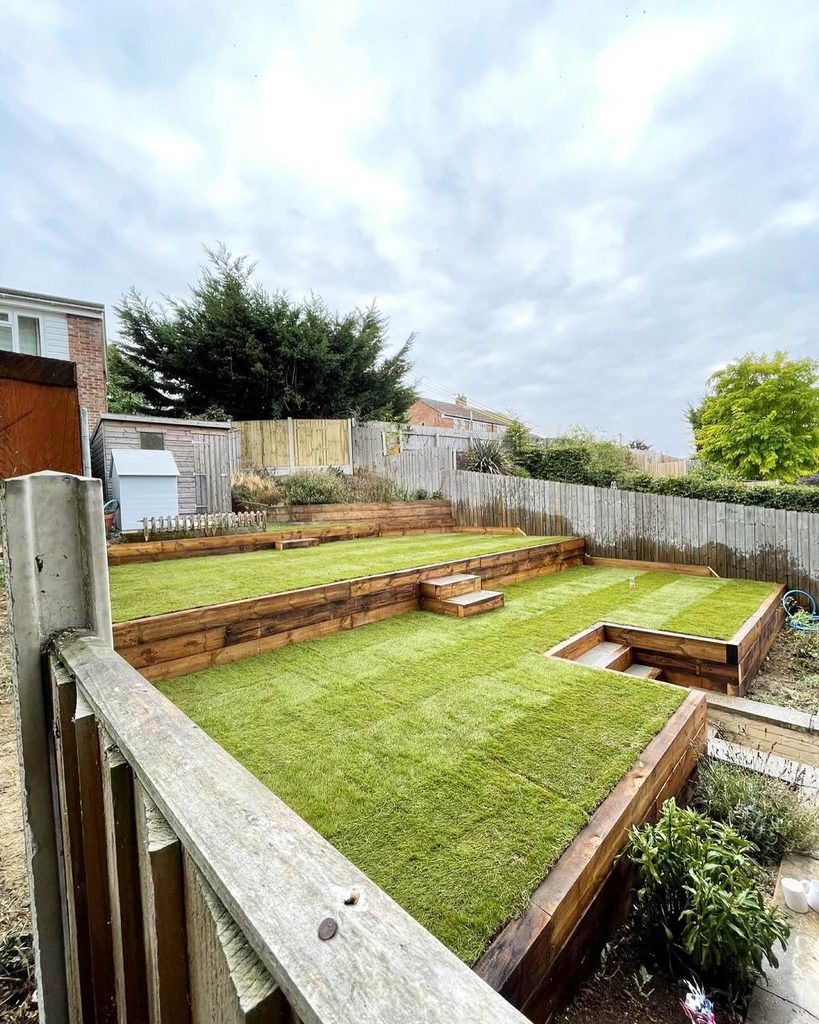
A multi level lawn gives families more usable green space without requiring the whole yard to sit at one elevation. Among practical sloped backyard landscaping Ideas, this option is useful when you want room for outdoor games, garden furniture, or a simple area where children can play. Timber or masonry retaining structures separate the lawn levels and help create defined spaces.
Keep each lawn section wide enough for its intended use, and include steps or a suitable path between levels. Strong edging helps separate the grass from nearby planting beds, making mowing and trimming easier. Before installing turf, consider how water moves through the property, since a poorly planned lawn can develop muddy areas, uneven settling, or bare patches where runoff collects.
Natural Rock Retaining Walls
Credit: @turtlecreek_landscaping
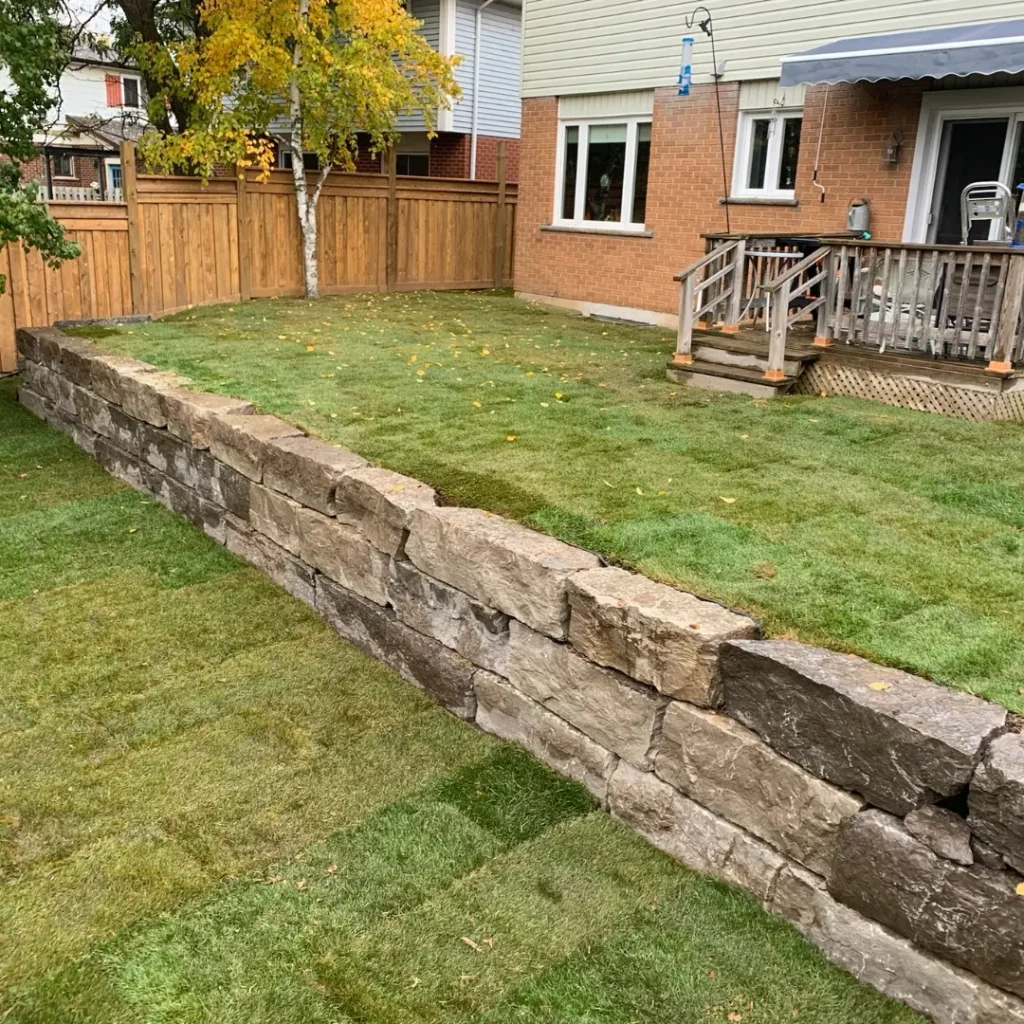
Large natural rocks give a sloped garden a rugged character that works beautifully with trees, shrubs, and open lawns. This style of sloped backyard landscaping Ideas suits properties where natural materials feel more appropriate than a highly uniform wall. Different rock sizes create visual depth, and small planting pockets can help soften the edges of the structure over time.
Choose stone that is suited to the size of the wall and the conditions of your property. Smaller plants can fill gaps in suitable locations, while drought tolerant shrubs may work well on sunny upper levels. Large retaining walls require careful attention to soil pressure, drainage, and stability, so consult a qualified professional when the wall is substantial or supports a building, driveway, or other heavy feature.
Planning a Sloped Backyard Landscape
The most successful sloped backyard landscaping Ideas begin with a clear understanding of the land. Walk around your property after rainfall and notice where water collects, where the soil washes away, and which sections remain dry. These details help you choose a layout that works with the conditions instead of creating extra maintenance later.
Think about how you want to use the space before choosing materials. A family garden may need broad lawn terraces and safe steps, while a quiet outdoor retreat may benefit from planted slopes, natural stone, and a small seating area.
Measure the height difference between the highest and lowest parts of the yard. Even a modest slope can affect the amount of soil, wall material, and labor required, so accurate measurements help you set a realistic budget.
Consider the amount of sunlight each level receives. Sunny slopes often suit ornamental grasses and drought tolerant perennials, while shaded areas beneath trees may support shade loving ground covers and woodland plants.
Choosing Plants and Materials for Slopes
Plant selection makes a big difference in how much work your garden requires. Deep rooted plants and suitable ground covers help protect soil, while shrubs and ornamental grasses provide structure across different levels. Choose varieties suited to your climate and soil conditions, with particular attention to how much water each plant needs.
Evergreen shrubs provide year round greenery, while flowering perennials add seasonal color. A simple combination of three or four main plant types often creates a more cohesive garden than using many unrelated varieties.
Materials also influence the character of your outdoor space. Natural stone suits relaxed gardens and traditional homes, timber introduces warmth, and concrete retaining blocks work well in contemporary settings. Compare the cost, lifespan, and maintenance needs of each option before making a final choice.
For a smaller budget, begin with the areas that need the most attention. Mulch exposed soil, introduce suitable plants, and improve an existing path before investing in a large retaining wall or extensive decking.

[…] gray floating deck ideas suit homeowners who prefer a clean, modern outdoor setting. The deep color gives the platform a strong outline, helping it stand out against green […]