
Live Beautifully at Home


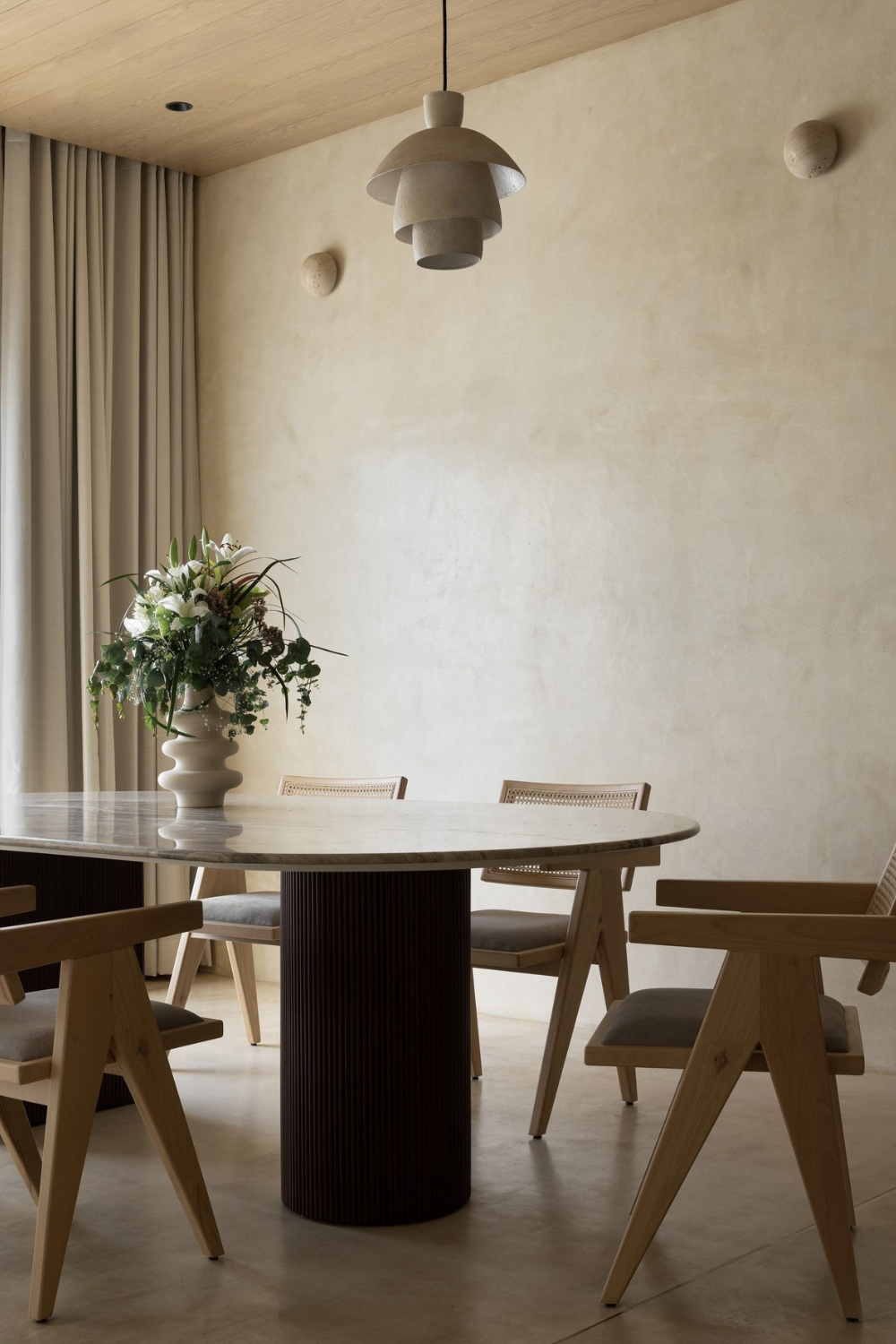
14 Best Japandi Dining Room Ideas for a Minimalist Home
 Rhonda
My Blue Creek Home Founder & Editor
I spent over 12 years in decorative painting and faux finishing, starting with a faux finishing company I co-owned in Mississippi that...
October 19, 2026
10 min read
Leave a comment
Image Notice. Some images featured in this article may originate from third-party sources and are used for illustrative purposes only. Please review our Image Credits Policy for full attribution information.
A Japandi dining room Ideas design brings together the warmth of Japanese interiors and the simple comfort of Scandinavian style. Natural wood, soft colors, clean shapes, and thoughtful details create a dining space that feels peaceful and welcoming. The goal is to make your room comfortable for everyday meals while giving it a timeless look that feels easy to live with.
You can create this style in a large dining room, a small apartment, or an open plan kitchen and living area. Light oak furniture, linen upholstery, handmade pottery, and gentle lighting help build a relaxed atmosphere without filling the room with unnecessary items. Each piece has a purpose, and the natural materials bring enough character to keep the space from feeling plain.
A successful Japandi dining room Ideas design also leaves room for daily life. Your table needs to work for family dinners, quiet mornings, and guests, while the surrounding furniture keeps the room open and easy to move through.
Choose a dining table with a simple shape and a natural finish to create a strong starting point. Solid wood, rounded corners, and sturdy legs give the room character without adding visual clutter.
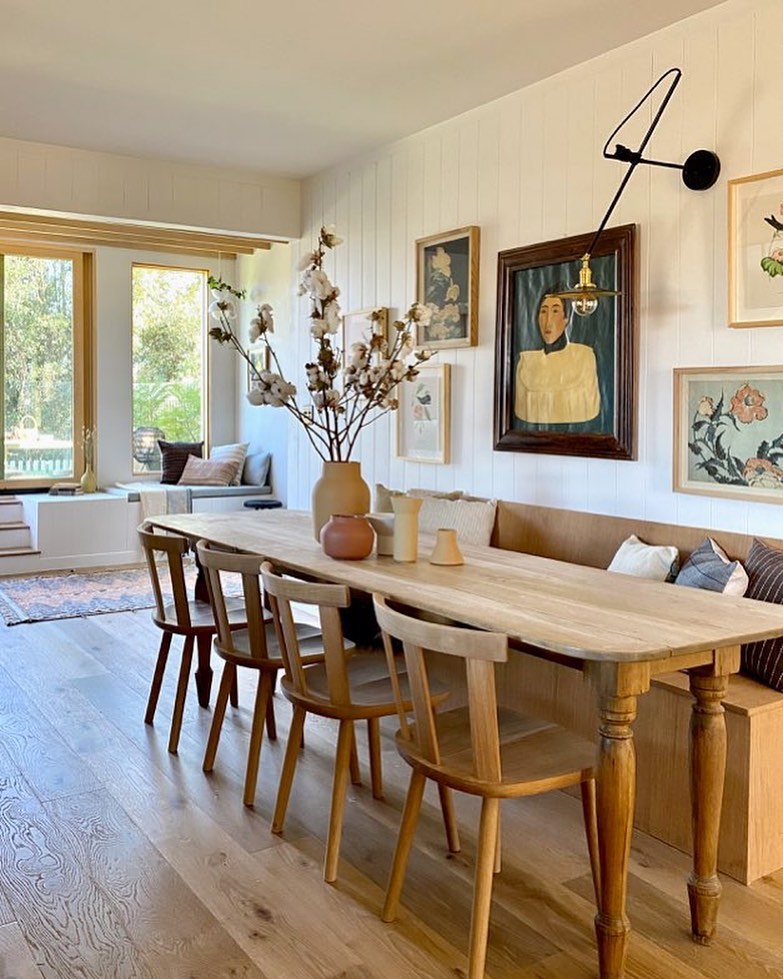
Natural Wood and Upholstered Seating
Credit: @a1000xbetter
A natural wood table paired with comfortable upholstered seating gives Japandi dining room Ideas a welcoming foundation. The mix of smooth timber and soft fabric brings together the practical side of Scandinavian design and the quiet simplicity of Japanese interiors, creating a room that feels relaxed enough for everyday meals.
Choose chairs in oatmeal, beige, or muted taupe to soften the stronger lines of the table. A few framed botanical prints, simple ceramic vessels, and pale wood flooring help complete the space without taking attention away from the furniture.
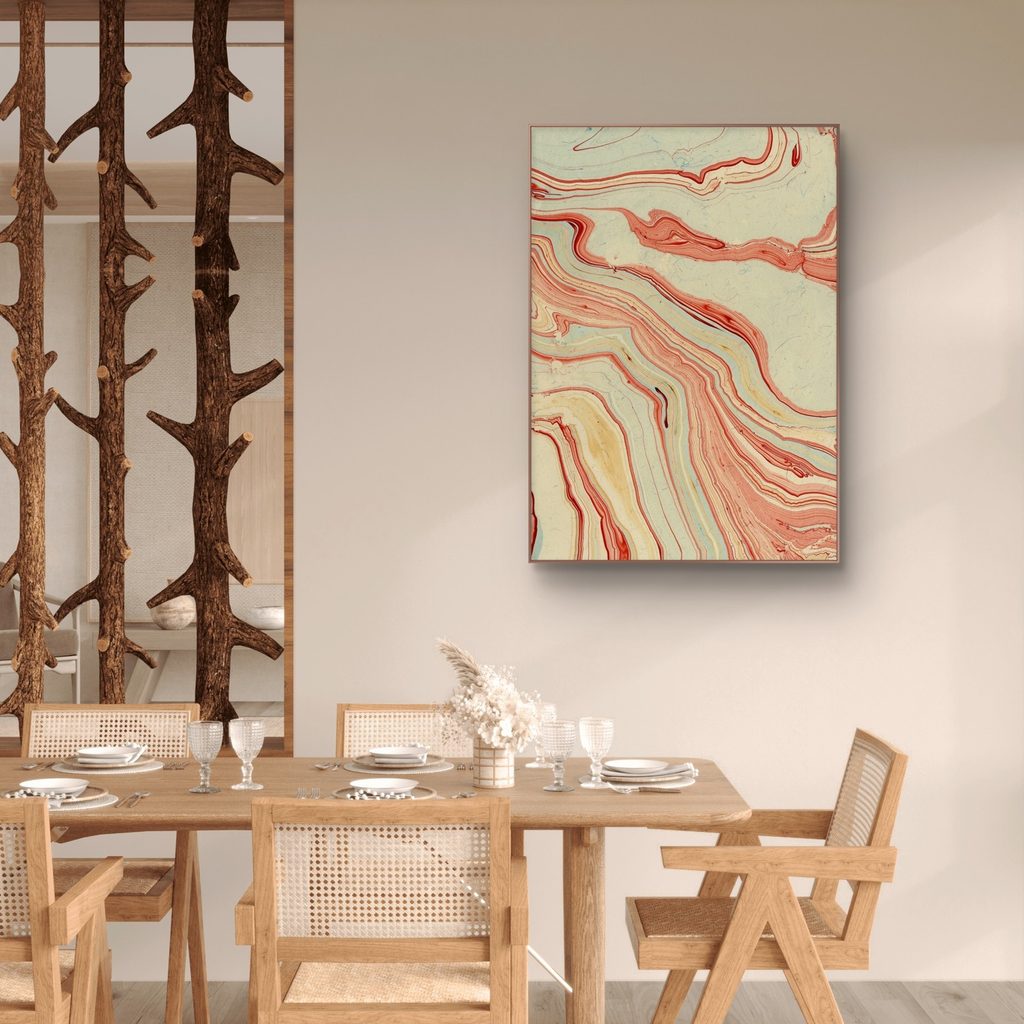
Sculptural Wood and Cane Chairs
Credit: @frameit_app
Cane backed chairs introduce a light, natural texture that works beautifully with a solid wood dining table. Their open woven surfaces bring detail to the room without making it feel crowded, which makes this approach especially appealing for Japandi dining room Ideas in homes with a warm, neutral palette.
Pair the chairs with a simple rectangular table and understated tableware in white or cream. A large piece of abstract artwork can add a gentle touch of color, while a natural fiber rug beneath the dining set helps define the space.
Dark Wood and Soft Lighting

Credit: @huisjeinhetpark
Dark wood introduces depth and richness into a dining room while preserving the calm feeling that makes Japandi interiors so appealing. A deep brown table paired with curved beige chairs creates a comfortable balance between strong furniture shapes and soft materials.
For this version of Japandi dining room Ideas, choose oversized pendant lights with warm bulbs to create a gentle glow over the table. Wall molding, full length curtains, and a simple bench can add structure and comfort without competing with the natural wood grain.
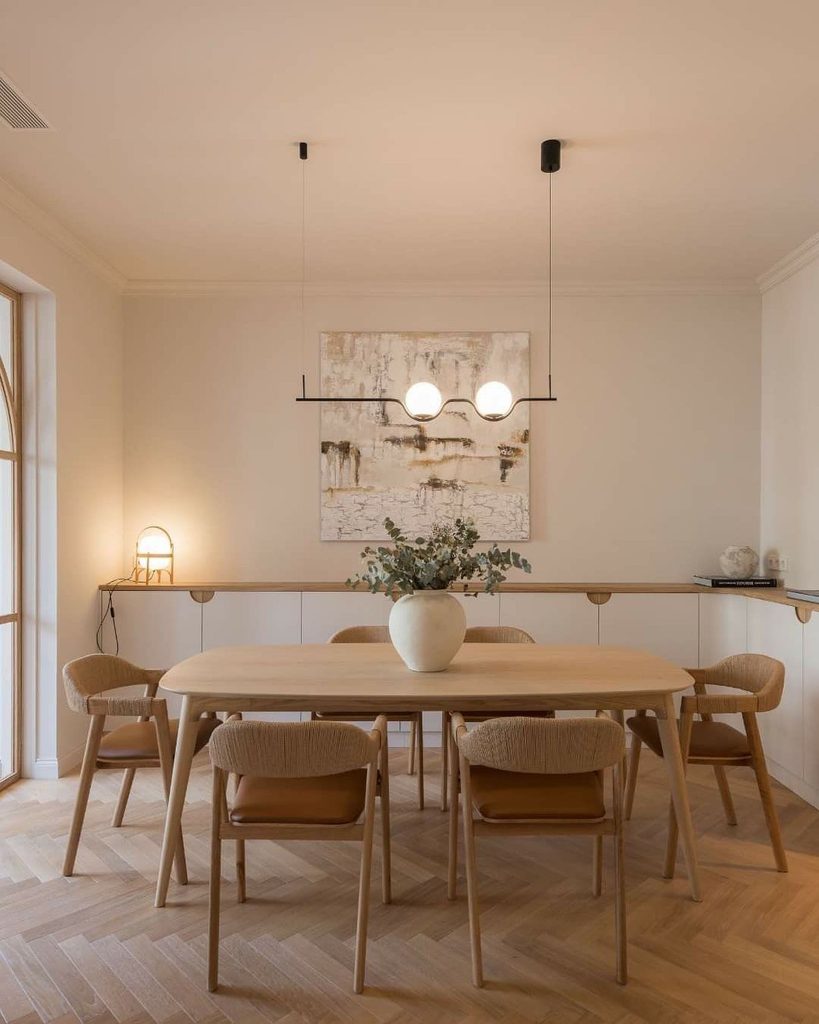
Light Oak and Rounded Furniture
Credit: @japandi_interior.jp
Rounded table corners and gently curved chair backs bring a softer feeling to a dining room. Light oak keeps the furniture visually airy, while warm beige upholstery adds comfort for long dinners and relaxed weekend breakfasts.
A round or softly rectangular table works especially well in rooms where people move between the kitchen and dining area. Add a single matte ceramic vase and a restrained abstract artwork to maintain the simple character of Japandi dining room Ideas without leaving the room feeling bare.
Minimalist Japanese Dining Room
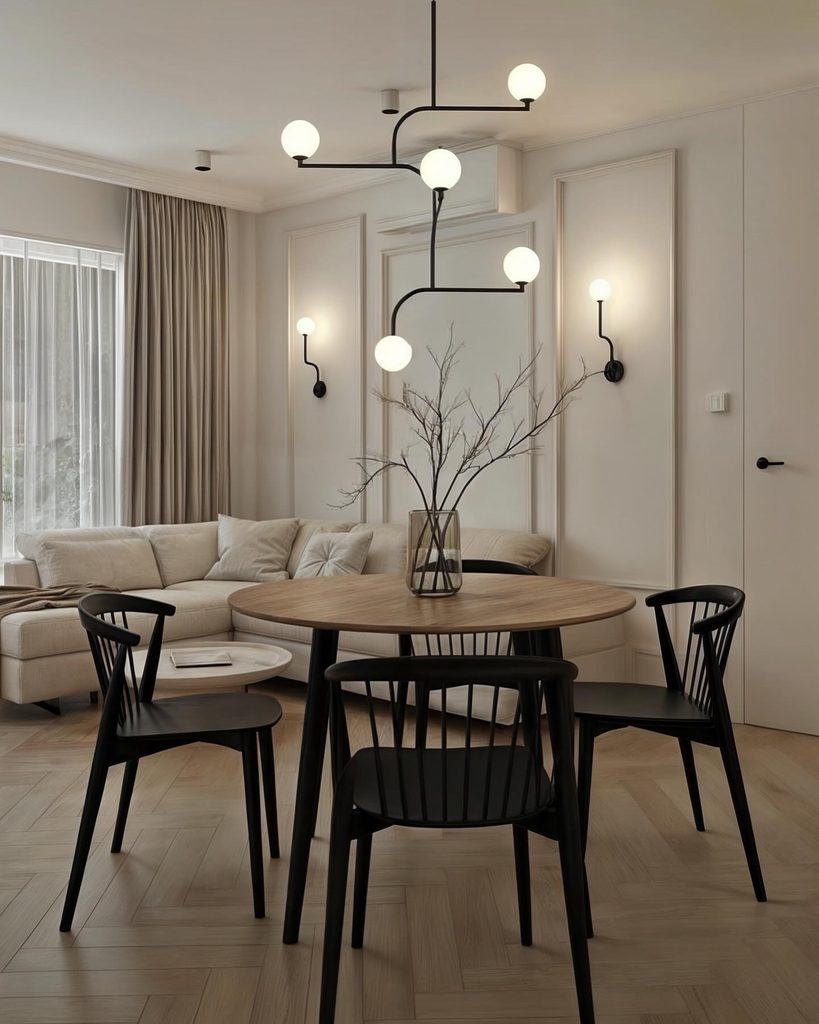
Credit: @julitakulikowskaarchitecture
A minimalist dining room feels restful when every element has enough space around it. A pale wood table, a small number of comfortable chairs, and understated wall art create a setting where natural materials become the main source of interest.
This approach suits anyone who appreciates Minimalist Japanese Living Room Ideas and wants the same sense of calm to continue into the dining area. Keep the surrounding walls in warm white or soft ivory, and choose simple lighting with clean lines to create a gentle connection between the rooms.
Black Chairs and Natural Oak
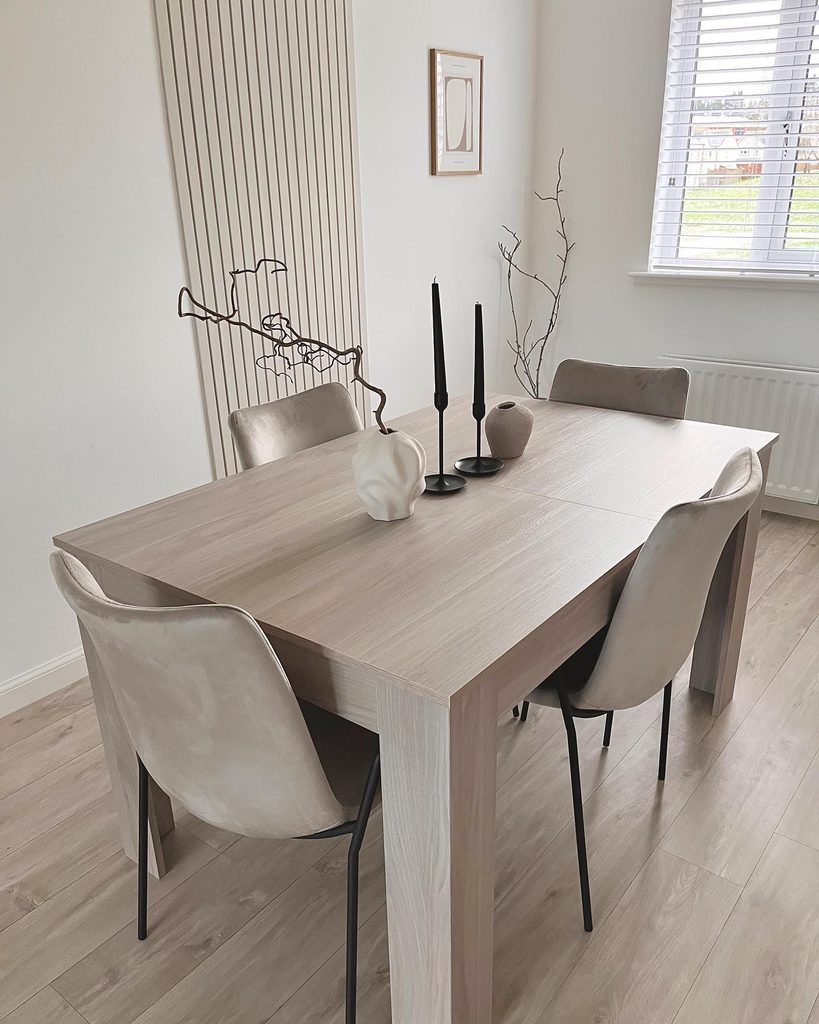
Credit: @kcinterior
Black dining chairs add contrast to a light wood table without taking away its warmth. Their darker finish creates a clear outline against pale flooring and cream walls, making the dining furniture feel grounded and well balanced.
For a practical version of Japandi dining room Ideas, repeat black in just one or two other details, such as a pendant light or a small decorative bowl. This creates a natural connection between the different elements while allowing the oak tabletop to remain the main feature.
Warm Timber and a Sculpted Arch
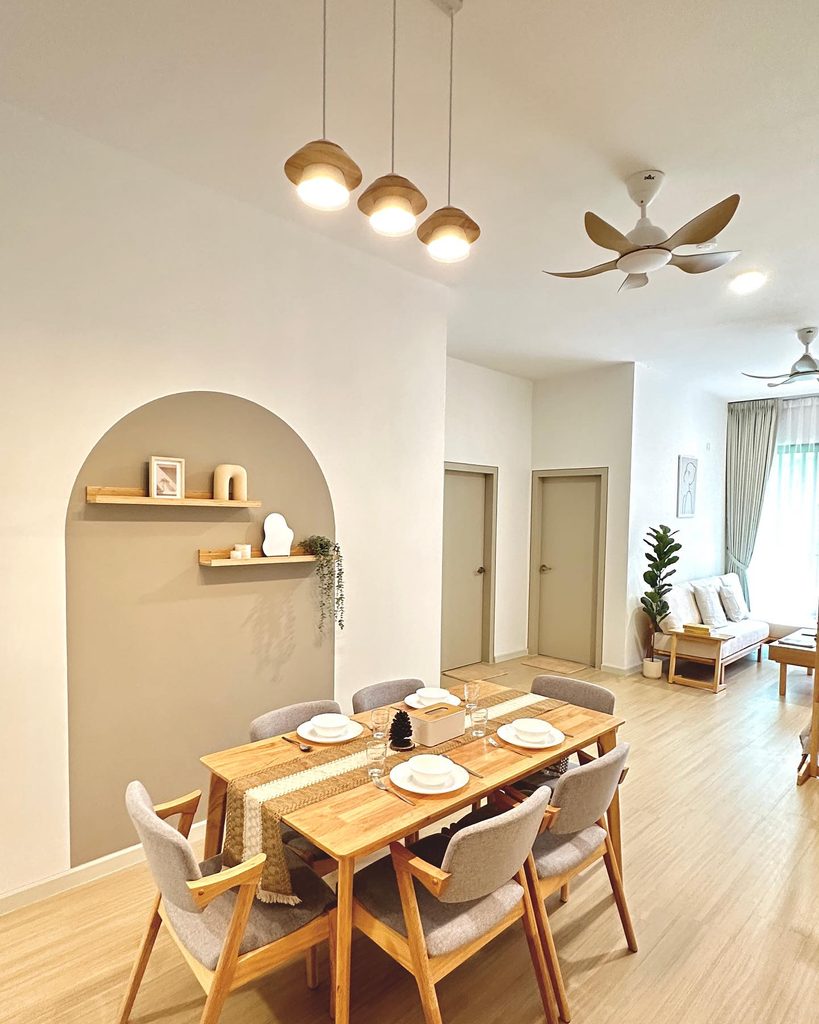
Credit: @khomie_design
A painted arch behind the dining table gives the room a gentle architectural feature without requiring a large renovation. A warm beige or mushroom shade adds depth to a white wall, while simple floating shelves provide a place for a few carefully chosen objects.
Choose a light wood dining set with upholstered chairs to keep the furniture comfortable and approachable. Small ceramic pieces, a trailing plant, and a textured table runner add personality to this version of Japandi dining room Ideas while preserving the open feeling of the room.
Black Details and Natural Texture
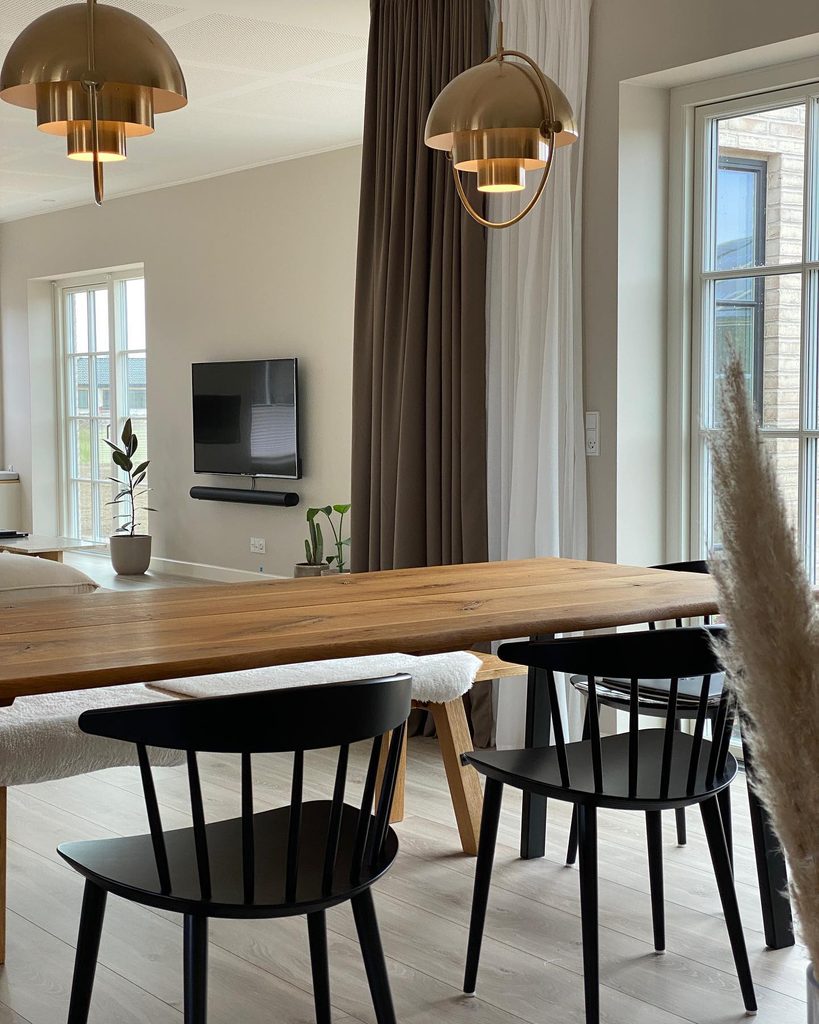
Credit: @lille_hjem18
Natural wood and black furniture create an appealing balance between warmth and contrast. A chunky timber tabletop feels substantial, while slim black chairs bring a lighter outline that keeps the dining area from looking too heavy.
This combination works well in an open plan home where the dining room shares space with a living area. Add a soft bench cushion, linen curtains, or a woven rug to bring more texture into the room, then let the wood grain and black accents provide most of the visual interest.
A Soft Neutral Dining Palette
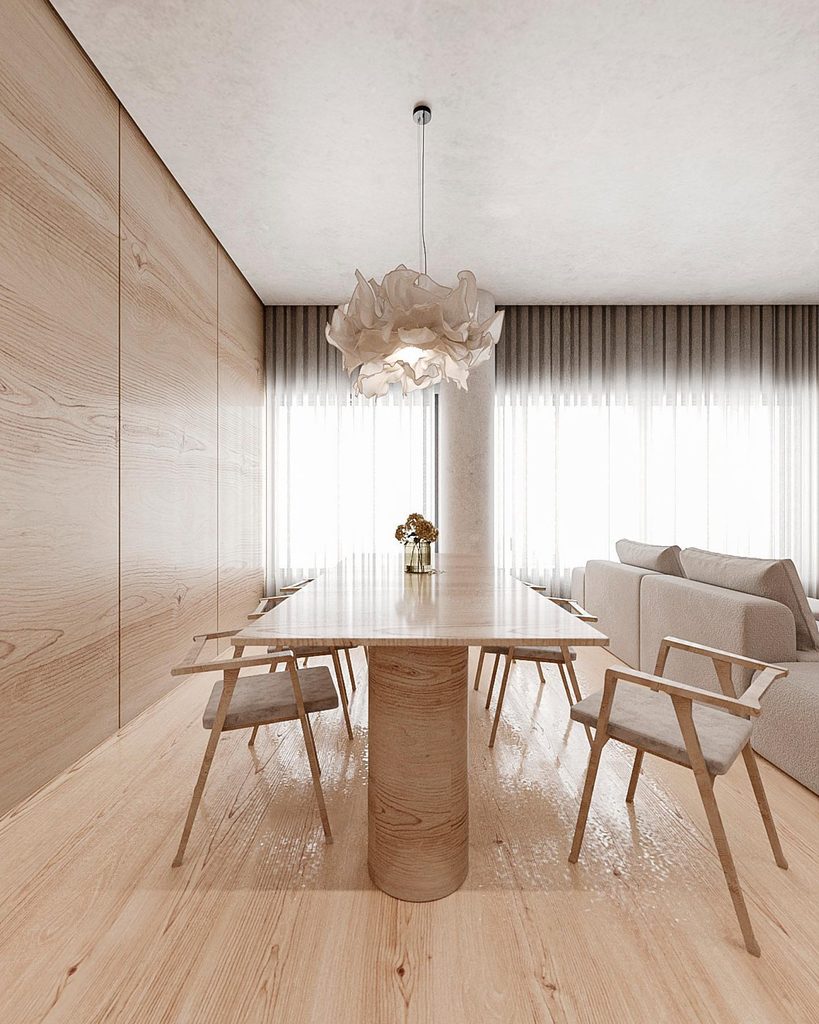
Credit: @maelina.design
A palette of ivory, pale beige, and light wood gives a dining room a quiet and airy atmosphere. Upholstered chairs add softness, while a simple oval table makes the furniture arrangement feel welcoming and easy to move around.
To keep Japandi dining room Ideas from feeling too plain, bring in subtle differences in texture. A thick woven rug, linen curtains, matte pottery, and a natural wood frame provide enough variety to make the room feel comfortable without introducing too many colors.
A Simple Table with Black Candles

Credit: @oheyatsukuruzo
A pale wood dining table can become a lovely focal point when the tabletop styling stays simple. Two dark candlesticks, a sculptural vase, and a small branch arrangement introduce contrast while leaving the table ready for everyday use.
This is a useful approach when you want to refresh your dining room without buying new furniture. Choose a few pieces in natural materials, keep their heights varied, and leave open space between them so the arrangement feels relaxed and easy to maintain.
Natural Wood with a Statement Pendant
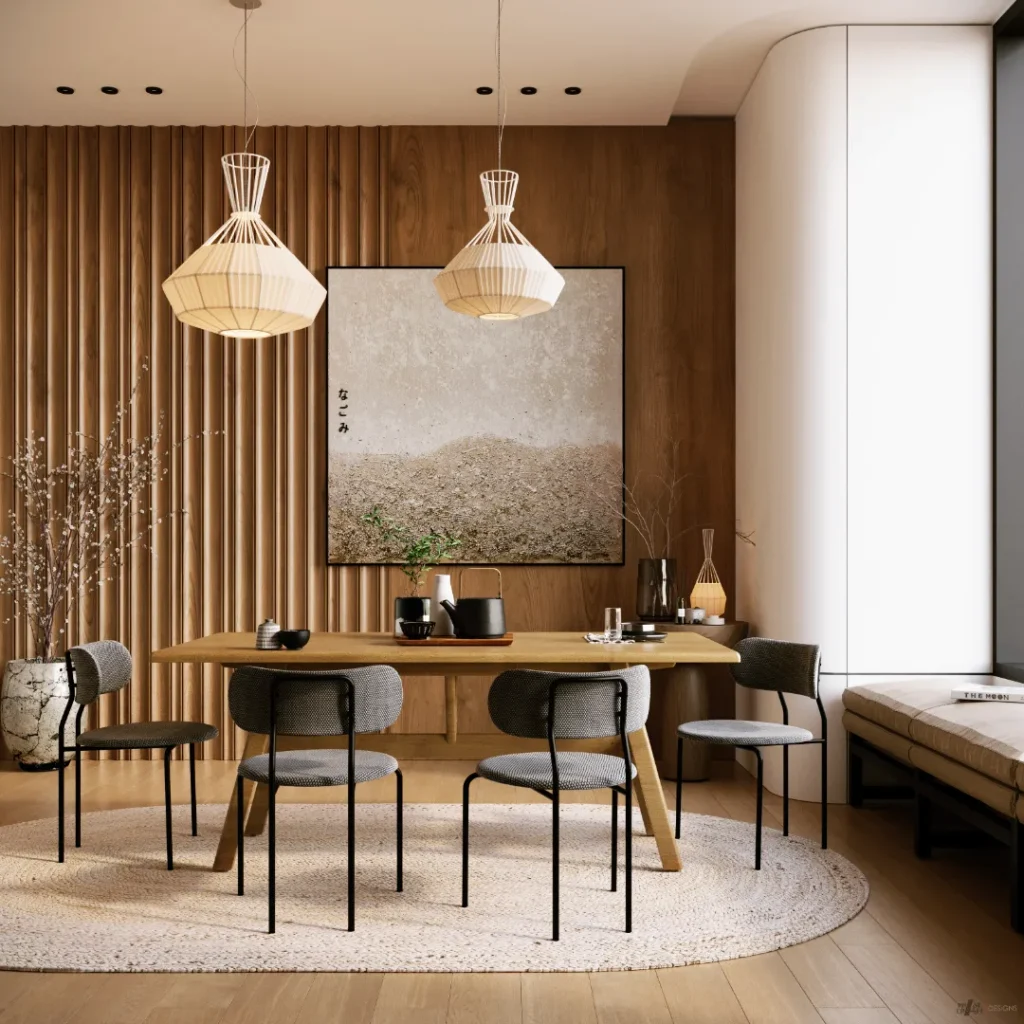
Credit: @phasecraft_designs
A statement pendant light can bring character to a dining room while the furniture remains simple. Paper inspired shades, woven pendants, and softly curved wooden fixtures work especially well with natural timber because their shapes add interest without creating a busy look.
Hang the light above the center of the table and choose a warm bulb for evening meals. In a room with wood paneling or a timber feature wall, a pale pendant can provide a gentle contrast that keeps the space from feeling too dark.
A Round Table for Small Spaces
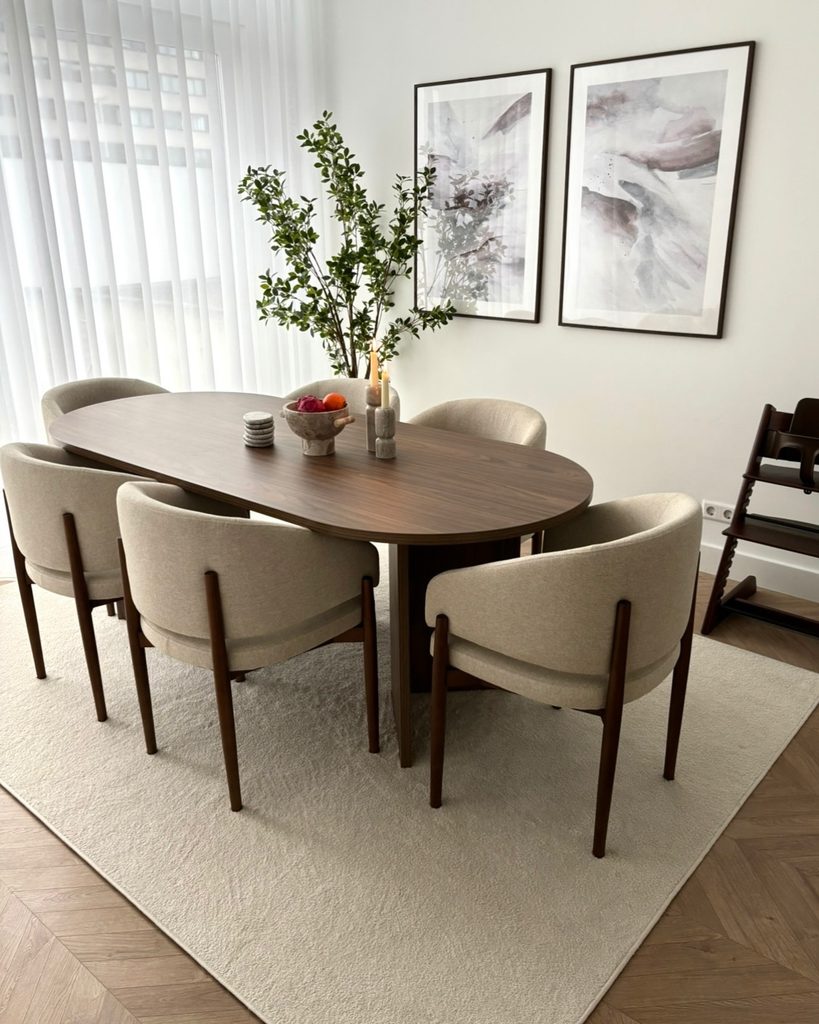
Credit: @pieceofhayel
A round dining table makes it easier to move through a compact dining area because there are no sharp corners to navigate. Its curved shape also creates a more relaxed arrangement, allowing everyone at the table to feel connected during meals.
For small Japandi dining room Ideas, look for a table with a central pedestal base or slim legs that leave plenty of room for chairs. Compact seats with rounded backs help keep the furniture arrangement comfortable, while a single pendant light gives the table a clear visual focus.
A Stone Top and Wooden Chairs
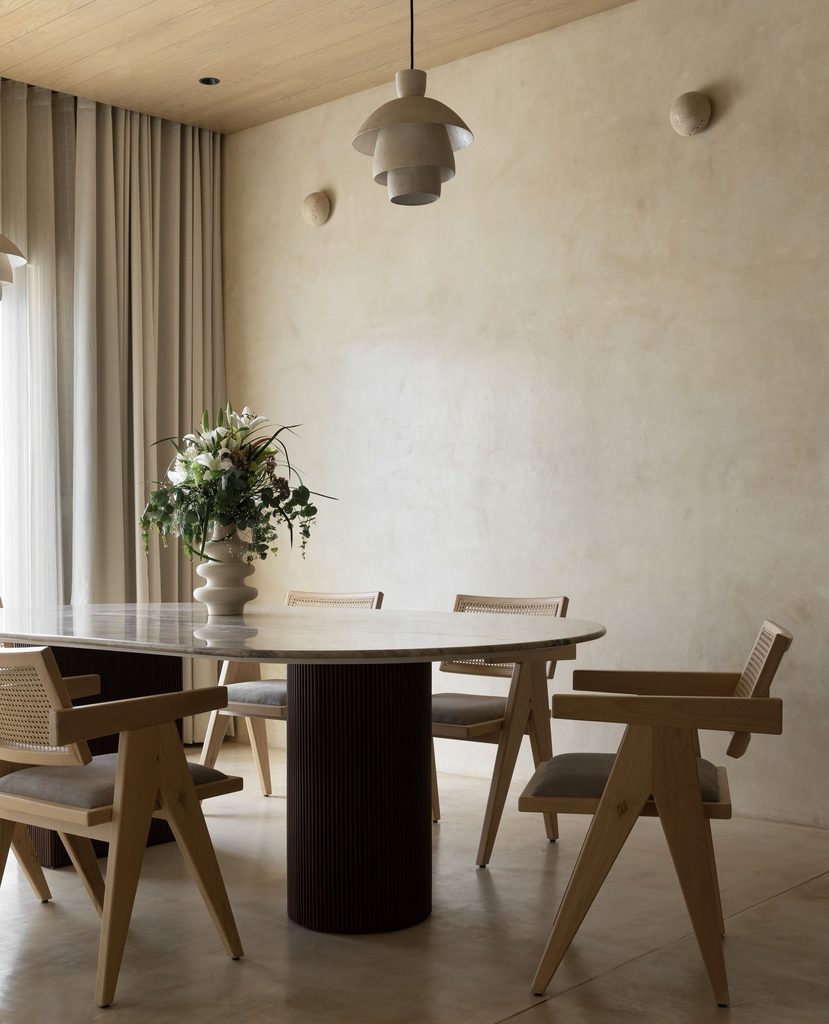
Credit: @theauburnstudio
A stone or stone look tabletop brings a different texture to a room filled with warm wood. Its smooth surface and subtle natural markings provide contrast, while wooden chairs with woven backs keep the overall setting comfortable and connected to nature.
Choose a pale stone finish for a light and airy dining room, or a deeper shade for more contrast. A sculptural ceramic vase with seasonal flowers makes a suitable centerpiece, and soft curtains help balance the harder surfaces around the table.
A Minimalist Dining Room with Paper Lighting
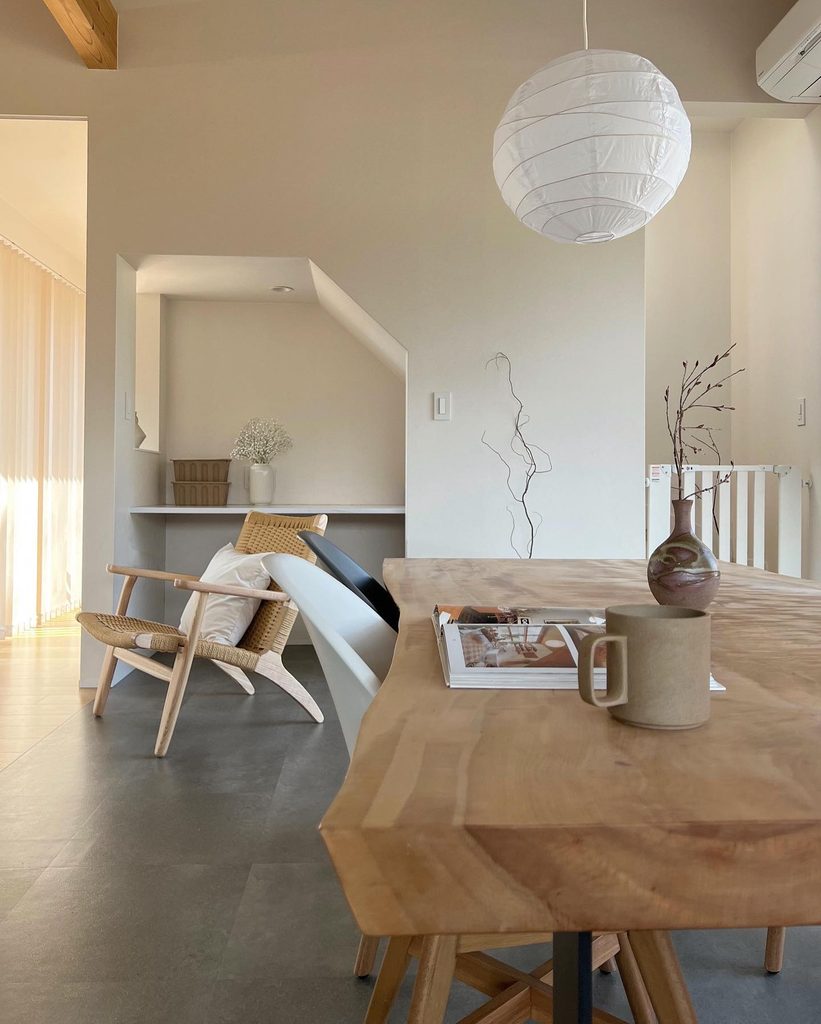
Credit: @y_u_i_ie
Paper lantern lighting brings a soft, diffused glow that suits the quiet character of Japanese inspired interiors. Paired with a substantial wood table, simple chairs, and a restrained color palette, it creates a dining area that feels peaceful without needing many decorative objects.
This style works particularly well in an open plan room where the dining area connects with a kitchen or lounge. Keep the tabletop free from unnecessary accessories, choose natural finishes for the furniture, and let the gentle lighting create a welcoming atmosphere in the evening.
Choosing Materials for a Japandi Dining Room
The materials you choose have a big influence on how your dining room feels. Natural wood, linen, cotton, cane, stone, and handmade ceramics bring subtle differences in texture that make a simple room feel comfortable and lived in.
Oak and ash are useful choices for a lighter dining room, while walnut creates a richer look with deeper brown tones. When selecting furniture, consider the color of your existing floors and kitchen cabinets so the different wood finishes work together.
Texture matters just as much as color. A linen cushion, woven chair seat, or wool rug introduces softness against the smooth surface of a dining table, creating a balance that feels inviting without adding unnecessary decoration.
Lighting also deserves careful attention. A pendant above the dining table creates a natural focal point, while a wall light or small table lamp nearby can provide softer illumination when the overhead lights are switched off.
If you are working with a limited budget, start with the furniture you already own. Changing the chair cushions, replacing a busy centerpiece with a ceramic vase, or adding a simple linen runner can bring a room closer to the Japandi dining room Ideas style without requiring a complete makeover.
Making Your Dining Room Work Every Day
A beautiful dining room needs to support the way you live. Before buying a table, measure the room and leave enough space for chairs to slide out comfortably, especially if the dining area sits beside a kitchen island, doorway, or walkway.
Think about how many people use the table each day. A compact round table may suit a small household, while an extendable rectangular table provides flexibility when guests arrive or family gatherings call for extra seating.
Storage can also help maintain the calm feeling associated with Japandi interiors. A simple sideboard offers room for table linens, serving dishes, and everyday essentials, keeping the tabletop free for meals and a small decorative arrangement.
When choosing colors, build the room around two or three main shades. Warm white walls, natural timber, and beige upholstery create an easy starting point, while charcoal, muted green, or earthy brown can introduce contrast in small amounts.
Finally, allow some empty space to remain. A dining room does not need an accessory on every surface, and leaving room around the furniture helps the natural materials, soft lighting, and thoughtful shapes stand out.