
Live Beautifully at Home


Perfect Outdoor Planter Ideas for a Cozy Garden
 Hanna
Hanna
My Blue Creek Home Author
A contributor at My Blue Creek Home passionate about home decor, organization, and beautiful living spaces.
September 18, 2026
8 min read
Reviewed by Rhonda
Hanna
Hanna
My Blue Creek Home Author
A contributor at My Blue Creek Home passionate about home decor, organization, and beautiful living spaces.
September 18, 2026
8 min read
Reviewed by Rhonda
 Rhonda
Founder & Editor, My Blue Creek Home
Rhonda reviews every article published on My Blue Creek Home to make sure it meets our editorial standards for accuracy, quality and genuine helpfulness.
Our Editorial Process
Leave a comment
Rhonda
Founder & Editor, My Blue Creek Home
Rhonda reviews every article published on My Blue Creek Home to make sure it meets our editorial standards for accuracy, quality and genuine helpfulness.
Our Editorial Process
Leave a comment
Image Notice. Some images featured in this article may originate from third-party sources and are used for illustrative purposes only. Please review our Image Credits Policy for full attribution information.
Outdoor Planter Ideas can make a patio, balcony, entryway, or backyard feel greener without requiring a large garden bed. The right planter can also define an outdoor room, soften a hard wall, or create a little privacy where you need it most.
You can keep the look simple with matching containers, bring warmth with natural wood, or use bold planters as part of the overall garden design. The best choices are the ones that suit the size of your space, the amount of sunlight available, and the plants you want to enjoy every day.
Container gardens are especially useful when ground space is limited. Large planters can create structure around seating areas, while smaller boxes can add flowers and herbs along railings, walls, and walkways. The Royal Horticultural Society recommends containers with good drainage and notes that larger containers generally dry out more slowly than smaller ones.
Before buying a planter, check where the sun falls during the day and choose plants with similar light and watering needs The Home Depot container garden guide.
Outdoor Planter Ideas For Privacy

Credit: @aliff.urbanscapes
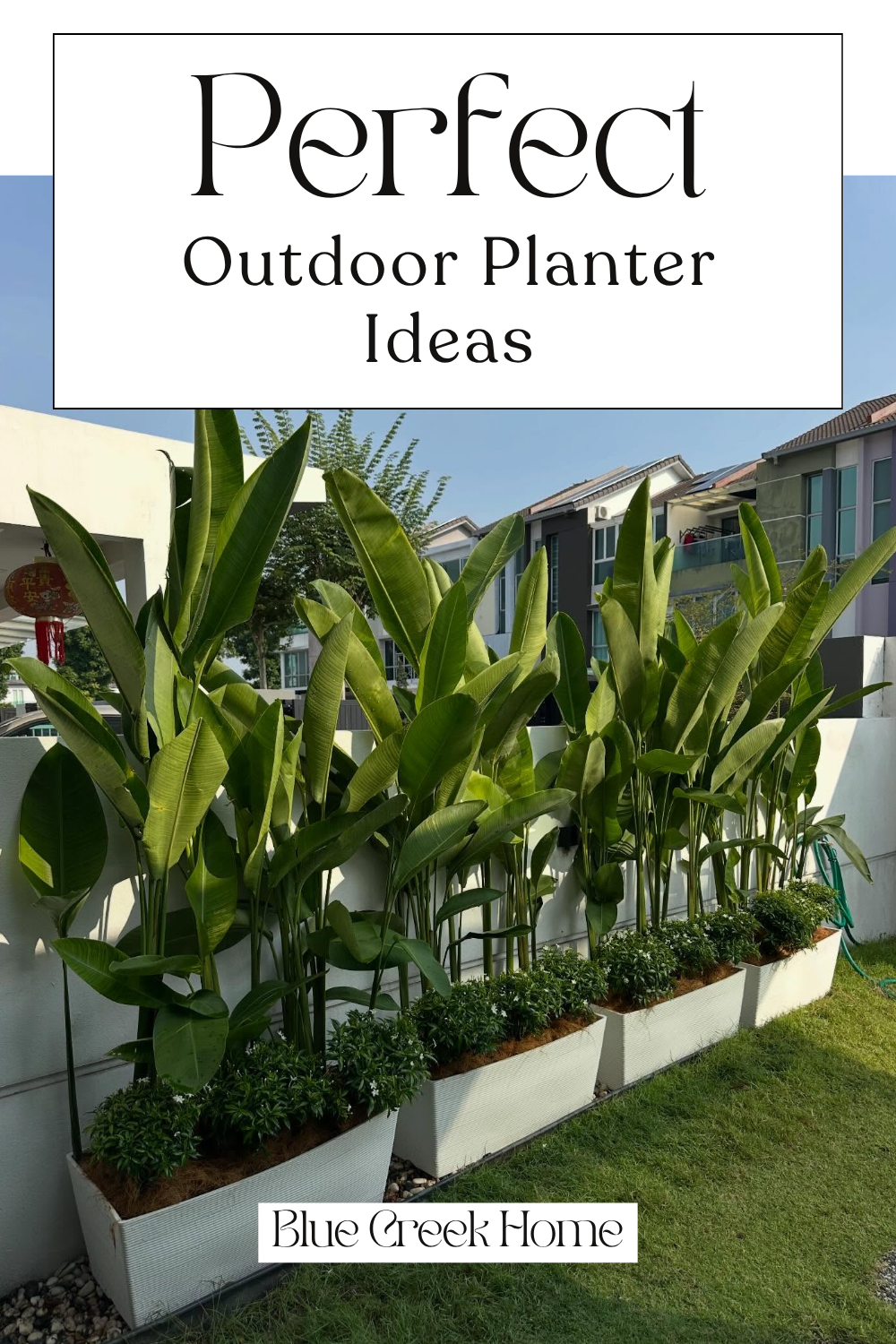
A row of tall planters can turn an exposed garden edge into a greener, softer boundary. This approach works especially well when you want privacy without making the entire space feel closed in, because the plants add height while still allowing light and air to move through.
Choose tall leafy plants that suit your climate and give them enough root room to grow comfortably. If the planters sit beside a wall or fence, keep the tallest plants toward the back and use shorter plants near the front, a planting approach also recommended in container gardening guidance from the RHS.
Layered Balcony Planters
Credit: @dewgreenworks
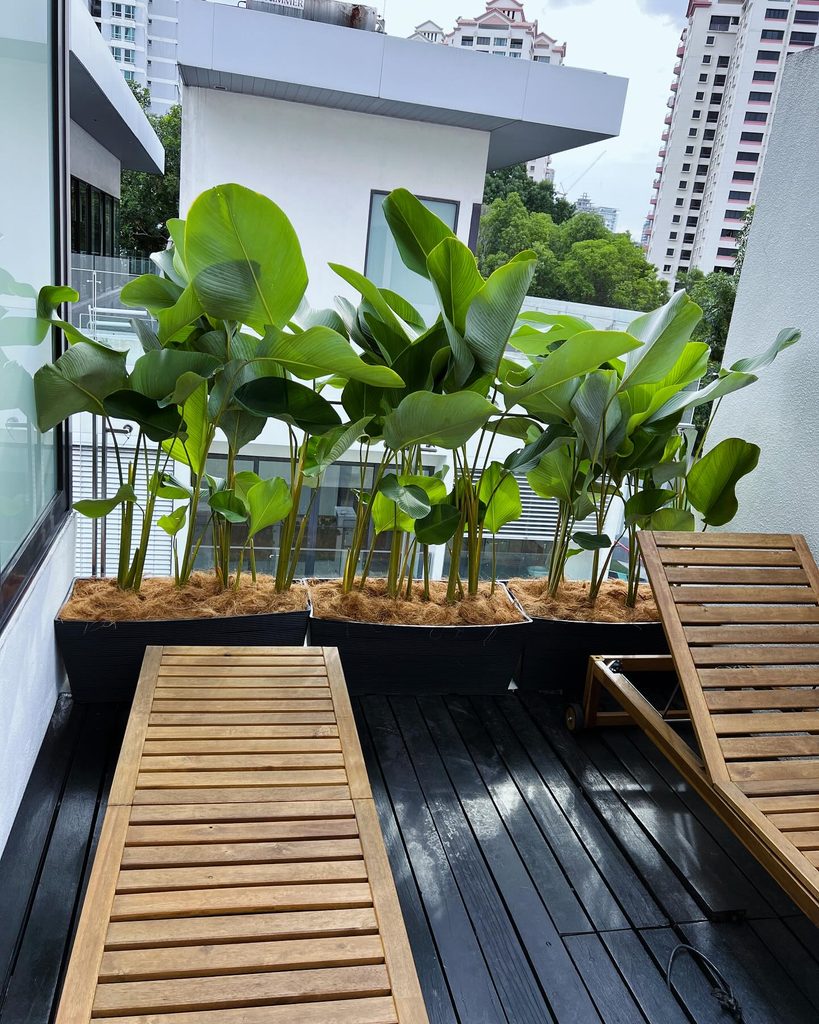
A balcony can feel much more private when planters are arranged in a long row along the open edge. Large containers filled with leafy plants create a living screen while leaving enough room for chairs, loungers, or a small table, so the space still feels comfortable for everyday use.
This is a useful direction for balcony planter ideas because the containers define the edge without taking up the whole floor. Choose lightweight planters when possible, for Wood Privacy Fence Ideas pairing warm metal planters with timber fencing can create an appealing mix of natural textures. Place taller plants near the fence and lower plants toward the walkway,KEA also recommends using vertical planting to free floor space and add privacy outdoors IKEA outdoor gardening ideas.
Classic Wooden Garden Box

Credit: @delino.custom.woodworks
A wooden planter box brings a warm, traditional feel to patios, porches, and garden paths. Its simple rectangular shape is easy to repeat, which makes it useful when you want several containers to look connected without making the garden feel too formal.
This style is especially useful for wooden planter box ideas because the natural material works beautifully with green foliage and colorful flowers. Cedar and other outdoor suitable woods can be practical choices, while a quality liner and drainage openings can help protect the planter and surrounding surface Better Homes and Gardens cedar planter guide.
Built In Planter Seating
Credit: @welcometothewoodsblog
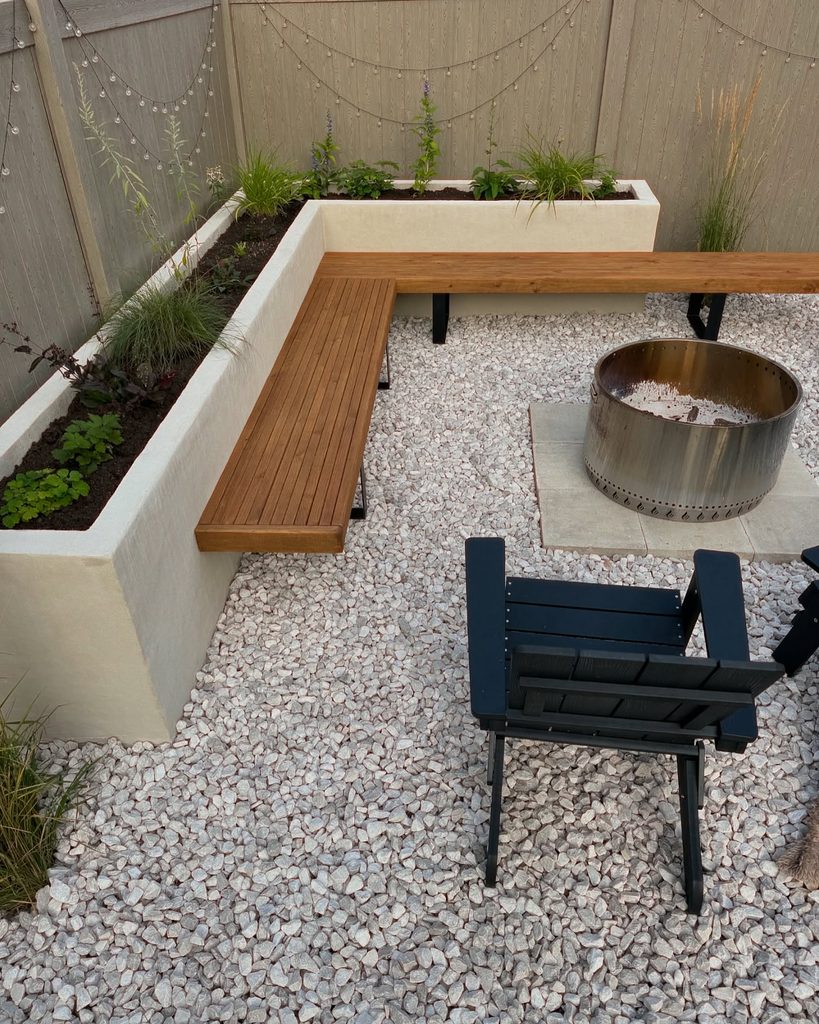
A raised planter can do more than hold plants when it is designed as part of the seating area. A wide planter wall can create a natural boundary around a patio while providing a place for a simple wooden bench, giving the garden a useful structure without filling the space with separate furniture.
This is one of the most flexible raised planter ideas for a small backyard because one feature can help define planting space and seating space at the same time. Keep the planting depth suitable for the plants you choose, and leave enough room around the seating area for people to move comfortably. Large containers can also help create structure around patios and outdoor seating.
Planter Posts With Hanging Baskets
Credit: @chaddyshack_18
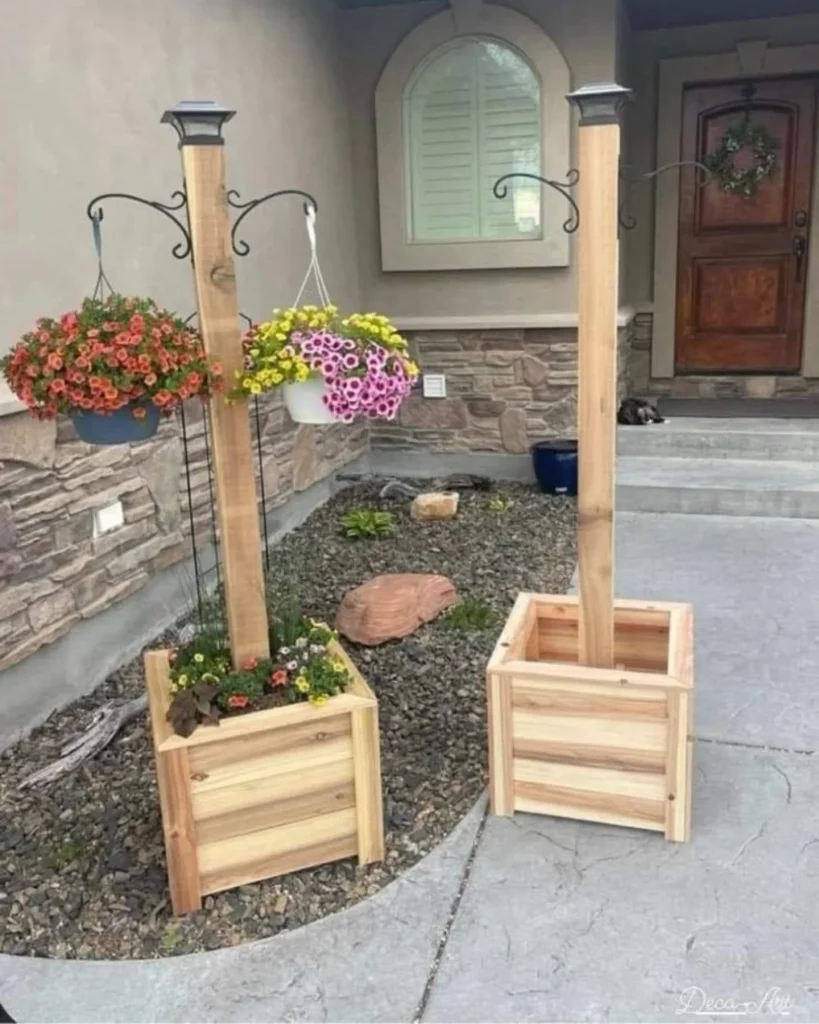
Tall planter posts can bring flowers upward while keeping the ground area open. This creates a welcoming entrance detail and gives you several planting levels, especially when the base contains smaller flowers and the upper section holds hanging baskets.
This approach works beautifully when you want fence planter ideas that feel decorative instead of purely functional. Use sturdy posts and secure hanging baskets properly, particularly in windy areas, then choose flowers that can handle the light conditions around your entrance. Vertical planting is also a useful way to make better use of limited outdoor space IKEA hanging planter ideas.
Black Planters Against Brick

Credit: @sticksandstonesoutdoor
Black rectangular planters can give a brick wall a clean, structured garden edge. The dark containers keep the attention on the plants while creating a strong connection between the hard surface of the wall and the softer greenery.
This is a good direction for patio planter ideas when you want a modern look without introducing too many colors. Repeat the same planter shape along the wall and vary the plants slightly for a relaxed garden feel, or use the same plant throughout for a more orderly arrangement. IKEA outdoor plant pots.
Long Bamboo Style Planter
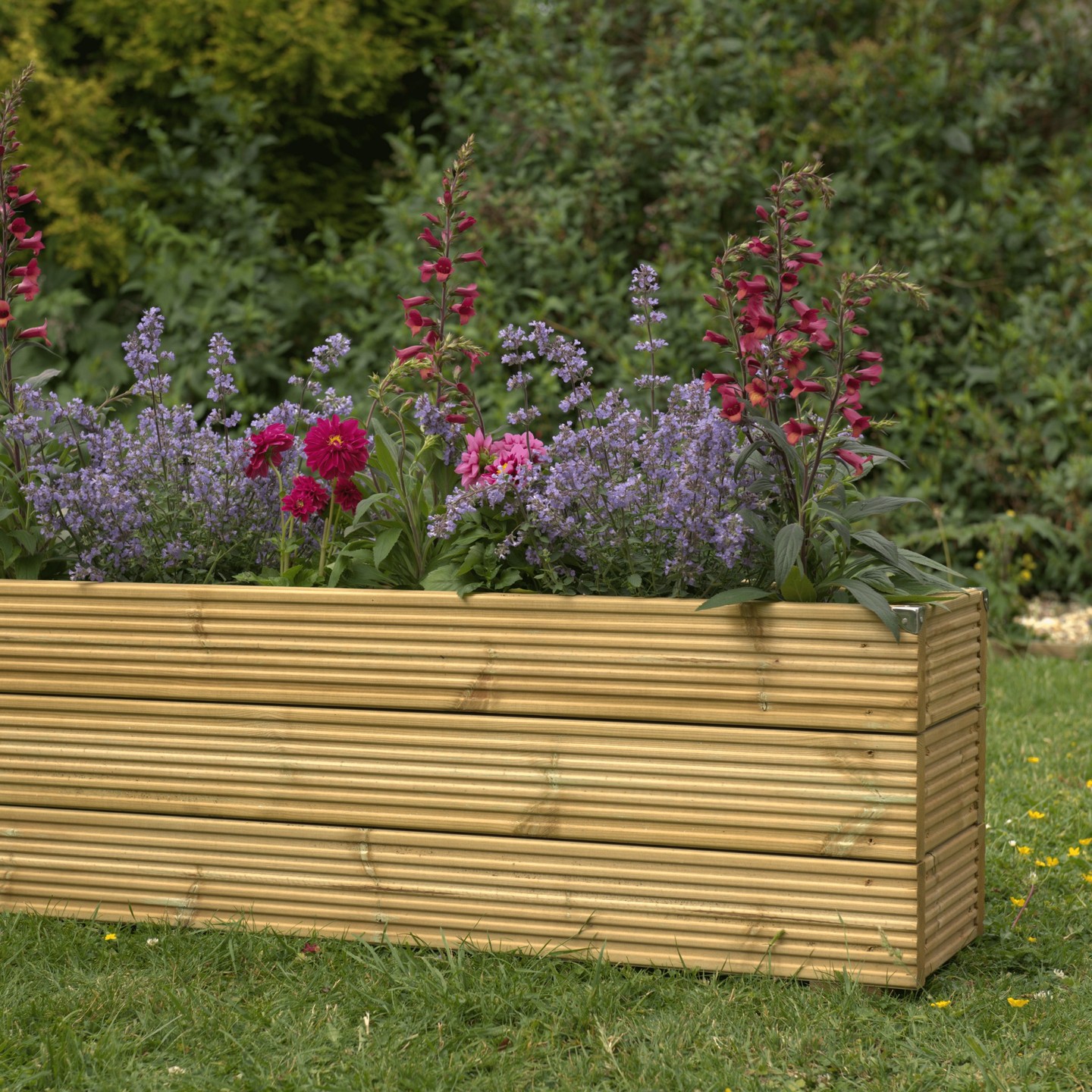
Credit: @ruby.ltd
A long natural planter can make a garden feel connected from one end to the other. The horizontal shape works particularly well beside a lawn, deck, pathway, or seating area because it creates a clear planting line without breaking the space into too many small sections.
Use a long planter for flowers, herbs, grasses, or a mix of plants with similar care needs. If the planter is made from natural material, choose a protected location and pay attention to moisture, drainage, and weather exposure so the container stays useful for many seasons. The RHS recommends choosing container materials and sizes according to the plants and growing conditions RHS container gardening advice.
Railing Herb And Flower Box

Credit: @evanswoodshopanddesign
A railing planter is a smart choice when the floor is already full. A narrow wooden box can hold herbs, flowers, or compact greenery while leaving the walking area completely open, making this style useful for balconies, decks, porches, and small garden platforms.
Try combining edible herbs with flowers that enjoy the same light conditions for a planter that feels both pretty and useful. Herbs such as thyme, rosemary, sage, and oregano can grow well in suitable containers when they receive enough sunlight and have good drainage. RHS guide to Mediterranean herbs in containers.
Outdoor Planter Ideas For Small Spaces
Small outdoor areas benefit from planters that use the edges instead of crowding the center. A long narrow box can sit beside a wall, while a railing planter can add greenery without taking away valuable floor space.
Vertical planting is another useful option when every square foot matters. Hanging containers, shelves, plant stands, and narrow boxes can bring plants upward and help create privacy without filling the walking area. IKEA compact outdoor gardening ideas.
Think about how the space is used before choosing the container size. A planter beside a chair should not make it difficult to pull the chair out, while a planter beside a pathway should leave enough room for comfortable movement.
Color can also help a small garden feel organized. Repeating two or three container finishes is often enough to connect different areas, especially when the plants themselves provide plenty of color.
Choosing Plants For Outdoor Planters
The best plants for a container depend on the amount of sun, wind, moisture, and available root space. Start by checking the conditions in the exact place where the planter will sit, then choose plants that naturally fit those conditions.
Try grouping plants that need similar amounts of water and sunlight. This makes daily care simpler and reduces the chance that one plant will receive too much or too little water because it shares a container with plants that have different needs. Better Homes and Gardens container gardening guide.
Making Outdoor Planters Last
A planter should be chosen for both its appearance and its location. A lightweight container can be convenient on a balcony, while a heavier planter may be useful in an exposed garden where strong wind could move smaller containers.
Drainage holes should be part of the plan from the beginning. Container plants are more exposed to changes in moisture because their roots have limited soil around them, so excess water needs a clear way to leave the container RHS advice for growing plants in containers.
If you are building a wooden planter, use materials suited to outdoor conditions and protect the structure from constant moisture. A liner can help separate wet soil from the wood, while drainage openings help prevent water from sitting inside the planter.
For larger containers, think about placement before filling them. Once a planter is filled with soil and watered, it can become difficult to move, so positioning it first can save a lot of effort later The Home Depot guide to container gardens.